Showing posts with label journalism. Show all posts

Friday, September 19, 2025

Crime News is Bad News

Alec Karakatsanis, Copaganda: How Police and the Media Manipulate Our News

I’d bet you a ham sandwich that, if you surveyed a reasonable sample of Americans, most would agree that we expect too much of the police. We expect them to investigate violent crimes, enforce traffic laws, provide crisis intervention, control wild animals, protect the environment, and safeguard private property. It’s unreasonable. Yet after the 2020 George Floyd protests and “Defund the Police,” most metropolitan police departments are even more overfunded and expected to perform miracles.

American police critics often say “copaganda” to describe mass media entertainment, particularly police dramas, that make law enforcement look both more necessary and more effective than they are. Defense attorney Alec Karakatsanis shifts focus onto mainstream journalism, which he accuses of papering over not only the police, but also any reasonable alternative suggestions. Our news media have the ability to decide what facts their audiences know, and what ideas the public considers “acceptable” or “mainstream.”

Why, Karakatsanis asks, do news outlets consistently lead with murder, sexual assault, and robbery? Police spend less than five percent of their time and budget on these crimes. Journalists regularly omit reporting on tax evasion, wage theft, or environmental degradation, which are crimes. But scary stories of violence sell precious ad space and keep audiences glued. Police know this, too; many PDs, hungry for voters and resources, have vastly increased public relations budgets since 2020.

Growing police budgets direct resources away from tools to address the root causes of crime. Attempts to redress poverty, housing scarcity, structural racism, and collapsing communities, seem abstract and squishy when crime leads the headlines. Indeed, many news consumers don’t know such attempts to redress even exist, because journalists cover them superficially, compared to the in-depth analysis that street crime regularly receives. What journalists bother to cover, winds up being what lives in audiences’ minds.

Karakatsanis sees three fundamental problems with crime reporting. First, journalists report words from politicians, police spokespeople, property owners, and other defenders of the status quo without meaningful analysis. Second, use of weasel words and deflections conceal the writers’ opinions behind seemingly neutral language. Third, news consumers lack critical reading background necessary to spot the first two problems. This leaves a voting populace frequently unaware that alternatives to the status quo exist, and have been tried.

Alec Karakatsanis

Scholars write extensively about law enforcement, and its alternatives. Karakatsanis describes many approaches to addressing crime without involving what he calls the “punishment bureaucracy.” (He finds the phrase “criminal justice system” falsely anodyne.) Some alternatives are strictly hypothetical, while others have been applied, mostly with success. But newspaper readers or basic cable watchers seldom see them. As Karakatsanis writes, “The news consistently fails to explain the substance of legitimate critiques of police, prosecutors, and prisons.”

Some readers might expect Karakatsanis’ analysis to have a partisan bent. Republicans have persistently made bank with “tough on crime” posturing. But journalistic defense of police has a bipartisan history. Nominally progressive politicians, and the reporters who support them, often use police to bolster their legislative bona fides. At least on “law and order” matters, there’s little daylight between the two major parties. Despite this, journalists frequently present any alternative as a Mad Max hellscape.

Worst, the problem is circular. Journalists lead with crime reportage, even now, when crime statistics are at near-record lows. Which crimes reporters consider worth covering, become the crimes politicians campaign and legislate on. The public’s perception of crime, irrespective of real-world conditions, justifies draconian police interventions, which wind up contributing to further crime. The statistically meaningless incident becomes the justification for crackdowns. Or, as Karakatsanis puts it, “Bad curation of anecdote leads to bad policy.”

These outcomes aren’t inevitable. Karakatsanis makes suggestions for how journalists could better handle volatile stories, though he admits that’s unlikely to happen under the current system of perverse incentives. Until then, Karakatsanis describes a more engaged, critical approach to news consumption. That includes a better understanding of the language, sourcing, and references which journalists use, and a willingness to seek what the current story omits. It also means asking who’s helped by the current framing.

The situation is indeed bleak. Karakatsanis makes a persuasive case that we have an incomplete, blinkered understanding of our justice landscape. The stories which define our knowledge and explain our opinions, are frequently slanted or poorly representative. But beneath it, he maintains an optimism that conditions could change, if we, the masses, consume our news more critically. We aren’t beholden to the news industrialists who distribute our stories. We can take control, if we want.

Thursday, October 10, 2024

The Magic of Predicting the Past

Malcolm Gladwell, Revenge of the Tipping Point: Overstories, Superspreaders, and the Rise of Social Engineering

Clear back in the year 2000, a New Yorker staff writer published his first book, an overview of recent behavioral science and sociology. The Tipping Point compiled insights from disciplines that frequently don’t communicate well, and distilled their insights into readable vernacular for generalist readers. Malcolm Gladwell introduced an epidemic-like analysis of human group behavior that continues to influence how Americans perceive group behavior and social movements.

A quarter century later, real life has field-tested Gladwell’s precepts, sometimes in direct response to his book. Several of his principles have proven reliable, while others have been OTBE’d: Overtaken By Events. Gladwell takes this, the anniversary of his career-making book, to revisit and update. As journalism of developing social science, it’s interesting reading, though it obviously rehashes the past. As science itself, sadly, it leaves something to be desired.

Gladwell’s dominant principle, that social movements develop like epidemics, seems especially timely because, in the intervening time, two epidemics have gripped American awareness: opioids and COVID-19. (He plays coy that he’s talking about opioids, because he wants his precepts to matter more than the details, but his target audience isn’t fooled.) We can revisit these two epidemics and determine whether Gladwell’s principles accurately describe how these outbreaks unfolded.

First, Gladwell describes the “overstory.” This term comes from ecology, describing the lush efflorescence of life which occupies the canopy of a rain forest, but Gladwell redefines it to fit the sweeping cultural context that humans occupy without conscious awareness. For example, he identifies Miami’s exceedingly high incidence of Medicare fraud with contexts like the Liberty City riots and the Mariel boatlift. My anti-racist spidey sense started tingling.

Then, Gladwell examines the necessity of diversity that protects against contagion. This means both literal diversity—cheetahs are so genetically homogenous that ordinary diseases can devastate communities—or metaphorical diversity, like the differences of backgrounds and goals that defend high schools against pathological groupthink. Nothing here should surprise anybody who got a B in high school biology class, but in today’s cultural milieu, definitely needs restated.

Finally, Gladwell unpacks why some individuals become “superspreaders,” a term most Americans probably first encountered during the pandemic. Some people prove contagious beyond the limits which the laws of chance would determine. Epidemiologists can usually determine fairly straightforwardly which individuals spread, and why, though usually only after they’ve infected others. Gladwell wants social science to have this same trend toward geometric absolutism.

Malcolm Gladwell

Sadly, while his principles seem plausible, they suffer because we only identify them retrospectively. He says, fairly late in the book, that the visible signs of tipping points, the big revolutions of public insight, exist in plain sight. The only reason we miss them, Gladwell asserts, is because we’re looking in the wrong direction. We persistently think change is years away, or longer, until the moment when change happens, usually quickly.

It probably reflects my prejudices, but one example persists in my memory: the sudden reversal of public opinion on gay marriage. The topic consistently failed at polls, most notably California’s Proposition 8. Then abruptly, public sentiment reversed itself, and suddenly most Americans, including a critical mass of conservatives, became accepting of gay marriage. The tipping point, according to Gladwell? The NBC sitcom Will & Grace.

Leave aside that the show’s initial run ended nine years before SCOTUS verified gay marriage in Obergefell v. Hodges. Or that, at its ratings peak, it topped out at only 24 million viewers, considerably below M*A*S*H, which notably failed to turn American sentiment against war. The very idea that one TV sitcom could reverse most Americans’ moral precepts seems laughable. This is especially pointed for series with political points, like Mr. Birchum, which is a global laughingstock.

If the conditions which precipitate the turning point are plainly visible, as Gladwell writes, then seemingly, at least one tipping point should’ve been visible. But nobody predicted Will & Grace changing American politics, nor the McKinsey corporation successfully turning Oxycontin into a public pestilence. Gladwell identifies these consequences because they already happened. In other words, Gladwell congratulates himself for successfully predicting the past. The future remains opaque.

Duncan J. Watts calls this tendency “creeping determinism.” We see outcomes as inevitable, Watts contends, because they happened. That’s exactly what happens here: Gladwell spends no thought for alternate contingencies, and doesn’t consider any attempts which failed, only those that succeeded. Thus he creates an overstory that’s factually correct, but not useful. Models like this only matter if they predict outcomes in advance, a goal which remains tragically elusive.

Wednesday, April 26, 2023

What Tucker Carlson Means to Me

Tucker Carlson, corporate puppet

I’ve never watched an episode of Tucker Carlson. While we’re at it, I’ve never watched Don Lemon either, and it’s been five years since I’ve watched Rachel Maddow. Cable “news” is an intellectual wasteland that can’t tell the difference between information and knowledge. The entire business model behind the 24-hour news cycle functions by flooding audiences with an information firehose, and letting them select whatever most justifies their pre-existing beliefs.

Therefore, watching Tucker ride into the sunset again (he’s been fired by all three major cable news channels), I find myself reacting not to Tucker himself, but a gestalt being called Tucker Carlson. It’s clichéd to note how American politics have become more polarized, adversarial, and off-putting, or to blame the departed for deepening that division. Instead, I’d like to praise Tucker for making people care enough to get angry.

Tucker’s firing grabbed my imagination, while Don Lemon’s simultaneous dismissal barely creased my awareness, because Tucker’s commentary generates more outrage. People share snippets to FaceTube and InstaTwit because his rock-ribbed rhetoric and us-vs-them mindset energize friend and foe alike. Tucker’s allies feel deeply enough to go vote, while his opponents feel outraged by what they perceive as his sublimated racism, and his undisguised classism.

This means Tucker has, in essence, two audiences. While one audience gets angry at his routine targets— immigrants, college students, protesters— the other gets angry at Tucker himself. We don’t parse Tucker’s statements to discover whether they’re really racist (they are). Tucker matters because he got people to feel emotions, strong and complex ones, passion sufficient to get off their couches and do something. Not everyone can say that.

Admittedly, Tucker motivated people to do things that were frequently awful. The laundry list of Tucker’s outright lies becomes overwhelming, particularly when we know that his intended audience was more motivated to vote and participate in civic life than the broadly aggregated Left. Watching the recent news about screaming outbreaks at school boards, town halls, and Alt-Right marches, it’s impossible to ignore that we’re watching Tucker Carlson’s disembodied influence.

Rupert Murdoch, Corporate Puppetmaster

Meanwhile, as Tucker unifies the Right in outrage over some unwanted change, and unifies the Left in outrage over Tucker, America’s anemic, disorganized excuse for left-wing activism continues doing nothing. Anarchists, Communists, small-S socialists, and big-S Socialists spend more energy fighting one another than ever fighting “the system.” Despite occasional outbursts like the George Floyd protests, America’s Left seemingly can’t organize a two-car funeral.

Much as I love investigative journalists like Greg Palast or Sarah Kendzior, they don’t motivate populations the same way. People don’t finish these authors’ books with the motivation to storm the Capitol Building. The emotional fire necessary to drive the largest number of voters to the polls doesn’t come from knowledge, accuracy, and nuance. Being engaged from the Left means being informed, which, for most people— let’s not kid ourselves— is boring.

If America’s electorate is divided, as the commentariat tells us, it isn’t divided between Right and Left. It’s divided between those motivated enough to participate in politics, and those who would rather sit on their couches, with their families, watching Netflix to mollify the moment. Right and Left don’t compete with one another; they compete every day with entropy and inertia, the two forces keeping most Americans from voting.

The mere fact that Tucker Carlson lies flagrantly, that even his employers admit he lies, comes second. Because of the Dominion voting machines lawsuit, we now know that Tucker and his cohorts don’t even believe their own messages. But their lies, outrage, and slander motivate people to leave their couches and, if not storm the Bastille, at least show up to vote. The other side can’t say that.

Evaluating Tucker Carlson’s legacy (it’s likely he’ll reappear on another, skimpier network), we must reckon with a contradiction: his message was lousy, but it worked. He successfully energized one segment of America to vote, by providing a cogent narrative vilifying another segment. While the Left continues infighting and false appeals to a non-existent center, Tucker, the most popular voice on the Right, got people to actually participate.

This isn’t to excuse anything about Tucker himself. He’s been pretty effective at what he does, but what he does makes America a worse place. He trades in hatred, resentment, and vitriol, and our world is more toxic for his presence. Yet the fact that even he didn’t believe his own message, proves that doesn’t matter. He made people care enough to participate, and that’s pretty rare anymore.

Friday, April 7, 2023

Notes From a War With No Front Lines

Jeff Sharlet, The Undertow: Scenes From a Slow Civil War

The rhetoric of Civil War was definitely present on January 6th, 2021, when a contingent of Americans tried to reverse an unfavorable election. But journalist Jeff Sharlet believes such rhetoric percolated long before and after that day. Sharlet believes Americans have long harbored a strange bipartisan longing for a violent purgation of our body politic. Maybe, he implies, it’s already begun; we just haven’t noticed yet.

So Sharlet seeks the front lines of that elusive conflict. He seeks them in history and art, including a rare sit-down interview with Harry Belafonte, focusing not on his epoch-making music, but on his political activism. He seeks the front lines in politics, embedding himself in Trump rallies in 2016, when Trump was new and exciting, and in 2020, when even his followers didn’t bother denying his racism.

But most importantly, from a journalist most famous for award-winning investigations into the dangerous intersections of religion and power, he seeks America’s front lines in places of faith. This usually means churches, especially White Evangelical Christian churches, many of which have entrusted their message to American power. But it also means anything Americans treat religiously, not only believing its truth, but speaking its liturgy.

Sharlet sees religion in places one wouldn’t necessarily consider sacred. He’s hardly the first observer to notice that Donald Trump’s campaign rhetoric resembles Prosperity Gospel preachers like Joel Osteen. But Sharlet parses Trump’s verbal cadences to find their tent-revival origins. Trump’s speeches baffle outsiders while leaving True Believers energized because, Sharlet insists, that’s what they’re designed to do. Like a snake-handling preacher, Trumpian language separates insiders from The World.

He also sees irreligion in places ordinarily associated with belief. He finds churches unwelcoming places, dominated by Trump apologia and calls for uprising. An armed security guard threatens Sharlet outside an Omaha storefront congregation. (Here, Sharlet’s choices shine through. Though he assertively notes the Omaha congregation is integrated, students of religious history will notice the thread unifying the churches Sharlet targets for scrutiny: not Christianity, but Whiteness.)

Jeff Sharlet

Religious language and religious analysis come naturally to Sharlet. Though culturally Jewish, and having no particular personal faith, he’s immersed himself in American religious discourse for twenty years or more. He sees the tacit patterns within language and action which, to outsiders, appear like meaningless word salad. He shows readers how the moments that appear disconnected are actually part of a whole. And what he shows is pretty disconcerting.

If he were louder and more frenetic, like Tom Wolfe or Hunter S. Thompson, we might easily mistake Sharlet for a Gonzo journalist. Like those famous personalities, he inserts himself bodily into the unfolding narrative. He also doesn’t flinch from candidly taking sides. While observing Occupy Wall Street, he sleeps in a Zuccotti Park encampment. When investigating Pastor Rich Wilkerson’s made-for-TV ministry, he meanders from a boring service.

This book’s centerpiece is a 120-page travelogue that combines journalism with memoir. Sharlet starts at a memorial rally for Ashli Babbitt, the January 6th casualty whom critics call a domestic terrorist, and True Believers call a martyr. Then he drives back across America, stopping at various churches, monuments, and sites of conservative pilgrimage, including Representative Lauren Boebert’s now-defunct open carry restaurant. He interviews anybody willing to talk to a journalist.

Partway through the travelogue, though, Sharlet admits he has ulterior motives for this journey. In his glove compartment, he has his own sacred talisman: his stepmother’s ashes, which he wants to distribute at various key locations. For Sharlet, this journey is a contrast between the America which his stepmother (and tacitly, he himself) loved, and wanted to be part of after her death, and another, uglier America, pugnacious and vulgar.

That duality permeates Sharlet’s book. There’s an America of great natural beauty and community solidarity, an America where youth eagerly organize to defend their rights following the Dobbs decision, even at great personal cost, simply because it’s right. Then there’s a counter-America, which mounts counter-protests against the organized youth, because their entire identity revolves around identifying enemies who need to be beaten. Even when those “enemies” are their neighbors.

Sharlet’s narrative seems disconnected at first. Some incidents he relates are almost a decade old and tangential to his themes. But ultimately, he brings it together, mostly. His narrative contains both national importance and personal struggle—as, indeed, does everybody’s anymore. His closing chapters leave some loose ends unresolved, in a most un-journalistic way that leaves me itchy. But overall, he brings us through an America with a freighted future.

Monday, February 6, 2023

Southern Comfort and Down-Home Injustice

Radley Balko and Tucker Carrington, The Cadaver King and the Country Dentist: A True Story of Injustice in the American South

If your loved one was murdered in Mississippi sometime between 1980 and 2010, chances are their postmortem was conducted by Dr. Steven Hayne. That alone should give you cause for concern. But if Dr. Hayne spotted any unusual marks during the autopsy, he would’ve called in Dr. Michael West, the state’s foremost bite-mark expert. Between Hayne and West, there’s an appalling likelihood that the wrong suspect got railroaded.

Radley Balko and Tucker Carrington have strong professional investments in Hayne and West, from their different perspectives. Balko, a journalist with ties to the libertarian Cato Institute and Reason magazine, has written extensively about an American law enforcement apparatus that’s long since parted company with justice. Carrington, an Ole Miss law professor, moonlights as head of Mississippi’s Innocence Project, and has faced down Hayne and West in many a contentious courtroom.

This story begins with two gruesome murders, a sure hook for today’s audience of true-crime podcast listeners. Two very young girls were sexually assaulted and murdered in rural Noxubee Country, Mississippi. Despite the murders’ similarities, investigators rushed to identify men inside the victims’ homes. Levon Brooks and Kennedy Brewer, who apparently didn’t know one another, were quickly singled out, and police, aided by Hayne, began assembling evidence.

Even though both girls’ bodies were submerged in water for hours or days, Hayne found suspicious marks on them, and called in West for bite-mark analysis. Here’s where things become significant: neither Hayne nor West identified new suspects, or excluded existing ones. Both “experts” found evidence inculpating the men police already wanted. Both Brooks and Brewer were convicted, Brewer sentenced to die, with no physical evidence except those bite marks.

Our authors aren’t satisfied with naming and shaming two “expert” witnesses who, by the time this book debuted, were already considered discredited. Their target is larger: they expose a political system that made this injustice possible. That means not only identifying the people who railroaded two innocent men, and almost certainly did likewise to others. They must also unpack how we got here, and where the problem still exists.

Most Americans probably don’t know the difference between a coroner and a medical examiner. The words are used interchangeably in the media where most Americans learn about law enforcement: TV crime dramas and detective novels. But they’re very different positions, with very different responsibilities. Start with the fact that coroners are elected, and therefore beholden to voter sentiment, not necessarily the facts. That should scare you.

Radley Balko (left) and Tucker Carrington

County coroners regularly hired Dr. Hayne, a private pathologist, to perform autopsies, especially in rural counties with limited forensic resources. At his peak, Hayne performed eighty percent of Mississippi’s autopsies, at a breakneck pace of six per day—while maintaining two full-time hospital jobs and giving testimony. Not surprisingly, obvious errors crept into many postmortem reports. Yet Hayne, often with West, remained indispensable to prosecutors for decades.

Exactly why Hayne and West remained popular isn’t difficult: they delivered convictions. Amiable and charismatic on the witness stand, the men charmed juries while baffling them with barrages of medical jargon. Faced with defendants who mostly couldn’t afford competitive attorneys, their bullshit went substantially unchallenged. Hayne and West gave lip service to justice and evidence, but built their careers carrying the prosecution’s water, and got paid well for it.

Balko and Carrington describe a death investigation system driven by convictions, not justice. Most coroners, prosecutors, and (in Mississippi) judges are elected, not appointed. Therefore being perceived as “soft on crime” can kill otherwise promising careers. Prosecutors choose expert witnesses based on their ability to deliver convictions, not their dedication to truth. And if those convicted are disproportionately Black, well whoopsie-daisy, I guess.

Worse, these problems aren’t limited to Mississippi. The lingering legacy of tough-on-crime politics has provided defendants with limited recourse at the federal level. Even when persuasive evidence exists that exculpates those found guilty, judges often feign helplessness. This means the innocent remain imprisoned, but equally awful, the guilty go unindicted, and often, as in Brooks and Brewer’s case, are free to kill again, because the justice system just stops looking.

These authors tell a gripping story of two innocent men, two charismatic experts, and the fatal dance tying them together. But it also describes a justice system that, in many ways, has advanced little. Expert witnesses serve the same role in modern trials that theologians served in colonial witch trials. The outcomes are heartbreakingly similar for those who believe that justice exists, and we have a duty to find it.

Monday, November 14, 2022

I Am Vengeance, I Am the Night—And So Much More!

It’s been touching to watch tributes roll in for American voice actor Kevin Conroy, following his passing this past Thursday at age 66. Fan loyalty to an actor they knew almost entirely through his voice speaks volumes to how important that symbol remains for so many who were young in the 1990s and early 2000s. I suspect Conroy knew his importance to a generation; his enthusiastic reception at fan conventions is the stuff of legends.

Live-action superhero actors come and go; cinema is currently on its sixth or seventh Batman, depending how you count. Fans greet every new Batman actor with hostility, though public sentiment usually adjusts quickly (pipe down, George Clooney). Behind them all, Kevin Conroy has persisted; he portrayed Batman from 1992 to 2019, when he finally portrayed the character in live-action on an episode of Batwoman. Twenty-seven years associated with the role.

However, I can’t help noticing how every tribute focuses on one role. Besides Batman, Conroy played a handful of other television and movie roles, particularly supporting roles on daytime soaps and crime dramas; few got any particular traction. But his theater career was extensive, and focused heavily on Shakespearean roles. Conroy studied at Julliard, under John Houseman, and his classmates included Robin Williams and Kelsey Grammar.

As a sometime actor myself, I wonder the implications of being so closely associated with one role. Like Jeremy Brett, whose once-storied career collapsed entirely into the role of Sherlock Holmes, every eulogy for Kevin Conroy remembers one role. His entire career has been compressed into something that happened in a sound studio, while the mostly anonymous animators worked around the needs of his voice.

I don’t want to disparage Conroy, or the influence his raspy, war-torn performance had on his intended audience. For two generations, his performance encapsulated not only Bruce Wayne’s willingness to fight for his beliefs, but the price he paid for continuing that fight. Conroy was the first gay actor to portray Batman (though this fact wasn’t initially known), and with his hard-chisled features and intense stare, it’s amazing he didn’t get live-action screentime sooner.

Kevin Conroy pictured with frequent co-star Mark Hamill

But actors with diverse range and untapped capabilities often get their careers reduced to one iconic role when they die, or even retire. When Ian Holm passed away in 2020, dozens of obituaries named his appearance in only two franchises: Alien and Lord of the Rings. When David Letterman retired from nightly TV, The New Yorker ran an illustration of him throwing pencils at the camera—which he hadn’t done in over twenty years.

Likewise, Kevin Conroy’s Shakespearean career largely vanished. So did his dedication to public service: following the terrorist attacks of September 11th, 2001, Conroy cooked and served meals for first responders sifting the rubble of the World Trade Center. In an era dominated by public attention-seekers like Kanye West and Elon Musk, Kevin Conroy happily worked hard, gave back, and let the results speak for themselves.

Conroy persistently remained conscious of his public role as an actor. As a gay man performing during a time when being publicly out could submarine a man’s career, Conroy took seriously theatre roles like “Peter” in Richard Greenberg’s Eastern Standard, a closeted entertainment executive who didn’t dare live his truth, for fear of imploding his career. In interviews, Conroy described such roles as an important moral statement.

Therefore I find myself torn. Like everyone, I think it’s fitting to celebrate the role that had such wide-ranging influence on a generation, and mourn the fact that this role has now ended. Yes, some other voice actor will certainly portray Batman, and probably mimic, to some degree, Conroy’s performance; but it’ll never be Kevin Conroy. Like Adam West before him, Conroy’s Batman mattered, and now it’s over.

Yet that isn’t Conroy overall. Like Jeremy Brett as Sherlock Holmes, or Harry Corbett as Harold Steptoe, Conroy’s career has largely vanished into one role. I don’t suppose Conroy minds, considering his active embrace of the organized fan community. (Unlike Corbett, who despised his iconic role and tried to distance himself from it.) Fan tributes to Conroy are remarkably one-note, and though it’s an awesome note, it isn’t a symphony.

Batman’s message matters, and the animated performance, uncluttered by the studio interference that reportedly hamstrung Tim Burton, conveys that moral complexity. Kevin Conroy will always be vengeance and the night for an entire generation, and he rightfully should be. But he was so much more than that and, actor to actor, I fear that getting lost.

Friday, June 17, 2022

Hey, Remember When the News Wasn't Fun?

Rep. Lauren Boebert (R-CO)

Scandal this week has enveloped Lauren Boebert, the Freshman Representative from Colorado, not for the first time. I won’t repeat the uncorroborated accusation, because it’s needlessly salacious, bordering on character assassination. I’ll say, however, that America’s organized Left has embraced this story with amazing alacrity, because they want the poetic symmetry. Boebert, who endorses using legislation to enforce sexual morality, is accused of exactly the sexual transgressions the usually inveighs against.

The accusations against Representative Boebert coincide with three other news stories: the televised January 6th Committee hearings, the ongoing war in Ukraine, and the recently closed Johnny Depp/Amber Heard trial. News sources haven’t treated these very different stories interchangeably. But in all cases, the response has been driven by how journalists, and the news-buying public, perceive the narratives. We aren’t looking for the facts, we’re looking for the story.

Each story holds different narrative forms. The Boebert proto-scandal relies on the parallelism of her being accused of the exact behaviors she wants to proscribe. Left-wing critics, in recounting the story, feverishly remind audiences that they don’t condemn the sexual actions of which she stands accused; they only condemn the hypocrisy Boebert shows in wanting to legally forbid anyone repeating the acts she (supposedly) committed. They’re looking for moral continuity.

From the beginning, coverage of the Ukraine invasion looked for the Freytag’s Pyramid in the story. Mass-market coverage created a charismatic protagonist in Volodymyr Zelensky, and a Snidely Whiplash-like villain in Vladimir Putin. Multiple op-eds predicted the coming climax any minute now—and, when that climax and subsequent resolution weren’t forthcoming, their coverage went quiet. Without the melodrama, apparently, there wasn’t much of a story.

Ukrainian President Volodymyr Zelensky

The less said about Depp/Heard, the better. During the trial, audiences announced their loyalties like superfans dividing into Team Edward vs Team Jacob, or maybe Team Captain America vs. Team Iron Man. After the verdict, commentators began scolding America for taking sides and supposedly overlooking the important issues underlying the case. But seriously, the underlying issues were no deeper than typical YA romance novels or Marvel movies.

And January 6th? Nobody disputes what fundamentally happened. The only controversy is which narrative we use to understand what happened: were the Capitol rioters merely peaceful protesters and harmless tourists? Were they equivalent to sansculottes storming the Bastille? Or were they more like Taliban looking to execute dissidents and heretics? The unifying narrative, more than the facts, define how we want to handle the rioters, and the politicians who abetted them.

Please understand, I appreciate why we need narrative unity to follow a story. Even under ideal circumstances, humans think in narrative; but these aren’t ideal circumstances. Today’s social media-driven news landscape encourages short attention spans, a tendency worsened by so many catastrophes happening simultaneously. Without the story guiding us, we’d be incapable of comprehending these massive, possible world-changing events. The narrative keeps us grounded and attentive.

But I seriously fear the narrative has overtaken the facts. Journalists have been swayed by the spectacle of storytelling: gleefully recounting every time Amber Heard’s attorneys biffed courtroom procedure, for instance, or treating Zelensky walking the streets of Kyiv like a celebrity sighting on Rodeo Drive. News audiences, meanwhile, race ahead of the facts, as they’re currently doing with Representative Boebert, to pronounce moral lessons we ought to receive.

Nostalgia for bygone days is obviously useless, here and elsewhere, but it bears recalling that journalism was once perceived as a moral good, not a commodity. During the Cold War, journalists stuck with stories that unfolded over the course of years, with no hope of forthcoming resolution. Serious-minded newshounds like Walter Cronkite and Ted Koppel kept Americans informed, not entertained, by stories with potential to steer their lives.

Walter Cronkite

News sources could perform this diligence for various reasons. A well-informed public was considered a national asset, and TV networks willingly lost money because they considered it their patriotic duty; most newspapers were owned by rich dilettantes willing to break even at best, to be seen as responsible citizens. Today, FaceTube and InstaTwit demand returns that would make cocaine kingpins blush, and long-term investment in stories is a non-starter.

I acknowledge that entertaining stories with a through-line and pat moral resolution are tempting. I enjoy reading novels that ascend, reach their point, and resolve neatly too. But citizenship requires commitment to stories that aren’t necessarily fun, or complete. Sometimes people we disagree with don’t receive their symmetrical comeuppance. Sometimes wars drag without clear heroes. And we need to stick with them anyway.

Monday, February 21, 2022

But Someone’s Gotta Do It

Eyal Press, Dirty Work: Essential Jobs and the Hidden Toll of Inequality In America

Few Americans have seen an untrimmed chicken carcass with our own eyes, but we know such things exist. Somebody, somewhere, turns living livestock into the styrofoam-backed meats Americans consume in such quantities. Similarly, somebody has to push the “kill” button on unmanned military drones, someone has to house the prisoners created by America’s “tough on crime” policies, someone has to extract hydrocarbons from the mine.  We sure won’t do it.

Journalist and NYU sociologist Eyal Press gathers the term “Dirty Work” from Everett Hughes, whose post-World War II research dealt with how citizens of totalitarian nations dealt with shared culpability for government atrocities. Ordinary citizens, Hughes determined, created a mental barrier. Some work was necessary, but innately dirty. Therefore a designated underclass handled the distasteful responsibility of, say, conducting pogroms and prosecuting wars of conquest.

Dirty Work, Press emphasizes early, is different from dirty jobs. Some jobs, like construction, agriculture, or infrastructure maintenance, are widely regarded as somewhat crummy. But Dirty Work is morally tainted, and that moral condemnation transfers onto those who do it. But that work remains necessary, because the population wants the work done. Workers performing Dirty Work become agents of society’s collective id, and we reward them with our disgust.

Press focuses mainly on three categories of Dirty Work in America: prison staffers, military drone pilots, and meatpackers. Combining a broad statistical survey of each field with close, intimate stories of people doing the work, he guides readers through these fields’ intricacies. He unpacks the sorts of people who accept, even seek, these jobs. And he demonstrates how they express our collective will, even as we publicly disown them.

Prisons suffer a paradoxical push-pull influence. Like schools, Americans see prisons as necessary means of enforcing laws and creating order. Candidates campaign on pledges to build, and fill, new prisons. But also like schools, prisons are first on the chopping block when budgets get cut. This becomes especially dangerous because, with the mass closure of state-funded asylums in the 1970s, prisons are now America’s leading warehouse for the mentally ill.

Eyal Press

America’s military became reliant on drones because we still expect to maintain global military dominion, but distrust committing troops. Drone pilots, working from bases in places like west Texas or northern California, save the Administration the PR headache of deployments, while keeping America active in stopping militants and terrorists. But because of their technology, individual drone pilots kill far more targets than soldiers ever could. And many suffer catastrophic PTSD.

Industrial meatpacking plants satisfy America’s appetite for cheap, plentiful meat, but at great cost. Animal rights activists love showing footage of how livestock suffer on the killing floors. But plant workers are inordinately likely to be maimed, even killed, while those who emerge physically unhurt suffer PTSD symptoms, including nightmares and hair loss. Like prison guards and drone pilots, they’re despised in their communities, underpaid, and punished for speaking out.

These workers have significant commonalities. Ruralism, for one: prisons, drone bases, and meatpacking plants are built well away from population centers. Prison workers and today’s military are also likely to come from rural areas, where often, these secure government jobs are the only reliable source of income. The workers, and their work, are easily ignored because they remain isolated on the periphery of “polite” American society.

They’re also subject to bipartisan contempt. Whenever whistleblowers in these industries come forward, conservatives ridicule them as crybabies who don’t appreciate the opportunities these jobs offer. But progressives, who historically attribute poverty and crime to systemic, rather than individual, causes, make exceptions for workers doing Dirty Work. Progressives hold these workers individually, not their employers or the laws which regulate them, culpable for their industries’ worst excesses.

Press delves into other Dirty Work, like immigrations enforcement and hydrocarbon mining, though in less depth. For comparison, Press has a chapter on “dirty tech,” high-tech innovations that make society less free, like Google making alliances with Communist China, or Facebook selling personal data to Cambridge Analytica. But, Press notes, dirty tech workers aren’t personally tainted. They’re free to quit with minimal penalties, and seldom held individually responsible.

Overall, Press describes a stratified economy where despised workers get thrust into despised work. This exposé channels historically respected journalists, from Upton Sinclair to Eric Schlosser, who have revealed the two-tiered rot in American society. The product is chilling. And maybe, this time, we’ll learn enough from the lessons Press offers that we won’t repeat these mistakes in the future. Though admittedly, the precedent isn’t good.

Thursday, February 3, 2022

The Ordered Mind in a Disordered Society

Johann Hari, Stolen Focus: Why You Can't Pay Attention—And How To Think Deeply Again

It’s not just you: people worldwide are reporting increased difficulty paying attention to deep ideas and ordinary tasks. Though it’s impossible to precisely quantify, copious circumstantial evidence reports that populations don’t stick with ideas as long as we once did, and while customers are buying more books than ever, they’re finishing far, far fewer. How did this happen to so many people simultaneously? Just as important, how can we reverse it?

Anglo-Swiss journalist Johann Hari mixes autobiography with investigative reportage to uncover answers to these questions. He noticed his beloved nephew, once an energetic child, had become entranced by his handheld technology, spending literally hours without looking up from his phone. But sure as every doctor is a patient, Hari realized he could see, in his nephew, his own sins; his own life was increasingly circumscribed by his phone.

Like many critics, Hari assumed our handheld technology caused the problem. After all, we started staring at phones, and experienced shortened attention spans, right? Not so, he quickly discovers. First, though the data isn’t ironclad, there’s reason to believe human attention spans have been getting shorter since the Victorian age, and the reasons are reasonably comparable to what’s happening around us today.

Not that mobile technology, and the companies that make it, are innocent. Using insider testimony and industry documents, he provides persuasive evidence that Silicon Valley cultivates a business model based on keeping users hooked. They know their devices produce cocaine-like dopamine jolts, and they know some modest tweaks could fix that without hurting their balance sheets. But nobody can afford to be the first to make the responsible choice.

So smartphone makers and social media enterprises are disincentivized to act responsibly. That’s hardly a shocker, though Hari feigns astonishment. Hari also finds several less obvious contributors to modern users’ abbreviated attention spans. Heightened levels of economic stress trigger a human tendency to look for threats, like paleolithic hunters on the bushveldt. Lousy processed food leaves our brains undernourished, and environmental pollutants disrupt the functions of our endocrine system.

Taken together, Hari finds a socioeconomic structure that wasn’t necessarily designed to disrupt human attention spans, but definitely has that effect. What’s more, the wealthy and well-connected already know these effects exist. To the extent that they’re able, the people who profit from this disruptive economy, don’t participate in it. The rich eat organic unprocessed foods, send their kids to Waldorf schools, and frequently don’t use the technologies they manufacture.

Johann Hari

Healthy mental states aren’t difficult to define. Robust psychology and neuroscience have demonstrated what well-rounded brains do. From children running and playing, to adults achieving what Mihaly Csikszentmihalyi called a “flow state,” we have extensive science showing what healthy minds do, and how such health contributes to creativity, emotional balance, and social well-being. We know what’s gone wrong, Hari writes, and we know what “right” looks like.

Hari occasionally sweeps into breathless narration where he claims to have personally discovered something really well-known. For instance, he claims he uncovered evidence that Facebook and Google make most of their money, not providing services to ordinary end-users, but by packaging end-user data for resale to advertisers. That’s not exactly a closely held secret. His wide-eyed narrative in these moments, sadly, makes him appear less than wholly serious.

Which is a shame. Though most of what Hari discovers isn’t original to his investigative research, he does make a meaningful contribution by organizing it into a unified story. I like the structure of abuse and dependency Hari has uncovered, and wish he would’ve resisted the temptation to make himself the center of the story. Because ultimately, what he finds here isn’t about him, it’s about us.

Throughout the story, Hari hints at something he spells out explicitly in the conclusion. Despite the individualistic Western myth, this widespread attention failure isn’t an individual problem; it was created systemically, and can only be fixed systemically. Hari outlines several steps individual readers can implement to regain some of their attention span, some of which I’ve already implemented. But ultimately, like racism or homophobia, this collective problem requires collective solutions.

I’m not blind to the irony that you’re reading this review online. Without social media, I never would’ve discovered this book. But Hari doesn’t advocate tossing the baby with the bathwater; networked mobile technology serves an important social role. The goal, rather, is to master our technologies, instead of letting them master us. We can achieve that goal, working together. Hari provides the first organized tools to do so.


Also by Johann Hari:
Chasing the Scream: The First and Last Days of the War on Drugs

Wednesday, December 15, 2021

Freshman Comp and the Failure of Modern Journalism

Cathy Birkenstein and Gerald Graff (promotional photo)

Back in 2005, University of Illinois literature professors Gerald Graff and Cathy Birkenstein published the first edition of their composition textbook They Say/I Say: the Moves That Matter in Academic Writing. The textbook’s core premise is simple, that in college-level writing, the most important rhetorical maneuver is to define the consensus on some topic, then counter with your own words. This may mean disagreeing, clarifying, expanding, or refuting altogether.

In my teaching days, I adopted Graff and Birkenstein’s model early: I photocopied their published templates, even before their textbook shipped. I made the first edition required reading for my freshman comp students. But soon I noticed problems. Though their model remains solid, Graff and Birkenstein omit one important fact: your words must be supported with evidence. My students pitched straw-man opponents, then baldly asserted their unsubstantiated opinions.

This week, conservative Catholic journalist Matthew Walther published an op-ed on The Atlantic’s website: Where I Live, No One Cares About COVID. The article is paywalled, so I’ll synopsize: we good Christians in rural Michigan have never cared particularly about COVID-19 or the regulated steps recommended to prevent transmission. Every time journalists and media pundits expound on taking steps against COVID, Walther says, they prove themselves out-of-touch with America’s heartland.

Even beyond the undeniable fact that Walther’s opinion is counterfactual and doesn’t deserve a national platform, this op-ed is sloppily written. Walther provides only anecdotal evidence, sneers at anyone who cites science, and claims his ways are simply authentic because yours aren’t. Matthew Walther formerly wrote for prestigious publications like The Week and the New York Times, but this editorial reads like something a freshman tore off quickly on deadline.

Matthew Walther, who publishes so many
photos of himself smoking that he clearly
thinks cigarettes are very grown-up.

Walther states his thesis early: “I don’t know how to put this in a way that will not make me sound flippant: No one cares.” He admits that’s hasty generalization, but turns around and says that nobody in rural America particularly cares. He supports this position with copious “I” statements:

  • “In 2020, I took part in two weddings, traveled extensively, took family vacations with my children, spent hundreds of hours in bars and restaurants, all without wearing a mask.”
  • “The CDC recommends that all adults get a booster shot; I do not know a single person who has received one.”
  • “Until I found myself in Washington, D.C., on a work trip in March, I had never seen anyone wearing a mask outside.”

I live in one of America's most convervative congressional districts, and okay, Walther isn’t entirely wrong. I’ve seen exactly what he’s talking about in every grocery store. Even I, the first person on my jobsite to start masking up, eventually wearied of fighting the tide and stopped wearing one. And then I got COVID. In my company, entire jobsites were shuttered in November 2020 because actual numerical majorities of workers caught the plague.

Essentially, Walther claims his rural neighbors have never cared or taken routine precautions, and their indifference should be treated seriously. He never considers, even momentarily, that such widespread indifference might be why we need continued precautions against a mostly avoidable contagion. Walther presents unconcerned and disengaged Americans as a base that deserves catered to. He never acknowledges they’re maybe plague rats who keep everyone else from getting better.

The fact that Matthew Walther, individually, doesn’t know anybody who wears masks or gets their shots, means nothing. I know nobody who listens to The Weeknd or eats home-cooked insects, but my unfamiliarity doesn’t matter. Globally, these activities are common and influential. If my freshmen provided such anecdotal evidence to support their vague assertions, I’d have returned their papers marked “Cite your sources.” Indeed I did, so often that I changed my textbooks.

Equally important, I wouldn’t give such baseless assertions a global platform. The Atlantic, sadly, has a history of publishing foolish, unsupported opinions by cartoonish people. We shouldn’t amplify antivaxxers, global warming denialists, or Nazis, because they’re wrong. Perhaps someday, if they provide substantiated evidence to support their positions, we might reconsider this position. But currently, baseless straw-man editorials, like Walther’s, don’t deserve space in respected periodicals.

Graff and Birkenstein aren’t wrong; voicing positions and counterpositions is a tool of serious writing. But I discovered that this triangulation means nothing until student writers know how to back their positions with evidence. If writers and audiences don’t have sufficient tools to evaluate evidence, they wind up thinking their adolescent opinions are equal to scientific arguments. And gullible magazines can be tricked into sending these bullshit opinions out worldwide.

Monday, December 14, 2020

Women, Academia, and Lousy, Lousy Men

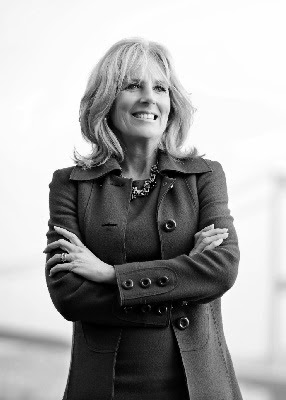
Dr. Jill Biden

Joseph Epstein is a twat-waffle who shouldn’t be taken seriously by anyone. My regular readers can surely agree on this thesis. I can add nothing to the controversy surrounding Epstein’s contemptible Wall Street Journal op-ed which hasn’t already been said better by women, professional academics, and scholars of journalism. And yet, even as I consider him a total asswipe, I can’t help understanding where he’s coming from.

Admittedly, I haven’t read Epstein’s attempted take-down of presumptive First Lady Dr. Jill Biden, and her use of her academic title in non-academic situations. I didn’t bother going beyond the paywall; the first paragraph, in which Epstein calls Dr. Biden “kiddo,” a term almost exclusively used on small children and women, demonstrated Epstein’s attitude promptly. I wouldn’t read a student assignment with such an opening; it demonstrates bad faith.

A former student from Epstein’s years adjuncting at Northwestern University recently posted a personal memoir of Epstein’s thoroughgoing disdain for women. His refusal to call on them in class, to acknowledge their contributions, or to believe they wrote the works they actually wrote, is probably familiar to generations of women. Yet, as a former adjunct myself, I can’t help wondering what my students thought of my treatment according to gender.

Nobody ever complained, to my face, that I favored one gender over another. Indeed, as my entire career focused on teaching Freshman Composition, I found women generally better prepared for college-level writing than men. I seldom gave 100% on any student assignment, but the two times I clearly remember, were both women. If I favored one gender, it was women, but I favored them because they—generally—earned it.

My final teaching semester, I had a student, a young man on a football scholarship, approach me after class. I found this youth, let’s call him Michael, a willing student, eager to learn, but unprepared for higher-level writing. Rarely did I actively dislike any student, but I felt warmly for Michael, because he earnestly tried to overcome his unreadiness; he genuinely wanted to succeed. He just didn’t know how.

“I don’t know, Mr. Nenstiel,” Michael said, studying his shoes with a distinct lack of confidence I don’t recall seeing in many football players, “this just feels more difficult than anything I’ve done before. I just feel like the girls are kicking my ass. I don’t know if I can compete with them, they just do so much better than me.”

Joseph Epstein, former
academic and crap journalist

This was the closest anybody ever came to accusing me of gender favoritism. The girls, Michael felt, were kicking his ass. (I distinctly remember that phrase, and have written about it before.) Yet even then, I realized, Michael saw things incorrectly. In a classroom roughly divided equally by gender, only one woman regularly participated in discussions without being called on; I had five men who eagerly participated.

Yet Michael felt outclassed, not because of classroom participation, but because of tangible, portable outputs. Later in my teaching career, I abandoned lecturing at the 101 level and began running my classes as writing workshops, which better suited my disposition. Therefore Michael had seen every student’s assigned writing, even the women who didn’t speak up, and saw they wrote with more confidence and experience. He didn’t know how to compensate.

Michael responded to this lack of preparation by turning his feelings inward and blaming himself. Personally, I’d blame a public education system dominated by “skillz drillz” and Scantron tests, administered by career overseers with little classroom experience. Women, whose brains mature earlier, need less guidance, in a guidance-free school system, than men. But someone like Joseph Epstein sees the same lopsided outcomes and blames the women for succeeding.

Nearly sixty percent of college students today are women. Women are not only more likely to enter college, they’re more likely to finish what they’ve started, and more likely to achieve graduate degrees. Academia, like business, remains dominated today by male executives and managers, but as the paucity of qualified men becomes more prominent, we’re likely to witness the female domination of post-secondary school and business, possibly within our lifetimes.

Where men like Michael consider themselves responsible for this outcome, and struggle to compete individually, men like Joseph Epstein respond by attempting to tear women down. His attack on Dr. Biden’s qualifications doesn’t merely attempt to diminish Dr. Biden, or even women generally; Epstein attacks academia itself, a system that often rewards prior preparation and early maturity. A system that, in blind outcomes, rewards women. That, to him, cannot stand.

Wednesday, February 26, 2020

When Rural News Becomes World News


Nebraska generally only makes national and world news when something awful happens. Charles Starkweather, for instance. But the most common reason Nebraska, where I live, makes the national headlines, is because weather becomes extreme, like when blowing snows close Interstate 80, one of America’s major transcontinental arteries, or droughts threaten meat prices. In spring of 2019, record snows followed by record rains destroyed a huge portion of my state.

I recall this, not to elicit your sympathy or tell anyone that they should pay Nebraska better attention, but rather, because my state isn’t alone. Just days ago, I discovered that similar history-making rains are currently destroying eastern Kentucky, a state with a similar economic backbone of agriculture and light industry. I remember, in 2019, complaints from flooded areas that mainstream journalists were ignoring the devastation. This year it’s happening again.

Many major journalism outlets don’t even have stringers positioned in the worst-hit regions for environmental destruction like this. Sometimes, on those rare occasions when Nebraska makes national headlines for weather-related devastation, national outlets will buy printed reports or camera footage from locally based reporters. The AP apparently keeps a paid stringer in Lincoln, in case something newsworthy happens. He doesn’t post very often.

Not that national venues ignore rural America altogether. Barely three weeks ago (as this posts), national-grade journalists flooded Iowa for the 2020 Presidential caucuses. They slavishly followed candidates (mostly Democrats) around the state, recording them knocking on doors, shaking hands, and ginning up morale among volunteers. Then the caucuses happened, the candidates moved on, and the journalists folded their tents and followed. The Midlands retreated to insignificance.

St. Louis-based journalist Sarah Kendzior writes that Americans living in “flyover country” grow accustomed to getting routinely ignored. Life in the middle of the map requires a reëvaluation of what we consider “fair,” Kendzior writes, because the difference between the richest and the meanest citizens is increasingly small. Those who muster enough money, or have so little they can affordably walk away, leave this region for coastal cities, which have something ours don't:

Jobs.

Please understand, this isn’t sour grapes. I understand that national and world news happens in major cities, which have access to money, instant media technology, and populations ready to attend camera-friendly events. Cities create a reciprocal relationship between reporters and events: things happen in places which have journalists ready to report. And journalists stand ready to report where things happen. This feedback loop makes simple sense.

But in the near future, what events demand reporting will probably change. Until now, human-made circumstances, like economics and technology, have demanded journalists’ attention, and journalists have obliged. Going forward, what we euphemistically term “acts of God” will make national and global headlines, and places with sparser populations will get first and hardest. Nobody is prepared in those areas to report; the media apparently expect somebody competent  to rush in later.

This pattern has already begun. Besides Nebraska, the entire Missouri and Mississippi River Valley system saw record-setting floods in 2019; the Mid-Atlantic region was socked by massive floods in 2018; the Lower Mississippi was devastated in 2017; and, to quote USA Today, “U.S. had more floods in 2016 than any year on record.” Devastating weather events are becoming normal… if you see and recognize the pattern.


A pattern which even I, a dedicated news-follower, completely missed until it hit my home last year. Floodwaters from the 2019 Nebraska floods came within eight feet of my front door. I was personally fortunate, because my building didn’t actually get infiltrated. Several friends weren’t so lucky; some were driven from their homes when water entered. One friend had her home flooded a second time while still conducting repairs from the previous flood.

In 2019, Nebraskans complained on social media that our state’s devastating floods got ignored in national media. This was perhaps an exaggeration; sources like the New York Times and Wall Street Journal did, indeed, run wire-service reports on the flooding. But the reporting usually got buried in “regional news,” only got two or three paragraphs in websites, and otherwise got nodding acknowledgement without much real, attention-grabbing coverage.

Now it’s happening again. Floods are socking eastern Kentucky, an area journalists ignore except during massive coal-mining disasters. The pattern becomes clear to those who see it: those places where the vanguard of environmental damage is happening, are least likely to have coverage. Thus it becomes easy to pretend life continues unchanged. Because destruction is happening, but nobody tells us about it.

Friday, April 12, 2019

Julian Assange: Bit Player In His Own Story

The young, idealistic Julian
Assange we all remember
Watching the storm surrounding WikiLeaks co-founder Julian Assange’s arrest yesterday, I’ve deduced one clear conclusion: something happened. Beyond that, it’s tough to say. Did free journalism and democratic ideals get dragged kicking and screaming from international asylum? Did a rampant tool get evicted from Ecuador? Depends on who’s asking. Because Assange himself has become a total cypher; his arrest says more about us than him.

I don’t know about anybody else, but WikiLeaks creased my awareness in 2010, when it released reams of documents and hours of footage related to atrocities in Iraq and Afghanistan. He quickly became a nuisance for powerful people; when he ruffled the Obama Administration’s feathers for exposing their ongoing drone assassination campaign. Politicians love talking about transparency; WikiLeaks revealed they’re less friendly toward the practice.

But despite what some critics claimed after yesterday’s arrest, what Assange and WikiLeaks did wasn’t journalism. WikiLeaks simply deluged audiences with raw, undigested information, mostly in terms general audiences couldn’t understand. We still needed experienced journalists to translate piles and piles of documents, written in specialized jargon and flooded with sloppy data, into language us numpties actually speak. If we’re honest, journalists have done a bad job of this.

This became visible during the 2016 campaign. WikiLeaks became a pipeline of information directed from Moscow, through their website, into American news outlets, which kept the “Hilary’s e-mails” story alive despite a paucity of actual information. Though probably unconnected with the GOP campaign, it became clear WikiLeaks was carrying water for one side when Donald Trump praised the company nearly 150 times at campaign events.

This puts people evaluating the Assange arrest in difficult straits. On one hand, the Pentagon Papers precedent says, provided leaked information doesn’t jeopardize national security or put lives in danger, it’s always better for citizens to know. The democratic process requires informed, literate citizens in full command of the facts, because only debate under such conditions has the ability to flush bad ideas from the body politic.

On the other hand, WikiLeaks didn’t release information neutrally, or in service to democracy generally. It’s tough to say whether they knowingly sat on information regarding corruption at the heart of the Trump campaign, including ties between Russia and Paul Manafort, George Papadopoulos, Michael Flynn, and others. Maybe they just didn’t have such data. However, they clearly flooded the information market with information damaging to Democrats, imported wholesale from Russia.

And don’t try telling me Assange didn’t run WikiLeaks during his seven years of Ecuadorian asylum. During that time, the embassy needed to rescind first his phone privileges, then his internet access, because he repeatedly violated their stipulation that he not engage in political maneuvers. Standards of international law require asylum seekers to not engage with outside or homeland politics— a standard Assange and Edward Snowden both disregard flagrantly.

The shambling, zombie-like Julian
Assange we saw getting arrested
Watching the mass-media interpretation of Assange’s arrest, and the professional journalists chin-wagging over exactly what it means, it’s clear everyone imbues Assange with their values. He’s a horrible harbinger of dictatorial influence on global electoral politics. Or he’s a martyr to high-handed authoritarian government, getting railroaded by a conspiracy between the Republicans and the Tories. The language reporters have used since the arrest has been downright Manichean.

I’d contend, though, that it’s possible to say Assange represented the best aspirations for the “marketplace of ideas,” while also conceding that his company had become a clearinghouse for the worst realities of partisan hackery. Despite the moral dualism of mythology, nobody is entirely good, nor entirely bad. Humans, including journalists, are sloppy amalgams of ideal and expediency. As the Apostle Paul said, “If we say we have no sin, we deceive ourselves.”

Furthermore, I’d contend that the hunched-over, unshaven hobo we saw getting evicted from the Ecuadorian embassy yesterday wasn’t the would-be Free Speech Champion who went inside seven years ago. Isolated, lonely, and increasingly desperate, Assange appears to have undergone the same transformation that plagues rock stars and cult leaders. The pure-eyed Assange of 2012 isn’t the broken, captured fugitive of 2019. We all change; some of us decline.

Watching talking heads argue about Assange, I’d assert we aren’t seeing anybody talk about the real human. They’re discussing the ideals he represents to each individual. Assange himself doesn’t matter, probably hasn’t mattered for years. If we look past the figurehead he’s become, and examine the ideals we look for in journalists and other professional truth-tellers, perhaps we can escape the gravitational pull of the current controversy, and fix our long-term problems.

Friday, September 7, 2018

I Don't Give Two Rips About Your Fake “Resistance”

An open letter to the author of the New York Times anonymous op-ed published earlier this week.

Dear Self-Important, Anonymous Insider:

You clearly want everyone to consider you the hero. You call yourself “the Resistance Inside the Trump Administration,” the “adults in the room,” and the “steady state.” You treat yourself like a bulwark against national and, presumably, global anarchy that would ensue if President Trump had unrestricted access to enact every whim crossing his mind. But we ordinary Americans see you for what you really are: complicit.

Do you really think that, because you’ve stopped the President from calling an airstrike on Ciudad Juarez, or whatever, we’ll forget you’ve helped preside over the most capricious, lawless, harmful executive administration in generations? If you’re part of the administration, you were there when ICE forcibly separated refugee children from their parents at the border. Or when NATO basically promised to keep going without us. Or when the President cuddled a dictator in Helsinki.

By any reasonable standard, America’s place in the global network is less certain, less stable, less worthy of praise than it was when your President took office. He’s backed us away from climate accords, despite global warming having a more robust scientific consensus than Newton’s Laws of Thermodynamics. He’s alienated trade partners in East Asia, the EU, and even North America. He’s made our diplomatic position with Iran more precarious.

Don’t get me wrong. President Obama has plenty of problems history will hold him accountable for: deporting more immigrants than any President in history, or signing death warrants on foreign nationals with drones, or basically holding the door for financial industry insiders after they imploded the economy in 2007 and 2008. Things weren’t sunshine and free beer three years ago. I don’t have rosy-eyed false memories.

But the administration you serve, which has enacted policies I can only assume you approved if you have the kind of authority your op-ed purports, has made things objectively worse. In an attempt to recreate supposed lost greatness, which perhaps existed during the Eisenhower administration, you’ve severed America’s ties to the global community, and to reality. America, and the world, don’t look like they did in the 1950s.

For starters, back then, America could unilaterally do whatever it wanted, largely because Europe and Asia were busy filling bomb craters from World War II. Only America had the manufacturing and agricultural capabilities to rehabilitate the world. But those conditions don’t exist anymore, and won’t again without major global conflict, which nobody should wish for. This is worse than naive pining for the past. It’s a complete divorce from reality.


You can claim that President Trump’s presence allows you to do some abstractly defined good for America, provided you restrain his impulses. You cite three specifically: “effective deregulation, historic tax reform, [and] a more robust military.” I think you’re full of beans. Effective deregulation? This presidency wants to return asbestos to the market. Asbestos, a known carcinogen at any quantity! Whose life is improved by this?

Your tax reform promised every American a $4000 pay increase. Instead, America’s largest employer, Walmart, offered its seniormost employees a one-time $1000 bonus. Your tax “reform” has resulted in the most massive concentration of wealth and resources in history. But like massive tax cuts throughout history, the benefits don’t reach Americans with jobs. Or didn’t you notice the correlation with your recent freeze on federal workers’ pay?

As for your more robust military, are you serious? We proved in two things in Iraq in 2003: first, that no foreign adversary can challenge American military might without nuclear weapons. But second, we suck at nation-building and other cleanup operations after the shooting stops. Why bother making Earth’s most powerful military even more powerful? We need a more robust diplomatic corps to prove anything on the global stage.

Who, then, is your posturing for? Trump supporters, who already believe a “Deep State” conspiracy shackles their President from messianic transformation of the system? QAnon types, who think inside leakers have magic powers? Democrats, who want someone to restrain Trump’s racist rambles and nationalist gut reactions? None of these types will thank you for what you’ve done. You’ve only succeeded in digging your grave a little deeper.

In short, your “resistance” actually worsens ordinary Americans’ lot, jeopardizes our standing internationally, and makes cataclysmic collapse more likely. You strutting across the pages of the Newspaper of Record, patting yourself on the back because things would be so much worse without your intervention, only reveals the depths of your Administration’s moral bankruptcy. You aren’t the resistance, friend. You’re just another collaborator.

Friday, December 22, 2017

A Short Handbook for Confronting Liars

Bruce Bartlett, The Truth Matters: A Citizen's Guide to Separating Facts From Lies and Stopping Fake News In Its Tracks

Reality exists. This didn’t used to be a controversial thesis statement; people of good conscience could disagree about how to interpret facts, or how to situate facts in a larger narrative, but debates about what constituted an actual fact stayed in Platonic discussions, where they belonged. But the increasing decentralization of news-gathering has separated citizens from objective reality, and we’ve “elected” a president who openly disdains facts. How can engaged citizens regain the factual landscape?

Bruce Bartlett started as an economic advisor to the Reagan Administration, and later retired to a lucrative conservative think-tank career. But he quit movement conservatism during the George W. Bush years, when he claims his former party became unmoored from reality. The current climate of buffet-style news sourcing, coupled with polarized voters seeking confirmation of their prejudices, tweaks his scholarly hackles. He wants you, the voter, to care about sources as keenly as he does.

This book offers a pocket-sized primer to source checking and factual verification in news. Some of it is very basic: does more than one source agree that something happened? Does an online source use links to verify claims of fact? Other pointers get more technical. Readers need to know context for facts, rather than fact dumps, for instance. Journalists who use orphaned statistics and unsourced quotes are probably actively confusing the issues, rather than clarifying.

Journalism is a profession, with its own practices and conventions. Though chin-pullers like me have lamented the professionalization of journalism, this has nevertheless helped working reporters build practices of internal verification and fact-checking into their business. But the conventions also obscure core practices in ways we can’t always see, a fact fake journalists use, judo-style, against us. A 101-level familiarity with journalistic practices among news audiences could open our eyes to objective truth versus baloney.

Technology has complicated the news distribution business. As 2016 proved, inflammatory lies travel quickly, and polarize the electorate. But the same technologies that spread lies, also make citizen fact-checking more possible. Much that turned the 2016 election into a national shitshow, like Pizzagate or false quotes attributed to either candidate, could be debunked through the Internet. Though straight Google searches often return widespread lies, more specialized tools, like Google Scholar or ProQuest, provide verifiable facts.

Bruce Bartlett
And some of Bartlett’s pointers involve readers acting in reflective, informed manners. One major source of fake news has been ordinary people resharing specious, unsourced claims because it confirms their pre-existing biases, or because a clickbait title inflames passions. Bartlett asks us to ensure the “facts” we use, and distribute, aren’t wrong. But that requires us to periodically check and make sure we aren’t wrong. A good debater first assumes: “I should double-check myself, too.”

Bartlett provides here a brief introduction to research techniques used in social sciences. Though he doesn’t get into the premises of original research (contact your local graduate school about that), this volume, sized to fit most purses and blazer pockets, provides up-to-date guidance in checking secondary sources and existing fact databases. Instructors could incorporate this book into high-school and college courses in journalism, political science, history, economics, and even behavioral psychology. One could hope, anyway.

This entire enterprise, admittedly, assumes readers want to screen reports to determine facts, and their context. In other words, Bartlett’s fact-checking process requires people engaged enough to spend time researching instead of passively watching TV. This isn’t a foregone conclusion; some people enjoy shouting others down, the schadenfreude they receive from hurting others and making them feel stupid. I wish Bartlett included a chapter in here on knowing when it’s time to cut provocateurs loose.

Not that Bartlett doesn’t have occasional partisan lapses. Early on, he describes Fox News as a centrist alternative to left-leaning mainstream news. This description would surprise Rupert Murdoch, who, in an interview given about the time this book debuted, described his baby as “conservative.” He also lumps satirists like The Daily Show and other late-nighters, who broadly lean left,  into “fake news,” which is specious since satirists admit their principles. Liars and jokers aren’t interchangeable.

This only proves that even scholars and fact-checkers need a skeptical eye occasionally. Informed readers should never be passive, because we’re already part of that reality which, I already noted, exists. Reading the news should change us, but we should challenge the news. The relationship is reciprocal, and requires constant testing and refinement. That’s missing in the “post-truth era.” The techniques Bartlett provides are slow and unglamorous; they’re also real, which is what we need.


On a related theme, see also:
A Short Handbook for Confronting Dictators