Showing posts with label men. Show all posts

Thursday, November 27, 2025

Andrew Tate, Master Poet

Back in the eldritch aeons of 1989, art photographer Andres Serrano gained notoriety for his picture “Piss Christ.” The image involved a crucifix with Jesus, shown through the glimmering distortion of an amber liquid, putative Serrano’s own urine. The controversy came primarily through Senator Jesse Helms (R-NC), who aspired to become America’s national guilty conscience. This outrage was especially specious because Helms only noticed the photo after it had been on display for two years.

I remembered Serrano’s most infamous work this week when “masculinity influencer” Andrew Tate posted the above comment on X, the everything app, this week. Tate is a lightning rod for controversy, and seems to revel in making critics loose their composure. Sienkiewicz and Marx would define Tate as a “troll,” a performance artist whose schtick involves provoking rational people to lose their cool and become angry. To the troll, the resulting meltdown counts as art.

Andres Serrano remains tight-lipped about his politics, and repeatedly assures tells that he has no manifesto. Following the “Piss Christ” controversy, he called himself a Christian, but this sounds about as plausible as Salman Rushdie calling himself Muslim after the Satanic Verses fatwa: that is, a flimsy rhetorical shield that convinces nobody and makes the artist look uncommitted. I think something else happened here, something Serrano didn’t want to explain; the image itself doesn't matter.

Specifically, I think Serrano created a cypher of art. Unlike, say, Leonardo’s “Last Supper,” Serrano’s picture doesn’t actually say anything. Instead, it stacks our loaded assumptions of religious imagery and bodily waste, and asks us what we see here. The image itself is purely ceremonial. Serrano cares more about why seeing the Christian image through urine is worse than seeing it through more spiritually anodyne fluids, like water or wine. Our answer is the art.

Critics like Helms, or let’s say “critics,” see art in representational terms. Art, to them, depicts something in the “real world.” This might mean a literal object, such as a fruit bowl in a still life, or an event or narrative, like the gospel story in “The Last Supper.” The representational mind seeks an artwork’s external, literal reference. This makes “Piss Christ” dangerous, because dousing the sacred image in something ritually unclean is necessarily blasphemous.

Progressive critics abandon such one-to-one representations. In viewing more contemporary art, from Serrano’s photos to Jackson Pollock’s frenetic, shapeless splatters, they don't ask themselves what object they ought to see. They ask themselves how the art changes the viewer. In the Renaissance, audiences assumed that art created a durable image of the transient, inconstant world. But artists today seek to amplify and hasten change. We viewers, not the world, are the purpose of contemporary art.

Ironically, as progressive critics tolerate more receptive non-representational standards in visual art, their expectations of language have become more exacting and literal. From religion to poetry to President Taco's id-driven rambles, they take words to mean only what they mean at surface level. Every online critic who considers it their job to identify “plot holes” in Disney’s Cars, or insist the Bible is disproven because we can’t find the Tower of Babel, makes this mistake.

At the surface level, Andrew Tate’s macho posturing seems like the opposite of art. His insistence on appearing constantly strong leaves no room for contemplative ruminating over language’s beauty or nuance. He doesn’t signpost his metaphors like Emily Dickinson, so it’s easy to assume he has no metaphors. Yet the weird prose poem above, with its apparent insistence that it’s now “gay” to be straight, defies literal scientific reading. By that standard, it’s pure poetry.

Tate seemingly contends that, in a world without obsolete gender and sexual designations, while nothing better takes their place, words become meaningless. If men feel sexually homeless nowadays, Tate lets us relax our burdens and shed our doubts. If words mean nothing, then words can’t control us. If it’s gay to be straight, then we can expunge archaic goals like love and stability. Yield to language’s poetic flow, let it transform you and be transformed by you.

This doesn't forgive Tate’s crass misogyny and weirdly self-destructive homoeroticism. He still treats women as ornaments and men as something to both desire and despise. As with any poet, it’s valid to say when something doesn’t land. (This one landed so badly that Tate eventually deleted it; only screenshots remain.) But we must critique it in its genre. Andrew Tate is a poet, not a journalist, and his words change us like art.

Monday, July 8, 2024

“Deaths of Despair” and the Working American Man

The expression “deaths of despair,” once an exclusively scholarly term, became commonplace somewhere around 2019. It describes the heightened mortality among poor and working-class Americans from alcoholism, drug overdose, and suicide. The problem is both class-based and distinctly American, and apparently mostly affects men. When it creased public awareness, “deaths of despair” were a disproportionately White phenomenon, though recent changes see it rising among Black Americans.

My post-college career has caromed from education to manufacturing, to construction, to marketing, and most recently, back to manufacturing. (FWIW, knowing how to do high-skilled professional work differs markedly from knowing how to find high-skilled professional work.) This rapid oscillation gives me a binocular perspective on the American economy. While the sources I consulted for this essay emphasized comorbidities like obesity, diet, and poverty, I suggest “deaths of despair” are caused by economic propaganda.

Working-class American men continue marinating in post-WWII messages emphasizing male self-sufficiency. Though most have accepted they’ll probably never again support a spouse and kids on a single paycheck, they continue hearing messaging that they should. This is especially true for younger working-class men raised on digital technology, as the phallocentric world of alt-right messaging fetishizes a Little House-ish strain of bucolic libertarianism that mostly only exists on TV anymore.

Ian Haney López notes that the White Americans most likely to oppose “welfare” and other forms of federalized help, are the White Americans most likely to need it. This happens, he writes, because “welfare” is racially coded in American political propaganda; Black people need help, White people should be self-reliant. This claim becomes somewhat flimsier with the recent rise in Black deaths of despair. So I don’t want to call Haney López wrong, but his position needs expanded.

In addition to race, federalized help is also coded criminally. Accepting government money is a form of stealing. Not corporate subsidies or PPP loans, certainly, which are necessary to maintain a well-oiled market, but any government money you’re eligible to receive is, essentially, picking the taxpayers’ pockets. That’s why thought leaders keep tying EBT to drug tests, criminal background checks, and other forms of screening to identify crimes. Because anybody who needs help is, a priori, a thief.

Therefore, whenever a worker reaches a point of destitution where it becomes necessary to start thinking about asking for help, it flips a moral switch. The demographic class raised up on mythology of friendly cops, law’n’order, and “just comply,” finds themselves asking: “Am I seriously committing a crime?” This trips them into the same guilt spiral healthy people experience whenever the intrusive thought of killing somebody appears. They feel compelled to stop the trajectory.

Unfortunately, the positions aren’t similar. When that intrusive “you could just strangle him” thought appears, we short-circuit the process by just not strangling him. The same simple solution doesn’t appear when the impoverished worker starts considering asking for help. Because even if they never actually request help, the poverty doesn’t just disappear. The conditions that made the request necessary linger, and the worker remains as incapable of bootstrapping as ever.

Please note, “crime” is something we do, but “criminal” is something we are. If you strangle somebody, the event has a clearly delineated beginning and end. But you never stop being a murderer, even after you serve your sentence. This becomes especially true when one’s crime isn’t a legal definition, but a moral category—think “crimes against humanity.” The crimes judged at Nuremberg didn’t transgress any written law, but Euro-American society’s definitions of human decency.

Social stigma leaves the criminal wearing an invisible scarlet letter. Unfortunately, in situations of moral judgement, that letter may be so invisible that only the person wearing it sees it. Have you ever seen working-class men asking their buddies for help? It’s almost impossible for most men to seek financial help without lowering their heads and shielding their faces. Yet their buddies, though perhaps not cash-flush, will cheerfully open their wallets to the extent possible. Because they don’t judge the seeker like the seeker judges himself.

American working-class men have internalized a message that seeking help, especially federalized help, is theft. Therefore, needing help equates to “criminality.” And what do we do with criminals? We judge and punish them. If a man’s friends, family, and community don’t punish him in the way he expects, he’ll punish himself, often with the vigor of a medieval flagellant. To prevent “deaths of despair,” we must stop racing after individual self-harm, and change the message working men receive and believe.

Monday, February 1, 2021

Some (Incomplete) Thoughts on Men and Guns

Men practicing at a North Dakota gun range

There’s one guy everyone hates to see arrive at my job. Let’s call him “Jack.” Jack installs HVAC components, a job requiring both significant upper-body strength and an eye for fine detail work. He’s extremely good at his job, and everyone knows it. But he’s also constantly irritable, combative, and temperamental. He thinks it’s very manful to ignore basic safeties; management must constantly remind him to wear both a COVID mask and a hard hat.

Jack also, for over a year, angrily demanded his god-given right to open-carry a loaded firearm at work. He strapped an autoloader pistol into a snap-flap holster on his belt, above his right ass cheek. His bosses insisted he not carry his gun. The general contractor insisted he not carry his gun. He was repeatedly ejected from the jobsite for refusing to leave his firearm in his car. Still he demanded his unrestricted 2nd-Amendment rights.

This weekend, an unnamed Phoenix, Arizona, man shot and wounded a bystander while attempting to stop a shoplifter. My initial eye-rolling response reflected a long history of botched gun stories. Notice that, rather than attempting to apprehend the accused offender, the gun owner opted to escalate the situation to potentially lethal violence. Firing a gun isn’t a proportional response to low-level property crime. Yet this rapid escalation is exactly what gun advocates would probably celebrate.

Yet thinking about this man, and HVAC Jack, I realized they probably had something in common. Both men desire to fight injustice where they see it, injustice they believe is so insuperably evil that it requires swift, fatal intervention. The manichaean morality of “Good Guy With a Gun” rhetoric divides humanity into heroes and villains, whose morality is innate and unchangeable. Only bringing the hammer down, even at the cost of human life, restores balance.

When I describe this principle as a “male power fantasy,” it’s tempting to think I’ve simply dismissed men’s feelings flippantly. Admittedly, some do. Yet, watching Jack’s daily working routines, I’ve realized how thoroughly powerless he feels. Despite his demonstrated high skills, he has no workaday autonomy. Management thoroughly owns his daily routine; more than half his waking hours belong to somebody else. Jack is the walking embodiment of powerlessness in the face of capitalist hegemony.

Back in 2018, Spike’s Tactical, a Florida manufacturer of decent, but not particularly distinguished, assault rifles, ran a controversial ad. “Not Today Antifa,” read the banner, over a painting of four White men in store-bought tactical gear and rifles. The subjects formed a cordon between a rampaging mob of violent protesters, and us the viewers. Though the image offers much to unpack, mostly unsavory, it highlights the myth of civilian violence defending a brittle civilization.

Men like Jack, or the Phoenix shooter, see a world defined by powerlessness. Crime seems endemic, amplified by prime-time media reports of continued urban awfulness which make violence seem more imminent and widespread than it actually is. Simultaneously, the leading way many blue-collar men once defended their families, work, is increasingly mechanized, outsourced, or done by undocumented immigrants. Jack has good reason to feel angry and afraid. Capitalism has made him powerless, and arguably useless.

Spike’s Tactical, the NRA, and other for-profit institutions latch onto this feeling of helplessness. Jack comes home every day tired, physically and mentally, from a job defined by hard labor and mental acuity. Asking him to read scholarly reports, or even investigative journalism, regarding gun safety, is ridiculous. He wants easily digestible information, often in visual form. Spike’s Tactical gives him that, reaffirming his belief that somebody without a face is overrunning his dying world.

Evidence highly suggests that guns don’t help much. In combat situations, untrained gunfighters are more lightly to shoot their own fingers off than stop an attacker. In ordinary situations, gun owners are more likely to commit suicide with their guns than defend their property. Suicide is, of course, the ultimate expression of powerlessness. Rendered unnecessary by capitalism, and backward by social evolution, these men face a future of continued uncertainty, or no future at all.

Therefore, when I say “male power fantasy,” I’m not disparaging men like Jack, or the Phoenix shooter. These men feel powerlessness to their bones. A Marxist revolution might fix that powerlessness, but that’s trading one form of uncertainty for another. For all their volatility, guns are at least knowable and immediate. They provide the comfort of at least a little control. Yes, that control is pretty awful. But at least they know what it is.

Monday, December 14, 2020

Women, Academia, and Lousy, Lousy Men

Dr. Jill Biden

Joseph Epstein is a twat-waffle who shouldn’t be taken seriously by anyone. My regular readers can surely agree on this thesis. I can add nothing to the controversy surrounding Epstein’s contemptible Wall Street Journal op-ed which hasn’t already been said better by women, professional academics, and scholars of journalism. And yet, even as I consider him a total asswipe, I can’t help understanding where he’s coming from.

Admittedly, I haven’t read Epstein’s attempted take-down of presumptive First Lady Dr. Jill Biden, and her use of her academic title in non-academic situations. I didn’t bother going beyond the paywall; the first paragraph, in which Epstein calls Dr. Biden “kiddo,” a term almost exclusively used on small children and women, demonstrated Epstein’s attitude promptly. I wouldn’t read a student assignment with such an opening; it demonstrates bad faith.

A former student from Epstein’s years adjuncting at Northwestern University recently posted a personal memoir of Epstein’s thoroughgoing disdain for women. His refusal to call on them in class, to acknowledge their contributions, or to believe they wrote the works they actually wrote, is probably familiar to generations of women. Yet, as a former adjunct myself, I can’t help wondering what my students thought of my treatment according to gender.

Nobody ever complained, to my face, that I favored one gender over another. Indeed, as my entire career focused on teaching Freshman Composition, I found women generally better prepared for college-level writing than men. I seldom gave 100% on any student assignment, but the two times I clearly remember, were both women. If I favored one gender, it was women, but I favored them because they—generally—earned it.

My final teaching semester, I had a student, a young man on a football scholarship, approach me after class. I found this youth, let’s call him Michael, a willing student, eager to learn, but unprepared for higher-level writing. Rarely did I actively dislike any student, but I felt warmly for Michael, because he earnestly tried to overcome his unreadiness; he genuinely wanted to succeed. He just didn’t know how.

“I don’t know, Mr. Nenstiel,” Michael said, studying his shoes with a distinct lack of confidence I don’t recall seeing in many football players, “this just feels more difficult than anything I’ve done before. I just feel like the girls are kicking my ass. I don’t know if I can compete with them, they just do so much better than me.”

Joseph Epstein, former
academic and crap journalist

This was the closest anybody ever came to accusing me of gender favoritism. The girls, Michael felt, were kicking his ass. (I distinctly remember that phrase, and have written about it before.) Yet even then, I realized, Michael saw things incorrectly. In a classroom roughly divided equally by gender, only one woman regularly participated in discussions without being called on; I had five men who eagerly participated.

Yet Michael felt outclassed, not because of classroom participation, but because of tangible, portable outputs. Later in my teaching career, I abandoned lecturing at the 101 level and began running my classes as writing workshops, which better suited my disposition. Therefore Michael had seen every student’s assigned writing, even the women who didn’t speak up, and saw they wrote with more confidence and experience. He didn’t know how to compensate.

Michael responded to this lack of preparation by turning his feelings inward and blaming himself. Personally, I’d blame a public education system dominated by “skillz drillz” and Scantron tests, administered by career overseers with little classroom experience. Women, whose brains mature earlier, need less guidance, in a guidance-free school system, than men. But someone like Joseph Epstein sees the same lopsided outcomes and blames the women for succeeding.

Nearly sixty percent of college students today are women. Women are not only more likely to enter college, they’re more likely to finish what they’ve started, and more likely to achieve graduate degrees. Academia, like business, remains dominated today by male executives and managers, but as the paucity of qualified men becomes more prominent, we’re likely to witness the female domination of post-secondary school and business, possibly within our lifetimes.

Where men like Michael consider themselves responsible for this outcome, and struggle to compete individually, men like Joseph Epstein respond by attempting to tear women down. His attack on Dr. Biden’s qualifications doesn’t merely attempt to diminish Dr. Biden, or even women generally; Epstein attacks academia itself, a system that often rewards prior preparation and early maturity. A system that, in blind outcomes, rewards women. That, to him, cannot stand.

Saturday, May 16, 2020

Manhood in the Time of COVID-19


Why do some men apparently regard wearing antimicrobial face masks as unmanful? Writing in The Week magazine, contributing editor Bonnie Kristian describes the apparent conflict between the masculine imperative to protect others, and the other masculine imperative, to never appear weak. Unfortunately, Kristian has the same shortcoming I’ve seen from many people who discuss manfulness, from either side: they lack a meaningful definition of masculinity.

Since Kristian published this article, I’ve tried to find anyone specifically, unambiguously calling mask-wearing unmanful, and failed. You might find something, but I have a day job. The only inverse correlation between masculinity and mask-wearing I’ve found, has come from people arguing against that correlation. But even if people don’t endorse that position explicitly, it’s nevertheless implicit, when President Trump, a man notorious for wanting to appear strong, refuses to wear one.

Similarly, I don’t have any more thorough a definition of masculinity than Bonnie Kristian. However, as a construction worker, I do have experience within an almost entirely male workplace. (In our area, we have two women electricians, and one woman who intermittently works a concrete pump truck; otherwise, the industry is a sausage fest.) And with such experience in a dude-centered environment, I think I have qualifications to make certain generalizations.

I believe Bonnie Kristian makes one important point in describing her masculinity paradox: she sees manhood as an internal philosophical precept, as something you just inherently are. The men I work around probably wouldn’t agree. Manhood, in an all-male environment, requires constant demonstration to reassert its prerogative. Masculinity evidently isn’t something you are, it’s something you do, and as such, it needs constant re-affirmation in deeds and, especially, in words.

These men, among whom I spend most of my waking hours, constantly spar aloud to demonstrate their manfulness. These words include cheap insults, sexualized banter, and “jokes” that verge into the territory of ad hominem attacks. This “sexualized banter” often includes rape jokes. Much workplace repartee includes men’s attempts to prove themselves as cruel as possible to anyone they perceive as weaker than themselves, including women, homosexuals, and animals.

Their prize for these verbal battles is the right to continue battling. Though I haven’t heard the phrase “man card” used recently, the underlying philosophy remains intact: that manhood is something conferred by other men, and which needs constantly reinforced, lest it be rescinded. Importantly, the earliest use of the “man card” concept I can find comes from a beer commercial, demonstrating that those who define our social roles, generally have something to sell.


Let me emphasize that, here as in Bonnie Kristian’s exposition, there’s a difference between what men say, and what they do. About six weeks ago, my co-workers and I discovered where a feral cat gave birth in the insulation underneath our job trailer, then, for whatever reason, left the kittens abandoned. When I nested the kittens in a box with a towel, these men, who’d previously joked about dumping animals beside the road, tried not to be seen openly cooing over the kittens.

So, manfulness apparently requires men to demonstrate their masculine credentials externally. This makes manliness as much a theatrical presentation, as any runway model demonstratively swishing her skirts during Paris Fashion Week. Being manly isn’t a matter of having virtues of character, as Aristotle and Epictetus asserted; rather, it’s a matter of macho posturing, which men must maintain constantly, for other men’s benefit.

Therefore, if men find wearing a respirator mask to Wal-Mart emasculating, it isn’t because they believe the mask makes them weak; it’s because they believe the mask makes them appear weak to other men. Consider the equally theatrical demonstrations of manfulness we’ve seen recently: protestors storming public buildings and ordering submarine sandwiches while carrying large-caliber weapons. Masks make men look weak; guns make men look strong.

I’d say these men think the mask makes them look fearful, except what else is openly toting an AR-15 except an expression of fear that someone will attack? No, going maskless and carrying armor-piercing ordnance share one common characteristic: the desire for control. To these men, conscious of being perceived as insufficiently masculine, the ideal of theatrical virility requires being seen as in control of every situation.

This isn’t, I’d suggest, a sufficient definition of modern masculinity. Better philosophers can wrangle that later. Rather, it’s a sufficient identifying marker of this specific masculine expression, and why it becomes vulnerable to toxicity. Macho men demand to be seen in control of every situation. And they demand control because they know they don’t really have it.

Friday, September 21, 2018

The Verses of War and Fatherhood

Martin Ott, Lessons in Camouflage: Poetry

Themes of “who I am” regularly permeate Martin Ott’s poetry and fiction. As a writer, a father, and a former soldier, he has alternated among identities with the urgency of an actor trying roles. So, like many of us, he sits down quietly with himself, as poets have to, and he doesn't know exactly who he’s sat down with. This struggle becomes the driving force behind his quiet, introspective verse.

The tapestry of identities Ott draws upon to create this collection may seem familiar, especially to anyone who’s read his previous books. The rural Michigander living in the city; the working-class boy in a creative-class job; the quiet introvert with an energetic family. As in previous collections, though, Ott’s history as an Army interrogator looms large: the man assigned to extract truth, like a tumor, in situations of hostility and violence.
A retired interrogator walks
into a bar with himself,and asks for bold spirits,
untraceable in the lineage
of fevered fermentation.
Who is greater than gods,
creator of zealots and fools,
apocalypse of every shade,
architecture of storm and awe,
maker of mountainous tombs?
(“Riddle”)
Saying a poetry collection turns on themes of “identity” has become almost cliché anymore, since poets write for self-selecting audiences rather than mass publics. Everybody writes about identity, because they write about themselves. But Ott takes this a step further. The question-and-answer tone of the poem above permeates this book. Many of his verses stride forth boldly, then interrupt themselves with questions that reverse everything that came before them.

This probably reflects his own rapid transitions in life. At various times he’s needed to nurture and to kill, to discern truth and to obfuscate, to create and to destroy. Who hasn’t, of course, even Solomon wrote something similar; but having served in the military, at a time when the moral certitudes of the World Wars have fled us, this conflict between Ott’s present and his past forces him to constantly re-evaluate himself. The past isn’t gone, but the present changes it:
Martin Ott
The older I get, the less well I do at hide
and seek, my kids able to see the bulges
poking out, fewer places for me to disappear,
the essence of fatherhood to be in plain view.
(“33 Lessons in Camouflage”)
Most of this collection’s early poems deal explicitly with Ott’s military experience, littered with references to basic training, maneuvers and orders, the disciplines necessary in war. After the first twenty or so pages, this theme recedes, becoming not a driving force, but an implicit piece of background radiation. Like a musical theme in a symphony, it becomes a necessary part of a larger composition, no longer demanding attention, but fundamentally part of the structure.

This happens with several concepts throughout this collection. Themes introduced in one poem achieve maturity in another. Hide and seek, mentioned in the stanza quoted above near the end of the collection, refers to another poem near the beginning. In that one, he writes about being so good at the game, in childhood, that even police tracking dogs couldn’t find him. This seems a momentary blip, until Ott unexpectedly completes the arc, over thirty pages and twenty poems later.

Readers weaned on the way poetry is taught in high school, with each poem essentially a separate specimen considered in complete isolation, may require some time to get accustomed to this. (Hell, I have a graduate degree, and it threw me at first.) For Ott, poetry collections like this aren’t anthologies of individual verses, written separately and brought together for publishing purposes. He constructs his poetry collections as consciously as any novelist.
When I was a boy, my family and I took
long forays into the woods for berries,
Dachshund in tow, pinging our haul
into pails, sometimes searching for morels.
Mom’s body is pale, tumors nestled between
windpipe and heart, five days since she collapsed.

(“Morels”)
Motifs of gravel, and fire, and morals/morels crop up throughout the collection. They seem to have the randomness of everyday life. Yet suddenly they’ll come together in an explosion of clarity, sometimes in a poem’s closing lines, sometimes later. Like Beethoven’s Ninth, this collection progresses toward its final movement, in this case the mini-epic that provides the title for the collection.

Like us, Ott’s identity isn’t monolithic. It comes together in a sudden explosion of insight, not always looked for, but forever impending. We wait for clarity, and aren’t disappointed. And we’re grateful Ott invited us along on his personal journey.

Wednesday, September 5, 2018

The Prisons Men Build For Ourselves

1001 Movies To Watch Before Your Netflix Subscription Dies, Part 28
Jairus McLeary with Gethin Aldous (directors), The Work

Twice a year, a large number of men march, willingly, into New Folsom, one of California's harshest maximum security prisons. They do this to participate in four days’ group therapy with some of America’s most hardened violent criminals. In 2009, filmmaker Jairus McLeary followed three men who participated in this therapy session, allowing outsiders, for the first time, to witness one of the most intense learning experiences available.

This documentary got released in 2017, after nearly a decade of production holdups, to almost no notice at the time. Which is both sad, because people missed the ability to learn from the content, and perplexing. Perhaps editing required consultations with clinical professionals to ensure the therapeutic impact wasn’t lost; that might explain the extensive “special thanks” credits. It might also explain why it’s hard to watch this documentary without tears.

Though the therapy session includes dozens, perhaps hundreds, of inmates and civilians, McLeary focuses on just six. Vegas, Kiki, and Dark Cloud are inmates, all affiliated with gangs on the inside as well as the outside. Their names are almost certainly pseudonyms, adopted perhaps because all three purport having cut gang ties. All three continue atoning for serious crimes, both against the state of California, and against humanity.

Outsiders attend for reasons entirely their own. Brian, young and angry, has problems with authority, bounces from one meaningless job to another, and casually picks fights. His inmate mentors immediately recognize him as a prisoner in the making. Charles, fortyish and pudgy, never knew his inmate father, and fears repeating family sins with his own children. Chris simply hasn’t done much with life, and hopes to understand why.

Other, more popular documentarians might have failed to handle what follows with appropriate dignity. Michael Moore or Morgan Spurlock would’ve inserted themselves into the narrative, or used intrusive voice-over narration to tell audiences how to perceive. Network newscasters might interview their subjects looking directly into the camera, expounding on important take-home themes. Either way, they would’ve told us what to think.

Instead, McLeary withholds authorial judgement upon his subjects, content to let the camera simply observe events unfold. We watch over subjects’ shoulders as they occupy their therapeutic circle, seeing ways to open themselves to honest experiences. This proves difficult for all, especially the inmates, whose all-male environment fosters attitudes of extreme stoicism. The movie never directly comments on toxic masculinity; it never needs to.

Promotional image for The Work

This matters, if for no other reason than that his subjects clearly don’t have firm mental understanding of their own situation. Following one exercise, the facilitator instructs the men to write down their insights about their own unfulfilled desires; the results are mostly trivial bromides. “I don’t want people to tell me what to do,” Brian writes. “I want to be happy,” says Chris. Both miss what really motivates these desires until the eleventh hour.

Rather than traveling inward, the most important moments are actually physical. Near the beginning, Kiki, one of the inmates doing a life bid for murder and armed robbery, struggles to mourn his sister’s death. Surrounded by men, he can’t open up sufficiently, until the facilitator instructs him to stop clenching his jaw. Without this defense emerging from his body, Kiki cannot squelch his emotions any longer; he becomes able to truly mourn.

Similarly, near the end, Chris finally drops his ironic distance and admits his problem. Where others have abusive or absent fathers, Chris’s father simply dismissed and ignored him; he drifts listlessly now, awaiting approval that will never come. (Here I paused the film and left the room.) The men appoint a father figure, then make Chris push through a wall of men’s arms to confront him. Pushing from the chest to reach his “father” unblocks Chris’s impediments.

These men find their mental blocks in their bodies. Not all successfully overcome them; one suspects Dark Cloud will face many more sessions before achieving release, and Brian may still do time eventually. But those willing to confront the physical barriers they’ve learned, almost all from fathers, manage to achieve some level of acceptance. These men’s struggles are just beginning, but they have tools forged for the purpose.

This movie’s all-male environment may seem off-putting to some, but reflects the prison background. It also reflects the patriarchal limitations these men must overcome: being a “real man” is both their goal, and their enemy. After four days’ therapy, they’re perhaps somewhat closer to achieving that goal. This movie doesn’t offer pat solutions, but it does offer goals.

Friday, October 13, 2017

Maybe the Problem Is Just Men Having Power

Harvey Weinstein
Hollywood greasebag Harvey Weinstein’s descent into pariah status has happened with haste I never expected. It took months for Bill Cosby’s rape accusations to gain sticking power, and he even headlined a successful tour while accusations kept dribbling out. How people feel about Bill Clinton, even after DNA evidence, still largely breaks along party lines. Malcolm Forbes and Jimmy Savile didn’t even get seriously accused until they were dead.

This happens so consistently, though, that we should contemplate the moral. We keep discovering powerful men with their trousers around their ankles. This may mean literally, as with former House Speaker Dennis Hastert, or figuratively, like JP Morgan Chase CEO Jamie Dimon. Either way, we face a discomforting reality: men with egos big enough to pursue and achieve global power, have egos big enough to consider themselves immune from consequences.

Weinstein’s described behavior should sound familiar to people who follow these issues. Like Malcolm Forbes, he greeted targets wearing only a bathrobe, or less, and when his targets refused his advances, he’d masturbate, or otherwise gratify himself, in front of them. Like James Woods, he evidently approached very young women with grandiose offers in exchange for favors. Like Joss Whedon, he did this while publicly ballyhooing his progressive credentials.

In fact, the described behavior is so similar that, like medieval witch hunts, I’d almost believe the accusers were jumping on public hysteria and repeating claims they’d already heard from others. Except that we keep seeing the same behavior emerge from their mouths. They, or a handful of paid shills, deny the accusations and disparage the accusers. They throw themselves on the mercy of the courts. Then, they get convicted.

02102We’re still so early in the Weinstein scandal that we’re just seeing the “non-denial denial” stage. That’s when the accused insist they… something. At this stage, Bill Cosby simply went quiet, refusing to confirm or deny anything. Donald Trump issued a statement insisting that his recorded boasts don’t really reflect his identity. Bill Clinton took the unusual step of out-and-out lying. The effect is identical, however: “It’s not my fault!”

There’s also the attempt to paint oneself as the victim. Weinstein has issued a statement complaining that his wife and children left him, while his board fired him from the company bearing his name. Sob. Donald Trump mustered several of Bill Clinton’s accusers to redirect his story onto “crooked Hillary.” Roman Polanski fled the country and made several award-winning films to distract Americans from his rape confession.

Often, but not always, the accused gets found guilty. After DNA proved the stain on Monica’s dress really came from Bill Clinton’s peter, Clinton admitted his lies, but evaded impeachment, retired at the peak of his poll numbers, and made a cushy bankroll on corporate speaking engagements. Marv Albert pled to a lesser charge to avoid a trial. Mike Tyson did three years on a six-year sentence.

But too often, the accused skate. Sometimes they should; accusations against Tucker Carlson, Jerry Lawler, and Kobe Bryant were deemed baseless. But Michael Jackson stood trial twice without a conviction, and R. Kelly pushed procedural options so far that his ultimate trial became tragicomic, with a pre-written conclusion. And Woody Allen, Errol Flynn, and Al Gore? Hell, they just skated. It’s hard to prove sexual crimes, especially against famous people.

Any individual accused of sex crimes, of course, represents only himself. There’s no magic individual who represents the entire male population, even that male subset comprising the famous, wealthy, and powerful. No stink of sexual impropriety ever clung to Barack Obama or George W. Bush. And the occasional woman has been accused (Britney Spears). So it’s wrong to draw hasty conclusions, or assume all rich, powerful men are guilty.

However, after enough accusations, the pattern becomes visible. Men who grow accustomed to thinking of themselves as bigger than the general rabble, who believe their impulses more worthy of satisfaction, will eventually believe themselves bulletproof. Harvey Weinstein has been in the media production business for forty-eight years, and evidently considered himself a kingmaker. Maybe he started to believe that “divine right of kings” bullshit.

Plato wrote, over two millennia ago, that those most eager to achieve power, deserve it least. This applies in politics, finance, or pop culture. The young, hungry Harvey Weinstein may have produced decades of culture-defining hits; but accusations of impropriety now go back two decades, to when he became an institution. Maybe we need a statute of limitations on power. Maybe we need more women.

Monday, January 16, 2017

The Broken Manhood Spectacle

Click to view the thread on the original website
In recent years, I’ve watched three women I know endure long, bitterly contested divorce battles. In all three cases, the court battle has turned heavily on their efforts to regain their own birth names, so they need not be legally known by their abusers’ surnames. Names have power, and when abuse survivors are still required to sign their abusers’ names on legal documents, it has the ability to double down on scars that haven’t healed.

That was my thought when I wrote the image at right. For those unfamiliar with Whisper, it’s a smartphone-only social media app where people post 200-character thoughts without bylines, sort of like anonymous Twitter with better graphics. It’s fun sometimes to post random thoughts and get general feedback from strangers. This particular idea, more a random musing than a thought-out manifesto, sat unread for days. Then, over the weekend, it blew up in my face.

Click the link if you want particulars, which I don’t recommend. The idea got over 600 clicks on the heart logo, indicating over 600 people like this idea. But it also got nearly 250 text responses, skewing heavily negative. And by “negative,” I don’t mean people saying that’s a bad idea. Many responses are hostile and vulgar. Many impugn my sexuality. Several include threats against me, and against women who don’t adopt their husbands’ surnames.

This battery of emotionally charged, bizarrely personal responses possibly bespeaks an important cultural issue. These responses variously indicate I’m gay, I’m weak, that I’m an embarrassment. But I can’t help noticing two recurrent threads in these responses: accusations that I’m a porn addict, and that I’m sexually impotent. Both imply I’m incapable, psychologically or physically, of having normal heterosexual sex. These respondents, presumably mostly male, feel the need to impugn my sexuality and my manhood.

I’ve experienced this before. When I positively reviewed a book questioning why women are systemically marginalized in churches, I received responses indicating I was homosexual, that my receding hairline proves my moral degradation, and that I’m so weak and enfeebled that I can only convince women to have sex with me by pretending to be nice. Overthinking the responses arrives at multiple contradictions, not least that gay men aren’t interested in sex with multiple women.

But in both cases, we have men who’ve never met me, mostly men who don’t post their real names, projecting fears of diminished manhood onto me for isolated opinions. They don’t know my context, like the three women I’ve watched struggle to reclaim their identities from their abusers. They simply assume, because I don’t desire to dominate and sublimate women, that my manhood is somehow diminished. The consistency of their imputations is bizarre, and noteworthy.

These men lash out at another man who doesn’t share their dominance-based model of manhood. They implicitly see masculinity as something not innate, but achieved, presumably through shows of strength. They dominate women, and when the opportunity avails itself, they dominate other men. If they cannot dominate others face-to-face, they dominate electronically. But their behavior demonstrates that dominance beats all. You aren’t a man, their words declare, until you crush somebody else beneath your boot.

One other common trait bears comment. Though the app conceals the users’ names (unless users voluntarily offer their names), other details are visible, like gender, location, and broad age range. These hostile comments overwhelmingly come from men between ages 18 and 25, the ages when men are most likely to seek partners and marriage. I cannot say how these men treat the women in their lives. But their response to a male stranger is telling.

There are legitimate arguments against my position. Several young women, responding to my statement, expressed a desire to take their husbands’ names to shake off abusive fathers. That’s a good reason. A woman may want to adopt somebody else’s name. If and when I get married (a prospect seeming increasingly unlikely at my age), my wife and I will discuss, and make a decision then. My thoughts now aren’t binding for the rest of time.
But these responses, disproportionately, don’t involve appeals to contingency. They’re largely free of nuance. They bespeak a model of manhood that doesn’t brook women having separate identities, or men having dissenting ideas. I spoke for myself, not all men everywhere, but these men choose to threaten, insult, and belittle me. Be honest, you only attack somebody when you believe they’re dangerous. These men see independent-minded women, and men who support them, as threats to manhood.

Friday, January 9, 2015

The Mr. Darcy Paradigm, or, Why Gentlemen Are Endangered

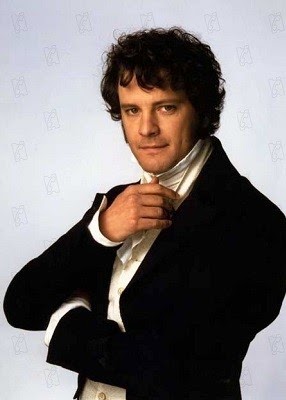
Colin Firth as Fitzwilliam Darcy
This week, a friend directed my attention to an article entitled You've Found A Real Man, another piece of tedious clickbait designed to mock today’s supposed lack of gentlemanliness. While I concur that a dearth of chivalry has become problematic in America, we’ve achieved a point where the natural pushback has become as bad as the problem it purportedly redresses. This listicle actually lowers the tone of discourse, in ways thinking people should find shocking.

The article, published without a byline, is problematic in itself. Advice includes such unbridled bullshit as:
  • He can balance both swag and sophistication and a career and a personal life without too many proverbial exclamation points
  • He reads actual books and newspapers and holds opinions on everything from scotch pairings to world events all the while understanding that not all of his opinions are facts and that not everyone has to agree with him
  • He has a career, a hobby, a family of close friends and a favorite way to have his steak prepared and he isn't the least bit intimidated when the woman in front of him shares these qualities
In the abstract, I don’t dispute any of these principles. We’d all love that kind of time, information, and worldliness. Self-improvement has been a lifelong cardinal value for me, one I wish more men—hell, more people—shared. The lack of intimidation before strong women is admirable. Observed in a vacuum, these perfectly praiseworthy traits redound warmly to anybody who pursues them.

Clark Gable as Rhett Butler
But consider what “swag and sophistication and a career and a personal life” implies. It requires “real men” to have enough time and money to invest in a diverse life that’s somehow both self-interested and other-centered. This model of leisurely gentlemanliness, what we might call the “Mr. Darcy Paradigm,” assumes real men have income without work commitments, glamor without time constraints, and employment completely segregated from personal time.

Well, but Jane Austen’s Mr. Darcy inherited his money. That model of gentlemanliness reflects an essentially aristocratic social structure, separating control of wealth from creation of value. Certainly we have that in America today, but not every woman can date some Manhattan hedge-fund manager. Though aggregate American wealth now exceeds what we had before the 2008 collapse, but if you disaggregate the super-rich, ordinary Americans are hurting.

Set that aside, though. Return to this listicle’s opening chapter. Reread the sentence that states: "every man and woman on the planet should be made to watch ‘Gone With The Wind’ at least twice, if only to teach men how to be men and women how to separate them from the boys.” Read it again. Now read it again. Go on. I’ll wait.

I haven’t seen Gone With the Wind recently. I cannot comment authoritatively upon the movie. Therefore, I must retreat into the book and ask: does this anonymous author mean the scene where Rhett mocks Scarlett’s callused hands as innately unladylike? The scene where he leaves her as recompense for her having changed from a lily-white flower of antebellum gentility? Or the scene where he punishes her constant manipulations by raping her—to her apparent approval?

That model of “gentlemanliness” is repulsive to me. Margaret Mitchell’s classic novel depicts a relationship predicated on constant power politics, jockeying for Machiavellian advantage, which divides winners from losers. Mitchell breaks the narrative at multiple points to propound how things used to be good when men were men, women were women, and white trash and slaves knew their place. But the world she describes is distinctly unsavory.

Marlon Brando as Stanley Kowalski—
the man you're actually likely to get
An ongoing New York Times series details how today’s employment situation has disproportionately impacted men. Though everyone makes do with less anymore, today’s conditions undermine accepted standards of manliness. As good-quality blue collar jobs become perpetually difficult to find, as more men embrace jobs once reserved for women and children, traditional heads of household retreat into surliness and resentment. The future looks less like Rhett Butler, more like Stanley Kowalski.

Which reminds me, there’s that rape theme again. Many women I know, victimized by men, would celebrate the retreat of certain aspects of traditional masculinity.

My opinion about these shame-mongering listicles is already documented. They only exist to heap shame upon the already disfranchised, to kick the weak for being weak. This author, too cowardly to sign his/her own name, belittles men on dating websites for insufficiently resembling matinee idols. But society owes itself the dignity of a real masculine identity that gives everybody, men and women alike, something to strive towards.


On a related subject:
The Ernest Hemingway Effect

Wednesday, June 11, 2014

Why I Can't Watch Big Bang Anymore

So when the new guy, “Nelson,” arrived at work wearing a Green Lantern t-shirt, I assumed maybe he just considered himself “in on the joke.” It wouldn’t be the last superhero logo shirt he wore. Like Leonard and Sheldon, Nelson obviously retained childlike wonder at the prospect of ordinary people using extraordinary powers in pursuit of common justice. I thought: maybe this guy and I could be friends.

The shine wore off that apple quickly. About my age, Nelson showed little interest in making male friends. Instead, his attention soon centered on one pretty Hispanic co-worker, whom we’ll call “Daniela.” Though he verbally protested that he had no romantic interest in her because she’s too young—and that’s true—Nelson’s muscularly intrusive attention became both unambiguous and disruptive. And it began wearing on Daniela.

Nelson would talk to her, which maybe sounds sweet, except he’d barge into conversations or shout over people’s heads to do so. Whenever the line stopped, instead of finding alternate work to remain occupied, he’d thrust himself into Daniela’s personal space, insisting on her attention, talking much too loud or singing along with Cool Disco-era love songs off the radio. Basically, he appeared to be attempting to wear her down.

The CBS television network recently took the unusual step of renewing The Big Bang Theory, the highest-rated sitcom since Seinfeld ended, for an eighth, ninth, and tenth season simultaneously, securing it a place on TV at least through 2017. Fans and TV professionals lionize this show for its broad reach and its popularization of fringe “nerd” culture. I’ve written four essays on how TBBT resonates with core human psychological forces.

But someone (I’ve forgotten who) recently asserted that TBBT is secretly creepy. The central relationship from the pilot episode, that between experimental physicist Leonard and aspiring actress Penny, begins with him forcing himself into her company. Penny’s initial, visible discomfort with Leonard’s affection gives way to acceptance; the seventh season ended with Penny accepting Leonard’s marriage proposal.

I rolled my eyes when first reading that opinion. Everybody knows it’s a sweet sitcom about goofy characters who lack social skills, just trying to fit in. Yeah, I thought that… until I saw somebody who apparently considers Leonard’s in-yer-face courtship technique a how-to guide. Nelson uses many of Leonard’s approaches, not least claiming to be Daniela’s friend to insinuate himself into her life, though anyone can read his intent.

Real life makes this dynamic un-funny really, really quickly

Without scriptwriters to ensure that Leonard’s surrogate is essentially harmless, and our stand-in Penny remains okay with his attention, the humor wears off the dynamic really quickly. Daniela clearly doesn’t want Nelson’s attention; when he’s thrusting himself into her space, monopolizing her time, she looks distinctly uncomfortable. Daniela’s reactions to Nelson’s behavior has progressed from bemused, to nervous, to recently looking out-and-out terrified.

Worse, Nelson remains doggedly immune to advice. When he first began mugging for Daniela, several of us warned him that she, and other women on the line, were flashing fear reactions. Nelson’s exaggerated behavior elicited giggles and laughter from Daniela. However, she never looked happy. Another co-worker warned: “They’re not laughing with you, they’re laughing at you.” But I’ve realized something far worse is afoot in Daniela’s reaction.

Many women who’ve been encultured to play beta roles to men often laugh when feeling threatened or intimidated. You’ll often see this in Spanish-speaking cultures, which have theatrically macho tendencies. Daniela frequently laughs at Nelson’s aggressive clowning, but it’s a tight-lipped laugh, her eyes wide rather than crinkly, her gaze carefully locked on him rather than throwing her head back heedlessly. Poor Daniela practically broadcasts fear signals, which Nelson ignores.

Early on, audiences accepted Leonard’s forceful behavior, and Penny’s visible retreat, because scriptwriters thoughtfully included Howard Wolowitz. Where Leonard appears merely clueless, Wolowitz’s early behavior looks actively threatening. But because he’s vanishingly small, Penny’s rejections essentially neuter Wolowitz’s menace. Notice that when Wolowitz meets Bernadette, his future wife, the writers soften Leonard’s behavior. Without a foil to alleviate our perceptions, Leonard’s initial comportment would look far less funny.

*sigh* I'll miss you, buddy
Nelson has made me aware how pervasive behavior white-collar types would consider “sexual harassment” is in blue-collar environments. Men touching women without consent, or looming into their space, is widespread. Though I’ve never seen anything overtly assaultive, Freudian behavior like tickling and poking is common. And management cannot crack down on one person without enforcing rules on everybody, which would turn time-consuming and disruptive very, very quickly.

Leonard looks harmless because writers carefully script his clueless flirtations, and ensemble characters offset his creepiness. Nelson must improvise, and nobody supports or deflects his behavior. Watching Nelson’s attempts to court a woman who’s completely uninterested, but fears flatly saying “no,” is like watching a slow-motion car wreck. Worse, he’s demonstrated why TBBT is secretly horrifying. And I can’t go back; what I’ve seen, I cannot unsee.

Tuesday, May 27, 2014

The Ernest Hemingway Effect

Michael Dale
So I was watching a news report about Elliot Rodger, the attributed Isla Vista shooter who rampaged around the UC Santa Barbara campus last week, attacking anybody he could find, but especially women. According to the LA Times, Rodger targeted “the hottest sorority of UCSB,” blaming them for his sexual inexperience and feelings of isolation. He apparently believed his sexual deprivation merited blood payback. Millions of frustrated virgins must’ve collectively slapped their foreheads.

Then, without apparent irony, the program switched to a testosterone supplement ad. You’ve seen the one: the Axiron ad starring a handsome middle-aged man, resembling a scruffier George Clooney, who swaggers into his living room to his wife and kids’ open adulation. “I always say ‘be the man with the plan,’” says model and part-time actor Michael Dale. “But with less energy, moodiness, and a low sex drive, I had to do something.”

Some years ago, doctors routinely treated women’s menopausal symptoms with massive hormonal supplements. But long-term exposure to these hormones causes women demonstrable harm: rates of breast and ovarian cancer, gallstones, dementia, and stroke track positively with lifetime exposure to estrogens. Growing bodies of evidence suggest that similar consequences follow long-term testosterone supplementation, including coronary disease, gynecomastia, and (fittingly enough) chronic impotence.

Not that low testosterone isn’t serious. Between two and four million American men suffer clinical hypogonadism, which shortens life expectancy and diminishes quality of life. But barely one in twenty men with diagnosed hypogonadism receive needed treatment. Pharmaceutical companies market testosterone supplements, erectile dysfunction drugs, and other male medications, not to men diagnosed with legitimate illnesses, but to men afraid their lives are insufficiently masculine.  Call it “the Ernest Hemingway effect.”

Ernest Hemingway and friends
Advertisers have actively peddled the impression that masculinity is measured externally. The Axiron voice-over narration establishes masculinity as briskness, gregariousness, and sexual insatiability. Put crudely, real men get some constantly. It’s questionable how completely media-savvy men internalize this message; but based on his writings, Elliot Rodger evidently did. When he couldn’t prove his masculinity through sexual conquest, he apparently considered violence the next best option.

This desire to prove masculinity is hardly new. Hemingway believed that manhood had little relationship to one’s genital orientation; he believed boys became men through action. Like Teddy Roosevelt before him, he constantly created new tests to refine his inner core. These included honor in war and triumph in hunting, but also chivalry toward women, charity for the disadvantaged, and intellectual refinement, embodied in his novels.

While Hemingway’s modern variation on classical Stoicism helped establish the Twentieth Century, it also assumed a years-long learning track. Smarter critics than me have noted that advancing media technologies have stunted consumers’ attention spans. Reading the papers takes too long, and the evening news comes on too rarely; we demand information, ideas, and entertainment right now, dammit. Wired magazine notes that people reading off screens seldom read anything to completion.

Thus, people like Elliot Rodger see images of Hemingway or Roosevelt on the savannah, and think they’re entitled to have others think them masculine. They see Hemingway bagging gazelles, or Roosevelt leading a cavalry charge, not as the culmination of a years-long personal odyssey, but as disconnected moments. Some men, feeling their lives lack requisite manfulness, think they can buy virility in pharmaceutical form. Others tragically mistake cause and effect.

Teddy Roosevelt
If Rodger’s self-penned diatribe is reliable, he felt oppressed because he remained a virgin at twenty-two. Screw you, Junior. I didn’t have my first serious relationship until twenty-five. There’s no evidence Franz Kafka ever had sex, and Isaac Newton—both a learned scientist and devout churchman—boasted in his eighties to have retained his virginity. History and experience show that here’s no correlation between sexual prowess and personal merit.

But Rodger grew up surrounded by imagery reassuring him that masculinity was an entitlement, not an accomplishment. When real life contradicted his media-given macho expectations, he couldn’t reconcile the conflict. Psychologists call this “cognitive dissonance.” Most adults learn to accept this discrepancy. Rodger located its source outside himself, which, in his deluded mind, justified sudden vengeance. He wanted back the illusions real life had stolen.

Elliot Rodger’s violence is clearly an outlier. His psychological struggle is not. Journalists, researchers, and other professionals have spilled much ink about modernity’s supposed manfulness deficit. Our lives today have more stuff, yet feel emptier, than ever before. And it’s impossible to separate that gap from our media-moderated lives. How much happier we’d be if we left our climate-controlled hermitages and just spoke to one another.

Monday, January 13, 2014

The "Everything's Okay" Gospel

Roy Page (with Sarah Horton), A Letter to Evan: An Average Dad's Journey of Discovery and Discernment Through Divorce

Oklahoma advertising executive Roy Page’s life shattered one year: Alzheimer’s took his father, his promising athlete son required invasive surgery that sidelined him from key games, and his marriage collapsed. Page’s sixteen-year-old son Evan got lost amid the catastrophes. So Page wrote Evan a letter, trying to bolster their relationship while resolving his own foundering life. That letter grew into this sadly self-serving Christian memoir.

I wanted to like this book. Authors have penned many thousands of pages about divorce and its family impacts. But most focus on small children; nearly-grown youths get short shrift. Page could’ve closed a glaring gap in this field, if he’d opened himself to his own shortcomings. However, he squanders the opportunity, spinning a mix of personal anecdotes, capped by gnomic morals that exonerate himself and trivialize what’s really happening.

Page essentially fails the Dave Test. Reverend Frederick Schmidt invented the Dave Test when his accepted seminarian bromides didn’t comfort his brother Dave through terminal brain cancer. Schmidt submits all Christian axioms to ten questions; Page fumbles, by my count, eight. These include, but aren’t limited to: “Can I avoid using stained-glass language?” “Can I give up my broken gods?” And most fundamentally: “Can I say, ‘Life sucks’?”

No, Page cannot say that. He cannot just be there with Evan, hurting. Instead, he performs appalling verbal gymnastics to justify why his divorce was inevitable, but not his fault; why prolonged physical absence doesn’t make him less present; why his time-consuming business demands were acceptable from a Christian man with a family. In Page’s telling, only vague abstractions are ever his fault. Cruddy circumstances just happen to him.

After dribbling out details for chapters and chapters, Page finally divulges the narrative of his divorce around the two-thirds mark. It’s the familiar story from his economic bracket: he ran the business, she ran the house, and their worlds scarcely intersected. Eventually, separate lives, lived at cross-purposes, ended their relationship long before courts vacated their marriage. They became two strangers, linked by their house and kids.

Except Page’s telling stays really, really abstract. In ten pages, he never says anything more specific than “The more passive I became, the more resentful she was of the burden of responsibility she carried.” Many marriages survive passivity and resentment. Why not his? People who know Page have posted counternarratives online, which aren’t mine to repeat. Briefly, people use vague, noun-free sentences to deflect banalities like blame or remorse.

This tone permeates Page’s entire memoir. Life’s blessings, like a successful business, resourceful kids, and community standing, Page treats in detail, praising God and his own ingenuity. Setbacks, like his twenty-year marriage’s collapse, remain fuzzy and accidental. Page tries to model his fathering skills on God’s Fatherhood, but in ways that don’t require him to actually be physically present for his wife and children.

Notably, while Page extols churchgoing and Christianity as family ethics, I counted only two Scriptural citations in a 200-page book. He quotes Jack Canfield, Babe Ruth, and Bill “Falafel” O’Reilly far more than God’s Word. For this white, upper-middle-class professional, Christianity is about what you get, not what you give. Page compares himself to Job, but only for the earthly goods Job lost and regained, not the pained debate.

Jack Canfield and BillO become what Schmidt calls “broken gods,” those man-made placebos that fail to sustain in dark hours. Instead of purging accumulated artificial reassurances, Page doubles down on the status quo, reassuring himself, and Evan, that everything’s okay, God’s in control, and weekends spent hunting and fishing make us family. Given the chance to make a new life with his son, Page opts to retrench his existing habits.

Instead of calling believers to new life, Page’s gospel ratifies this life, and this world’s standards. It requires no taking stock, no repentance, no change. It lets Page continue his jet-fueled former life unhindered, provided he darkens the church door often and uses Christian lingo. For Page, Christianity is a shield, an appurtenance he uses when need arises, when he, like everybody, clearly needs complete resurrection from this world’s ways.

Roy Page strikes me as a man who believes sincerely without examining deeply. He hasn’t purged worldly influences from his moral framework, and therefore justifies himself without needing more than cosmetic changes. Page and Reverend Schmidt could profitably have long, deep conversations, because Page is still a work in progress. He just doesn’t realize his own need, because his worldly privilege has shielded him from life’s harsher buffets. For now.

Friday, September 27, 2013

What Makes Modern Men Manful?

WARNING: this essay contains mild language and themes some readers may find disturbing.

I wonder how seriously to take the recent Unofficial Goldman Sachs Guide to Being a Man. Seriously, seventy-nine pointers? Many are good, like “If you perspire, wear a damn undershirt.” But even God stopped at ten. It’s too long, esoteric, and inclusive to memorize, much less actually use. Yet it reminds us of something many men forget: being a man is something we do, a choice we make daily.

Men, overall, jealously guard roles of manhood, desperate to ensure everyone recognizes their innate, unshakeable masculinity. While some men may overtly embrace feminine roles or feminine traits, these men remain outliers, and often get mocked by other men for their lack of manfulness, unless they find rapid success in whatever feminine endeavor they pursue. Despite years of progress, modern boys still aspire to become Rambo or John Wayne.

But we don’t necessarily have recorded standards of manfulness anymore. Societies once catalogued what traits constituted manfulness, training youth in these rules, ensuring they knew how to follow manly standards, and when to disregard them. Codifying manful rules was something of a pastime, and every dignitary from the Roman poet Ovid to George Washington compiled lists of how to remain manful in changing times.

Somewhere, those lists got shanghaied. “Virtue,” from the Latin for “masculinity,” once implied highly male standards of conduct, including justice, valor, and honesty. But say “virtue” now, and people imagine Victorian schoolmarms instructing girls how to sit in skirts. Lists of standards become inflexible laws, and inflexible laws become sanctimonious limits on manfulness. The solution becomes an entirely new problem.

Whether fairly or not, former standards of manfulness are now perceived as feminizing. And this leaves us with an important new definition: masculinity is whatever femininity is not. We define men’s characteristics oppositionally. I remember, in third grade, being told by a peer not to stand with one foot resting on a curb, simply because a girl nearby was doing the same. Thus we become men only by what feminine influences we reject.

This creates entirely new problems in today’s milieu, where women are welcome into male domains in ways men aren’t welcome into female domains. Women have embraced many stereotypically male jobs and hobbies. When Theresa Vail, Miss Kansas 2013, talked about enjoying bowhunting, and didn’t conceal her tattoos during the swimsuit competition, she received thunderous male applause nationwide this month.

Men cannot embrace feminine activities this way. When my father used his military retirement benefits to enroll in nursing school, he literally couldn’t find any nursing-related goods for men. Cards and souvenirs invariably used female pronouns, and he had to purchase his work clothes at military uniform stores. Comedians like Ben Stiller and Jimmy Carr openly belittle men who become nurses, because obviously, only spineless men and “faggots” do a woman’s job.

As women pursue vocations formerly exclusively male, men simply fall back. Hard science and math once belonged exclusively to men, because society believed women lacked the head for difficult empirical research. But when women proved both capable and willing, men ceded the domain. Something similar happened in classical music: search any conservatory, and you’ll find preponderantly women. Flute and violin, once entirely male instruments, have almost no male students today. Men are missing from modern science and humanities programs.

The Church of England didn’t formally ordain women priests until 1994. But within ten years, British seminaries were graduating more women than men. Though men still control the hierarchy, those men are rapidly aging, and fewer male candidates arise to replace them. Fearful of being called feminine, men who feel drawn to religion fall back on increasingly conservative denominations, which only reinforce adversarial gender roles, worsening the problem.

This adversarial attitude turned ugly this year when Robin Thicke’s repellent single “Blurred Lines” spent the entire summer at #1 on the Billboard charts. This disgusting recitation of sexual dominance, backed with a video that blatantly treats women as transport for breasts, demonstrates the nasty consequences of today’s oppositional manhood. If men must squelch their own femininity, it’s a short, lazy step to squelching and destroying actual women.

Goldman Sachs has joined a panoply of other organizations that have attempted to create modern masculine codes, including Miller Beer, Maxim magazine, and Glenn Beck. These lists have failed to take hold, probably because audiences recognized the listmakers’ self-serving goals. Yet people keep making such lists, because we recognize an unmet need. Some magnanimous philosopher needs to commence the tough work of writing a man code for the modern age.

Wednesday, December 12, 2012

Passion for the New Bachelorhood

Joe Keller, Single Effort: How to Live Smarter, Date Better, and Be Awesomely Happy

Two generations ago, feminists rebelled against the idea that an unmarried woman must necessarily be merely waiting for a husband. Now the tables have turned: we accept women who remain single, but look askance at male bachelors. Joe Keller survived a painful midlife divorce and returned to bachelorhood, only to discover that, like millions of single men, he lacked core survival skills. So he set about to rectify this lack.

I wish more of what Keller writes in this book qualified as common sense. We’d all like to live in a clean house that celebrates our interests while looking inviting to women. We all think men know how to meet and court women. Yet common sense and experience reveal that bachelor living skills, which look so obvious in romantic comedies, are very rare on the ground. Keller helps close that gap by combining careful research with hard-won experience.

The title comes, obviously, from the effort of living single in a world geared to couples. But it also describes Keller’s belief that we can make one effort fill two goals. Keeping your house isn’t just about having a presentable place to sleep; it’s a way to maintain a relationship with your kids, and a cue to dates about your personal qualities. Self-improvement efforts, such as fitness classes, can double as low-pressure opportunities to meet women.

Some of Keller’s advice is specific to divorcés: How to divide your marital possessions. How to make not just a living space, but a life worth living, at an age when you didn’t expect such upheaval. How to decorate a house so your kids feel at home, but your date doesn’t think you’re still hung up on your marriage. Some of this isn’t divorce-specific, though, considering that many engagements and courtships can outlast modern marriages.

Other advice applies to men at any relationship stage, and even to unmarried women. What do you need to make a complete kitchen? How do you keep a clean house on a single person’s tight time schedule—and when do you consider it a good investment to hire a professional cleaner? What household appurtenances are worth the money, and which will turn into mere household clutter? When the time comes, where can you meet a potential mate?

Joe Keller
Keller provides welcome guidance on living skills such as how to manage a kitchen. Too many bachelors live on carb-rich takeout, which shows on their waists, and their marriage prospects. Keller’s eminently readable, jargon-free guide to kitchen practice includes how to handle common ingredients, follow simple recipes, and pair food with wine. Your beltline and billfold will thank you for the knowledge. So will your date.

Speaking of dates, Keller dedicates the second half of his book to the presumption that, even if you’re single now, you don’t expect that for the rest of your life. Midlife courtship is categorically different than college romance, and many of the standards, like where to meet women and how to comport yourself, have changed. Dating is its own unique skill set, especially when you and she may both have kids, and Keller breaks it down into manageable, bite-sized nuggets.

For instance, many men see courtship as external. We don’t take the effort to make ourselves marriageable material. How we groom and dress make more of a difference than we care to admit. Likewise, bars and other meat markets make lousy places to meet committed spouses. Keller provides useful, nuts-and-bolts suggestions of ways to go where the women are, so you can meet and get to know them on favorable terms.

Perhaps Keller’s most important advice is not about dating, or housekeeping, or surviving the divorce. Underlying nearly every piece of advice, Keller wants to make sure you remain willing to live with yourself. You will never keep peace with your ex, maintain a relationship with your kids, build a life and career worth maintaining, and meet your next possible spouse, unless you first can stand your own company. That’s harder than it sounds, but Keller is there to help you out.

Many midlife bachelors have a passive attitude to being single. After all, our parents probably expected us to meet our spouses in school or early in our work lives; they never instilled the skills for late life singlehood. Keller provides the guidance we wish we’d had earlier on how to remain active in our own bachelorhood. Don’t wait for a wife to take control of your life. Be the man worthy of such a wife, now.