Showing posts with label theatre. Show all posts

Tuesday, March 26, 2024

Radium, Capitalism, and America

1001 Books To Read Before Your Kindle Battery Dies, Part 117
Kate Moore, The Radium Girls: The Dark Story of America's Shining Women, and D.W. Gregory, Radium Girls

In the early 20th Century, American industry was all a-flutter over this new-fangled mineral the Curies discovered in France: radium. Rare and expensive, but highly charged, radium had early commercial uses in patent medicines, cancer treatments, and even cosmetics. But it had its most lucrative boom in luminous paint. Radium paint appeared in wristwatches, dashboard instrument dials, and other technical processes. The women who hand-painted those dials were paid well.

When British author Kate Moore started reading about the radium fad, which happened mostly between the World Wars, she discovered that nearly everything published dealt with the science and the scientists. Nobody ever compiled much about the dial-painters, who were almost exclusively women in their teens and twenties. But the dial-painters paid the highest price for industrial radium, which caused sarcomas, osteoporosis, and a revolting disorder called Radium Jaw.

So Moore decided to close the gap. She pored through countless documents, many of which had remained in storage for decades or never seen outside the family, to reconstruct the lives of blue-collar women frequently overlooked by mainstream historians. Moore reveals a handful of young women whose modest ambitions included the desire to become wives, mothers, artists, or entrepreneurs. History had other plans, turning them into spokespeople for the changing times.

Radium dial-painters in Orange, New Jersey, and Ottawa, Illinois, used techniques first pioneered in painting expensive bone china. The painters mostly started work around age fourteen or fifteen; Moore says one started painting aged only eleven. They used camel-hair brushes, and to accurately paint small numerals, they got their brushes to a fine point by putting the bristles in their mouths. Thus they ingested microscopic amounts of radium.

But saying “microscopic amounts” does the poisoning an injustice. Radium bonded with calcium in their bones, where it emitted constant radiation with a half-life beyond a millennium. Years after leaving their jobs, many women began experiencing the first common symptom: tooth decay. But their teeth were only the external symptom. Their entire lower jaws, exposed directly to radium, were rotting out of their mouths. Many witnessed their mouths crumble.

Though the women had were fortunate to find doctors who believed them, and helped them seek treatment, the medical establishment refused to believe radium was dangerous. Not just medicine, either—their employers, backed with armies of attorneys, stonewalled the legal system to prevent having to accept responsibility for their former workers. Using legal maneuvers that sound suspiciously familiar a century later, they abused the courts to remain rich and untouchable.

The companies, U.S. Radium Corporation and the Radium Dial Company, shared a common technique: deny and stall the proceedings until the women died, almost all painfully and ignominiously. If they outlived the women, the cases lacked a plaintiff, and culpability went away. Thus these companies pioneered the literal process of privileging their profits over workers’ lives, an approach that remains commonplace today.
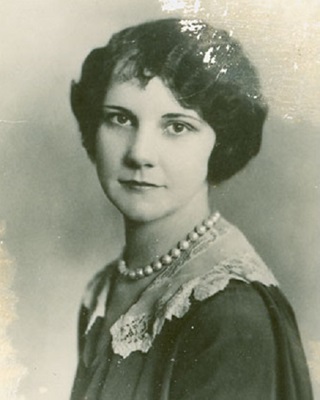
Grace Fryer, unofficial captain
of the New Jersey radium girls

Dial-painters, who were again almost entirely women, began working as teenagers around 1917; nobody was held legally responsible for their suffering and death until 1938. The decades-long slog through medical and legal delays presaged the hurdles faced by many working-class Americans in subsequent decades, suffering injuries caused by silica, heavy metals, hydrocarbons, and other pollutants. The dial-painters simply came first, thus paving the way for others.

Worse, industrial stonewalling techniques remain commonplace today. Though the dial-painters’ ordeal led to America instituting worker safety regulations, many companies now simply move manufacturing to unregulated economies in Latin America or the Pacific Rim. There, they repeat the pattern of hiring teenagers with slim, lithe fingers, working them to capacity, then denying responsibility for their workplace injuries, which sometimes manifest only years later.

Playwright D.W. Gregory recounts the New Jersey dial-painters, whose suffering came first, and whose legal struggles captivated an American public basking in the glow of that other innovation, the wire service. Gregory presents a snappy, fast-paced memory play, depicting one painter, Grace Fryer, and her struggle to receive her day in court. Backed by volunteers and her fellow dial-painters, Grace militarizes national media to get public opinion on her side.

Despite what you’d expect, Gregory’s play was produced fifteen years before Moore’s book appeared; Moore cites Gregory in her bibliography. Gregory’s version is both quicker and more intimate, eschewing the technical details and knowledge Moore lavishes. One could read these as two versions of the same story: one personal and close, the other inclusive and exhaustive. They’re two ways of looking at an event that changed America’s relationship with the moneyed class.

Saturday, November 19, 2022

The Role of Art in a Divided Society

A still from Robert Wise and Jerome Robbins’ 1961 film of West Side Story

Sometime in the 1990s, I’ve forgotten exactly when, my sister’s high school theater program staged the classic musical West Side Story. Because of course they did, it’s standard theatrical repertoire. The only problem was, her school (she and I attended different high schools) was overwhelmingly White. The performance of urban tension between Hispanic and Irish communities, was played by farmers’ kids of mainly German and Czech heritage.

This meant, as you’d expect, brownface. Students playing the Puerto Rican Sharks gang dyed their hair, darkened their skin, and affected Latino accents. The White Jets, meanwhile, learned a stereotyped “New Yawk” accent and got ducktail haircuts. These students, who were entirely White and lived in Nebraska for most or all of their lives, immersed themselves in playing ethnically mixed East Coast characters, not always in the most sensitive ways.

Around twenty-five years later, my sister recalls that performance with a visible cringe. Troweling on makeup to play ethnically clichéd characters, which seemed broadly acceptable then, is patently unacceptable today. Nobody, except a few high-profile heel-draggers like Megyn Kelly, would pretend otherwise. But without the willingness to play characters who didn’t resemble themselves, I contend, these students would’ve deprived themselves, and their community, of something important.

West Side Story remains important theater, seventy-five years after its debut, because it addresses an important American cultural problem. The Jets and Sharks, defined by their race, attend the same high school and walk the same streets. But they never communicate, because they believe long-held bigoted myths about one another. When Tony and Maria dare fall in love, it transgresses one of America’s most cherished internal borders, the color line.

I’ve written before that teaching youth the humanities matters, because through art and literature, students see other people as fully dimensional human beings, with thoughts, feelings and dreams equal to their own. West Side Story reminds us that anybody, raised on such myths, could wind up believing them, and embracing the violence such division brings. Racism, this play reminds us, isn’t inevitable; it’s a choice we make, and keep making.

Arguably, that’s why White actors playing Brown characters is pretty specious, usually. If my sister’s high school had sufficient Hispanic actors to play the Sharks, they should’ve cast accordingly. No matter how sympathetically those student actors attempted to portray characters who were culturally or racially different from themselves, they’ll inevitably resort to stereotypes, sometimes hurtful ones, of people groups they’ve never actually met.

A still from Stephen Spielberg’s 2021 film of West Side Story

But simultaneously, if the school refused to perform this play, nobody would’ve had the opportunity to receive its message. Not the student actors, who needed to stretch beyond their limited small-town experience, nor the audience who, in Western Nebraska, seldom get to witness world-class art. Beyond the high school, getting to see top-tier theater means traveling to Omaha or Denver, and most people can’t spare that much money or time.

This elicits the question: is the message important enough to accept a less-than-optimum messengers? I don’t want to be mistaken for advocating brownface; the specific event I’m remembering belongs to its own time and place, and should remain there. But the event gave students and the community an opportunity to see people whose lives and experiences were wildly different from anything experienced locally. Even if those “people” were actors.

Questions like this will become more important in coming years. In 1957, when West Side Story debuted, Manhattan’s Upper West Side was predominantly working-class, racially mixed, and volatile. Within five years, the combined forces of gentrification and White Flight changed local demographics. By the 1980s, the Upper West Side was heavily populated with yuppies, while the ethnic communities celebrated onstage had been forced into dwindling enclaves.

The White small town where my sister attended high school has experienced something similar: there are now considerably more Hispanic residents, and even a few Black residents. Because the Hispanic residents are mostly agricultural workers, though, they seldom mix substantially with the community. Interactions with what locals call “Mexicans” happen in public places, like grocery stores; the actual community members seldom get to know one another beyond nodding hello.

Artistic expressions like West Side Story will matter more soon, as American society becomes more segregated, more hostile, more like the Sharks and Jets. Opportunities to see “the Other” as equally human to ourselves might make the difference between peace and violence. And sadly, not everybody will have access to racially representative casting choices. Cross-racial casting isn’t ideal, but it’s better than denying audiences the art they need to see.

Monday, August 22, 2022

Live Theater and the Yearning For Revolution

Christopher Barksdale as the Emcee in Musical Theater
Heritage's production of Cabaret (source)

I just got back from a regional production of Kander and Ebb’s Cabaret. Not being a particular fan of stage musicals, this is an outlier for me; but Cabaret’s incisive themes and jazz-influenced score remain timely in ways that many other musicals just don’t. Especially now, when forces of inclusion battle with small-F fascism for control of America, this play’s commentary on descent into violent intolerance remains painfully current.

For anyone unfamiliar, Cabaret features an American writer who travels to Weimar Germany to enjoy the libertine bacchanalia between the wars. He has a passionate but possibly loveless affair with Sally Bowles, a dancer at the Kit-Kat Club, a seedy jazz den and probable brothel. But while Sally desperately tries to hold her apolitical, shameless life, Berlin descends into reactionary backlash around them, and the Nazis emerge.

Producers at Musical Theater Heritage, a middle-range professional venue inside a Kansas City shopping mall, staged their performance to spotlight the contemporary American parallels. Weimar Germany was arguably the most permissive society that’s ever existed for queer people, had a reasonably relaxed attitude about abortion, and mostly let people be. But beneath this surface, ordinary resentments fermented into outrage and bigotry.

Leaving the theater, I experienced conflicting emotions. I appreciated the company’s willingness to engage with current themes in a 56-year-old play. Casting a Black actor as the amoral Emcee, the play’s Greek Chorus role, against a racially mixed ensemble of Kit-Kat Girls, was a good modernizing touch. In Musical Theater Heritage’s capable hands, Cabaret became an insightful commentary on the American battle between libertinism and paranoia.

However, I also realize the audience is deeply self-selecting. People who attend theater run generally progressive, and the audience is narrowed further by the admission price: with taxes and fees, this show ran $65 per seat, a luxurious indulgence for working-class audiences like me. In attempting to engage today’s political themes, the producers strive to induce revolutionary impulses in already committed audiences like… well, honestly, like me.

Julie Pope as Sally Bowles in Musical Theater
Heritage's production of Cabaret (source)

Film critic Lindsay Ellis has noted elsewhere that theater people often consider ourselves revolutionaries. We want to engage our society’s moral center and provoke change, which we attempt by showing humans going through outrageous scenarios. In Cabaret, young writer Clifford Bradshaw’s political engagement contrasts with Sally Bowles’ refusal to believe anything is changing. Those who care, pay the price of watching those they love living to be tortured and murdered.

However, as Ellis rightly asserts, in a culture characterized by passive entertainments, theater is a poor channel for revolution. Not because it doesn’t engage the audience’s sentiments; it definitely does that. But for an audience to transport themselves to a theater building, buy tickets, and sit down for engagement with the show, that audience already has a level of investment. Preaching revolution to that audience is preaching to the converted.

Contemporary American society provides constant entertainment. One can watch television, stream movies, and download books without getting out of bed. These entertainments require little moral investment from audiences: much as I enjoyed Sandman, I didn’t pour my emotional weight into the experience. I watched the show in bed from my tablet, lying flat on my back, in my jammies. The experience was smart and complex, but also very, very passive.

Cabaret required me to already care enough to buy tickets, get dressed, and travel into Kansas City. In other words, it required me to already care. Surrounded by low-cost streaming services that reward me for not caring, who can blame most people— tired, underpaid, and constantly surrounded by images of widespread American injustice— for not wanting to care? Honestly, most of us don’t have much to show for caring anyway.

In Shakespeare’s day, audiences paid a penny to crowd around a sweaty, overpopulated center pit with no air conditioning or restrooms. In those days, Hamlet and King Lear were popular entertainment, consumed as eagerly as television. No wonder the Jacobites invented the concept of “theater etiquette,” of staring silently forward and applauding only at designated intervals. Because back then, attending the theater really could spur revolutionary impulses among the unwashed.

But today, advancing technology has invented new ways to encourage passivity. Plays written for the unlettered crowds now seem impossibly dense. Even shows like Cabaret, with its message that “it really could happen here,” require an investment audiences don’t have to make unless they already care. And why should they care? Amid our constant push-pull of injustice against entertainment, I can’t blame most people from avoiding that depth of feeling.

Saturday, June 4, 2022

A Tale of Greek Love and Greek Fire

Kae Tempest, Paradise: a New Version of Sophocles' Philoctetes

On a nameless island in the remotest sea, Philoctetes dwells marooned. He sleeps in a cave, hunts birds for food, and laments injustices done to him. One day, General Odysseus arrives with a promising young lieutenant, determined to fulfill a prophecy that requires Philoctetes return to the front. Unfortunately, Philoctetes doesn’t believe in the unending war anymore. Odysseus and Neoptolemus must decide how far they’ll go to get the old veteran back into the fight.

The Greek playwright Sophocles is best known for his Oedipus plays, staples of high school and undergraduate literature courses. His play Philoctetes isn’t as famous. Perhaps that’s because, unlike the Oedipus plays, it presents humans as passengers in the story, which commences with a prophecy, and ends with the demigod Herakles demanding a resolution. Or maybe because, unlike Sophocles’ Oedipus, his Odysseus and Philoctetes are one-dimensional characters arguing the age-old debate between glory and individuality.

British performance poet and White rapper Kae Tempest updates Sophocles’ play, resetting it in modern war and removing the literal deus ex machina ending. Tempest also gives these characters more to do, especially the Greek chorus behind the men. These characters and their modern setting, pitched against a war that’d dragged on literally for decades, bespeak the weariness of a generation which has grown up with interminable war in distant lands and poverty at home.

Philoctetes was once among Greece’s greatest warriors. (The homeland in Tempest’s retelling is studiously vague.) But a festering injury now leaves him largely crippled, and as the injury never heals, he emits an offensive odor; nobody can stand to be around him. Sometimes he wants to return to civilization, and laments how his sons have reached adulthood in his absence. But he no longer trusts the homeland he left behind, and almost loves his exile.

Odysseus, sometimes mistaken for noble and valiant, is the consummate general. His only ambition is victory, and he’ll lie, cheat, and steal to achieve that. This isn’t the Odysseus you read in grade school. Odysseus abandoned Philoctetes ten years ago when the great veteran’s wound became too noxious; now, knowing that only Philoctetes and his bow can secure victory, he’s come to reclaim what he previously abandoned. Unfortunately for Odysseus, Philoctetes isn’t ready to forgive.

Kae Tempest

Between Philoctetes and Odysseus stands Neoptolemus. Son of the late, great Achilles, Neoptolemus was bred for war, but has little stomach for it. Unlike Odysseus, Neoptolemus has a conscience, and hates being ordered to lie. But he does what he’s told, and almost succeeds. Throughout the play, Neoptolemus arbitrates between Philoctetes’ strong martial backbone, and Odysseus’ willingness to do whatever it takes to win. He never quite decides how to reconcile the two conflicting forces.

Tempest keeps the foreground story mostly intact, though updated for the War On Terror generation. Their contribution to the experience is the Greek chorus behind the men. In the original, the chorus mainly comments upon the action, providing clarification and moral guidance where it’s needed. Tempest transforms the chorus into a collection of women living on the island, whose efforts to survive the war contrast with the men’s deliberate attempts to make the war worse.

Some of Tempest’s women were born here; others are refugees, driftwood washed ashore after something terrible happened elsewhere. While Philoctetes mentally rehashes the war and laments the injustices he’s endured, the women have built a functioning society out of male civilization’s discards. They regard him with a range of attitudes, from contempt to pity to misplaced romanticism. We, the audience, aren’t sure whether he can even see them, except when it suits his perverse needs.

The resulting hybrid both is, and isn’t, Sophocles’ original Greek tragedy. Because Tempest, unlike Sophocles, believes humans have something resembling free will, Tempest changes the ending, condemning the characters to repeat their situation infinitely. This interpretation is pessimistic, but not wrong, given the current climate. (This play debuted approximately as America was finally withdrawing from Afghanistan.) No longer do spiteful gods define human choices in theatrical tragedy; humankind is terrible enough without questionable divine intervention.

Tempest’s play premiered in 2021 to mixed reviews. Some critics liked how Tempest handled the Greek characters, but felt confounded by the chorus; others had the opposite reaction. This was heightened because all parts, male and female, were played by women. But I think this misses the point: true tragedies resolve not in death, which is optional, but in disappointment, which is eternal. We humans are as small and regrettable as the gods we worship.

Monday, October 18, 2021

Further Thoughts on Community Arts

This post is a follow-up to In Praise of Community Arts
My promo photo from the
local community theatre

“Hey, Kevin,” Brad said, sticking his head in the door of my office. “I saw you in the show on Friday. I didn’t know you were an actor!”

“Thanks,” I said back with a smile, leaning back in my chair. “I thought you knew that was why I couldn’t have a beer that afternoon.”

“I guess I just didn’t put two and two together until I saw your name in the program. We go to the community theatre from time to time, but we usually don’t know anybody in the show.”

When I worked in the field, my coworkers often knew I was an amateur actor. They understood that I couldn’t stay late or pull overtime because I had a rehearsal or show tonight, and had people depending on me to be there. But they also never attended the show; they begged off, saying they couldn’t afford tickets (theatre is admittedly not cheap) or that they had family responsibilities. They knew I acted, they just never saw me do it.

Thornton Wilder’s Our Town was my first performance since I got promoted to office work earlier this year. It also marks the first time any co-workers have recognized me onstage. It makes me conscious of my own relationship with actors and performances. Somebody who knows me from work, knows that I frequently cuss, have a precarious relationship with deadlines, and put my feet on the desk while I think. How do they respond to me acting?

Dr. Djoymi Baker, professor of Cinema Studies at the University of Melbourne, has written that actors who become associated with a particular role, become a sort of “intertext,” an external commentary upon their own work. She specifically cites actors from Star Trek appearing in non-franchise roles: Bill Shatner in Boston Legal, or George Takei and Nichelle Nichols in Heroes. On some level, Dr. Baker writes, actors never cease their most famous roles.

What happens, though, when an actor’s most famous “role” isn’t performance? In Our Town, our central characters, George Gibbs and Emily Webb, were played by a married couple, a dispatch operator for a local haulage company and his stay-at-home wife. Most actors are students or skilled professionals, including local doctors and technicians. As you’d expect, the local university is overrepresented, including both students and faculty.

Jeff Ensz, left, as George Bailey, and me as Clarence Odbody, in
Kearney Community Theatre's 2017 production of It's a Wonderful Life

Everyone involved in community theatre, both onstage and backstage, has another local profile. When a famous TV actor appears in a play or movie—when, say Doctor Who’s David Tennant and Star Trek’s Patrick Stewart appeared together in Hamlet—they carry other acting roles into their current position. But when we amateurs appear onstage, the roles we carry reflect our outside responsibilities: doctor, lawyer, student, carpenter.

Further, as anybody who’s ever done community theatre knows, the companies are often in-groupish and clubby. A small handful of participants generally get lead roles and artistic direction credits. They might become locally famous, but they never stop being, say, a highly respected philosophy professor or radiologist. (Let’s just say.) They always have this duality, this contrast between their daily selves and their current onstage performance.

Experience tells me this goes both ways. Almost four years ago, when I still worked in the field, my company had a frequently contentious relationship with a client, a local dentistry firm. The company and the client argued frequently, and lawyers got involved. Then, late in the contract, I got assigned to the job. Tensions diminished almost immediately as several members of the client group recognized me from a recent performance of It’s a Wonderful Life.

I’d become a genuine local celebrity.

The term parasocial relationship has become common in internet parlance when audiences have deep personal affinity for public figures—YouTube celebrities and Instagram “influencers,” for instance. But community arts brings this home. We have parasocial relationships with community actors and directors, local gallery artists, pub musicians. And we have literal social relationships with these people through their day jobs and community involvements.

We local celebrities (ahem) also become what Dr. Baker calls “intertexts.” Except, rather than commenting on other acting roles, we comment upon social roles: jobs, families, congregations, and spending habits. When Brad stuck his head into my office, he was speaking to Kevin Nenstiel, apprentice proposal writer. But he was also talking to Simon Stimson, the passionate but drunken choir director at Grovers Corners Congregational Church.

When people see me on stage, they see my character, but they also see me. They’re conscious that the events portrayed are scripted, controlled, directed. Yes, they’ve looked at me and seen Simon Stimson, Clarence Odbody, Captain Lesgate, or Nathan Radley. But they’ve also seen me, and because of that, they’ve seen themselves. The relationship is difficult, nuanced, and strange. I haven’t figured it all out yet. But by golly, I love learning about it.

Monday, October 11, 2021

In Praise of Community Arts

Cast photo from Kearney Community Theatre's production of Our Town.
That's me, center back, in the black porkpie hat. Photo by Judy Rozema.

I spent much of the Kearney Community Theatre’s recent production of Thornton Wilder’s Our Town staring at David Rozema’s backside. Because the character I played, Simon Stimson, is dead throughout Act III, I spent the entire act frozen, head forward, doing all my acting from the neck up. While David, as the Stage Manager, explained the scene to the audience with choric ineluctability, I had literally nothing to see except his dark-suited back and posterior.

My family has a long history of getting involved in local and community-based arts. Moving around throughout my childhood as a military household, we never stayed in any one place long enough to put down roots. However, my family’s commitment to the arts always made them leaders, even if only temporarily. My parents would join the church choir, and a year later, would be directing it. I’d join church theatre; they’d be directing that, too.

Yet even as they took point in local (usually church-based) art, my parents gave me, let’s say, conflicting values. As important as song was in worship, for instance, they pooh-poohed the value of concerts. Why pay exorbitant prices and travel across town for somebody’s curtain time, they asked, when we already have the CD? Same for theatre: movies are cheaper and more convenient. And by “movies,” I mean we waited for the VHS to drop.

Thus I reached adulthood with lopsided information: I’d learned the rudiments of art, music, and theatre as actions, but remained blissfully unaware of processes. That is, I could act and write relatively well, and showed promise at drawing or painting, but I didn’t understand how skillful people with bure promise translated those skills into careers. A vast gulf existed in my head between practicing the pure skills, and getting that lucrative publishing or recording contract.

Don’t misunderstand me: my parents didn’t deliberately mislead me about art. As an adult, I realize that attending concerts, gallery shows, and theatre, involved the logistics of finding our way around cities that they didn’t know very well, because we moved so often. Because neighborhood congregations are small and intimate, there’s a level of personal closeness that one can’t match in a massive midtown proscenium. My folks did art, essentially, for their friends and neighbors.

Your humble blogger as Simon Stimson in Our Town. Photo by Corbey Dorsey.

I’ve long considered myself an introvert, given my preference for solitude, and my tendency to gather information before I speak. But recently, I’ve come to doubt that. My parents remember me as a gregarious child, quick-witted, eager to entertain others. Somewhere around third grade, though, I shifted. My clearest memory of third grade is getting discouraged trying to fit into my Cub Scout troop. I think that’s maybe about the age when I burned out.

The realization that I’m maybe not an introvert, but rather a discouraged extrovert, an affable team player who simply got tired of trying, explains why I’ve always joined community arts organizations. I’ve done theatre through churches, schools, and community theatre companies. Despite my limited musical ability, I’ve joined ensembles and given my best. Even my writing, the least intimate art since you’re seldom there when the audience reads it, was written to share with others.

The least productive times throughout my life have been when I’ve had no artistic outlet. When I can’t share with an audience, when I can’t have that creative intimacy with others, everything else in life suffers. My job tends to stagnate, I have difficulty building and sustaining relationships. Without art, and the exchange between performers and audience, I’m not me. Art remains the tool I use to feel close to others when other tools fail.

In Our Town, my character, Simon Stimson, is a self-hating drunk. The script says he’s had “a peck of trouble,” but doesn’t state why. To justify this, I played him as deeply closeted. Yet church music remains deeply valuable to him. He desperately wants to conduct a choir that the community can take pride in. Partway through rehearsals, I realized: like me, Simon feels fully human only when art lets him connect with his community.

Recent personal upheavals mean this might be the last time I perform with this company. I may have to relocate before year’s end. The relationships I’ve cultivated, not only with other amateur actors, but also with the audience, won’t travel with me; I’ll have to forge new ones somewhere. Yet looking back, I can say, no matter how tired community theatre often leaves me, no matter how discouraged, this is when I’ve felt most human.

Thursday, September 9, 2021

What, and Who, Is Art For?

Banksy, Snow, 2018 (source)

Someone recently hit me with a shopworn Banksy quote: “Art should comfort the disturbed and disturb the comfortable.” The anonymous British graffiti artist, whose success is as much a triumph of public relations as artistry, rewrites an axiom beloved by creative professionals, satirists, clergy, and politicians worldwide, to comfort the afflicted and afflict the comfortable. This chiasmus has precedents in the Bible, where Mary says:

He has brought down rulers from their thrones
    but has lifted up the humble.
He has filled the hungry with good things
    but has sent the rich away empty.

Sounds great, certainly. But one wonders what exactly this means, coming from Banksy. Earlier this year, one of Banksy’s canvases sold for $20 million, a new personal best, and a price range beyond anything us pedestrians could afford. Though Banksy became famous for semi-illicit guerilla work in outdoor spaces, the artist’s ability to continue making public art is subsidized by producing portable canvases which only the insanely wealthy can afford.

I began actor training in the early 2000s, when one couldn’t go thirty feet in any American theatre department without hearing somebody loudly singing excerpts from Jonathan Larson’s Rent. That play’s exhortations against post-Reagan malaise and the racism and casual homophobia of the late Twentieth Century took on an explicitly rebellious edge. The play implied all of Manhattan’s bohemian Alphabet City would rise against stultifying conformity and change the world.

Twenty years later, my acting career sputtered following some poor choices; Alphabet City has gentrified; and though casual homophobia isn’t instantiated in law anymore, the revolution never actually came. As YouTube critic Lindsay Ellis has explained, theatre often embraces the rhetoric of insurrection. But it absolutely requires the financial backing of corporate donors and rich patrons, because the soaring overhead means theatre bleeds money most of the time.

Artists, including me, consider ourselves incipient revolutionaries. We have messianic delusions that, like Mary’s Magnificat, we’ll overthrow rulers and raise the proletariat. (Mary sounds almost Marxist.) Yet art regularly loses money, and requires someone else’s generosity to cover the bills. Maybe it’s slightly better in Britain, where public subsidies mean the working class can afford theatre, orchestra, and opera tickets, but even that makes art beholden to the state.

Since my acting career has translated strictly into community theatre, I’ve discovered how risk-averse management frequently is. Not only will boards avoid anything with raunchy themes or controversy, which is perhaps understandable, but they’ll also avoid anything too new. I’ve witnessed decision-makers moot the idea of producing material written locally, but it always dies quietly, as only something road-tested on Broadway will likely pull audience numbers sufficient to entice sponsors.

Jackson Pollock, Blue Poles, 1952 (source)

This means our company will never do anything likely to challenge our community’s religious, political, and economic suppositions. I don’t even mean Augusto Boal’s sometimes self-righteous precepts that theatre shows society to itself, exposing our worst sins and social rot. Sam Wasson writes that Paul Sills and Mike Nichols invented Chicago improv to wrest theatre from elites, yet the companies soon became dependent on high-demand ticket prices.

It’s tempting to say these points describe in-person art, which always suffers from high overhead. What, one wonders, about recorded music and movies, which can amortize costs across much larger audiences? Even that doesn’t bear scrutiny, as most recording artists lose money and depend on concerts and personal appearances to get paid. And with Disney’s acquisition of Fox, Lucasfilm, ABC, and Marvel, one company has a stranglehold on Hollywood.

Fundamentally, art needs the system it rebels against to remain solvent. Not even profitable, but just above water. Artists individually may believe we’re doing God’s work, but in the aggregate, like politicians, we kowtow to whoever carries the checkbook. Great art, like a pearl, originates in friction and suffering, yet we wind up defending the system we abhor, because sooner or later, we get hungry. We can’t help becoming complicit.

These complaints aren’t unique to art. I’ve heard parish pastors voice the same struggle: they ultimately can’t drive the moneychangers from their temple, because somebody has to keep the lights on. Politicians campaign against the very fundraising practices that subsidize their eternal reelection bids. I only focus on art here because, as I struggle to find buyers for the manuscripts I’ve written, I still need rent and groceries.

But I’ve surrounded myself with art, and its baggage, too long to read quotes like Banksy’s without flinching. That statement seems directed at me. But, like Banksy, I still need someone to buy my art.

Thursday, May 13, 2021

Where Should Actors Draw the Line?

Let’s start with a position everyone should agree on now: it’s wrong for White actors to play Black, Hispanic, or otherwise non-White characters. Full-time professional offense-takers like Megyn Kelly might feign nostalgia for a prior time when Blackface was okay, but given what we’ve learned recently, surely anybody should understand that’s bad, unless they’re paid to not understand. Troweling on makeup to become a racial caricature is wrong and harmful.

However, as a trained actor with some stage experience, I retain important questions. As actors, we’re trained to become somebody we’re not: a different age, social class, nationality. Good people with big hearts practice to become violent, hateful, small people onstage. Likewise, people with embittered, destructive souls sometimes pass for amiable, fatherly figures for years, as Bill Cosby and Kevin Spacey taught us. Actors exist to step outside ourselves.

Where do we draw the line? How far can actors stray from themselves, from their assigned social roles and identity, before we become something offensive? This question strikes me after reading actor Fisher Stevens’ stated apology for playing Ben Jabituya in the 1986 comedy movie Short Circuit. Stevens, who is White Jewish, applied heavy makeup and adopted a pronounced accent to play Jabituya, a computer scientist from India.

The situation makes me uncomfortable because, though I’m nowhere near Stevens’ standing, I’ve also adopted fake accents to play roles. I’ve never done Blackface, a small mercy, since like Megyn Kelly, I grew up in the waning days when people still did that occasionally. I have, however, gotten cast across some questionable social lines. To further this debate, I must ask: do we consider Jewish people White?

I once got cast as an aged Jewish neighbor, whose looping grammar convinced me the character’s first language was Yiddish. So I took the initiative to teach myself a New York Yiddish accent, spent some time reading the Talmud and Sefir Yetzirah, and learned enough rudimentary Yiddish to incorporate it into my dialog. I never would’ve passed in a shul in Williamsburg, Brooklyn, but for a community theatre audience in Nebraska, I was Jewish.

Except, of course, I wasn’t. I, a White man of no fixed ethnic heritage, adopted the identity of an ethnic group that’s been historically ostracized, downtrodden, and subject to multiple attempts at genocide. I offered the character all the respect I could provide, learning his heritage, his religion, his language, and inhabiting the identity to the utmost extent possible. But I’m still a White guy trying to pass as Yiddish.

Memoirist Emily Raboteau, who is mixed-race, writes about a school experience. During a discussion of race, a Jewish friend turned to her and declared: “I’m not White.” Decades later, her friend made aliyah to Israel. Visiting her friend, Raboteau found her living proudly in a house expropriated from a Palestinian family. Her Jewish friend wasn’t White in America, Raboteau realized, but in Israel, she certainly was.

Therefore, I suggest that whether I transgressed racial boundaries by playing Jewish, is an unresolved question. Whether Jewish people are White is conditional. And because Jewish people are historically disadvantaged in America, where this play was set, one could make a persuasive case that I performed the equivalent of Blackface. Does it matter that, like Fisher Stevens, I played the role with utmost respect, and strove to avoid playing stereotypes?

I can’t answer that, because I’ve also played White people who were very different from myself. I played a poor White Southerner in To Kill a Mockingbird, a play I found riddled with problems. The entire play seemed designed to excuse its central White characters from responsibility for the violence enacted against Black Southerners. The character I played, however small, was an excessively broad stereotype of Southern Whiteness.

My role in Mockingbird was, I’d contend, more harmful to the categories of people it depicted, than my Yiddish character. My Yiddish character was respectful, honest, and most important, an individual. My White Southerner was a crass stereotype, in an ensemble of crass stereotypes, and equally important, was inaccurate. In portraying that character, I held an entire category of people up for ridicule and derision, irrespective of facts.

Don’t misunderstand me: this isn’t advocating Blackface or its equivalents. But beyond the clear boundary of “don’t change your skin color for a part,” it becomes much murkier. Portraying a character of another ethnicity, heritage, social class, or experience, could become explosive. And unfortunately, as with any experience reaching across social boundaries, the harm is often only visible in retrospect.

Friday, December 4, 2020

The Sadness of Reading Hamlet as an Adult

Kenneth Branagh as Hamlet

Almost any erstwhile English major will confess, I suspect, to having read Shakespeare’s Hamlet before being formally assigned it for classroom reading. The kind of person who elects to study literature is likely the sort of person eager to discover new experiences, and to embark on journeys into mysterious worlds, and no “world” is more ballyhooed than reading Hamlet. It’s the Mount Everest of literature: supposedly impregnable, though the trail is well-marked and extensively traveled.

I personally read Hamlet as a senior in high school. This may surprise several classmates, since—open secret—I nearly flunked that year. Not because I was stupid, but because I was impatient with the carefully curated, low-risk “skillz drillz” approach to learning favored in American high schools. I wanted to make independent discoveries and learn what excited me. So I purchased a paperback Hamlet at B.Dalton and undertook it myself, blind and rudderless.

The book I discovered felt dangerous, scary, and frustrating. This giddy kid, angry at his discovery that life didn’t unfold with the elegant symmetry of a medieval morality play, challenged the social order which dominated him, embodied in his stepfather. Young Hamlet realized Denmark, once bold and vibrant, had rusticated and fallen asleep. King Claudius loved wine and sex, not the manful virtues of conquest and justice. Between his books and swords, Hamlet promised revitalization.

Hamlet probably electrified Elizabethan audiences for the same reasons it jolted one suburban White kid in 1991. Just as Elizabethan theatre emerged from the stultification of plays as religious instruction (and opposed the Puritans who threatened to overrun England), this paperback Shakespeare ratified my belief that the institutions dominating my life were overgrown and decrepit. Sure, like Hamlet, resisting this decay might kill me. But it remained a worthy fight, just because it was right.

Mel Gibson as Hamlet

I still own that paperback Hamlet. On a dare, I recently blew the dust off the sadly creaky binding, and reread it. What a massive disappointment. Imagine reacquainting yourself with your oldest friend, only to discover that, while you’re now approaching fifty and facing life as an adult, your buddy remains saddled with rebellious teenage angst. Your friend’s life has fallen into a rut; he keeps repeating the same melodramatic but meaningless shows of defiance.

Shakespeare’s Hamlet begins his play declaring how fat, ingrown, and dissolute Denmark has become. He promises to uproot this corruption, which he sees embodied in King Claudius, and restore Denmark’s glory, which was the person of Old Hamlet. And then...everything conspires to prove him right! Every single belief Hamlet has in Act One, is vindicated in Act Five. Nothing happens to make Hamlet change his outlook or reevaluate his principles. Hamlet just never grows.

This disappointment with Hamlet probably reflects my own life trajectory. Nearly thirty years after first reading Hamlet, I’ve realized my teenage disappointment with middle-class mediocrity was, if anything, too small. But I’ve also realized that throwing myself bodily against the system, hoping my simple mass will change anything meaningful, is foolish. Yes, like many people my age, I resent the concessions I’ve made to systems which, in principle, I hate. But adolescent tantrums change nothing.

Young Hamlet prances around onstage, delivering long monologues about how intemperate, foolish, and shameful modernity is. I felt that, at seventeen. Then, in Act Two, Scene Two, where Hamlet remains onstage for 450 straight lines (one of Shakespeare’s longest), he successfully outsmarts and embarrasses every exemplar of Old Order gerontocracy: Claudius, Polonius, Rosencrantz and Guildenstern. One suspects Richard Burbage, co-owner and prima actor of Shakespeare’s troupe, demanded something that allowed him unlimited virtuoso star time.

Laurence Olivier as Hamlet

Fearful that I’d become irretrievably cynical, I reread Macbeth, King Lear, and Sophocles’ Oedipus Rex. Nope, these works remain complex, profound, and meaningful. Oedipus realizes his transgressions, and accepts his fate. Macbeth realizes his transgressions, and resists his fate. Lear realizes his transgressions, and gives up. Like my adult self, they realize the way life acts upon us, despite ourselves. These characters, in different ways, learn from their journeys, and emerge from the experience transformed.

Not Hamlet. He starts the play resentful and rebellious, sure his convictions matter more than everybody else’s, and he finishes vindicated in that belief. No wonder high school Kevin enjoyed this play. Hamlet reflects every black-clad teenager storming out of the house, screaming “You’re not my real dad!” And somehow, he still gets the hero’s death, so he never needs to realize his mistakes. He gets to be seventeen forever. Real life isn’t so merciful.

Wednesday, December 19, 2018

Theatre of the Unremembered

Jonathan Gillman, Looking In

Many of us who participate in theatre have dreams of transforming the world around us. But it’s hard to change adults’ fixed minds, especially when faced with the constant demand for “entertainment.” If only we knew how to reach audiences before their expectations calcified, before they became deaf to art’s social potential. If only we could reach a broader, more diverse audience...

Hartford, Connecticut’s Looking In Theatre creates topical content for teenagers, by teenagers. Director Jonathan Gillman auditions interested teens from around the state, who want in for unique reasons. He doesn’t favor art stars, or teenage proto-celebrities who do well in high school theatre; he favors teens willing to imbue some aspect of themselves into their scenes. This means he often gets teens whose lives reflect the struggles they depict.

And what struggles those are. Gillman and his performers, who act without props or costumes or sets, create scenes where teenagers play teenagers, facing the problems which plague teens everywhere. From topics so familiar they’ve become banal, like drugs and peer pressure, to topics adults often fear to address directly, like relationship violence and rape, Gillman’s performers delve unflinchingly into issues teens face daily.

Gillman uses Second City-like techniques to guide his performers in creating their own content. By his own admission, if he wrote scenes for these actors, the performances would probably lack immediacy. But the performers choose topics close to their hearts, and work intimately to turn raw experience into something intense onstage. Gillman coaches them to reach the next level, but doesn’t force their content into staid directorial visions.

This book is Gillman’s account of one year directing Looking In. He admits, from the beginning, his account is lightly fictionalized, to protect his performers’ privacy. And what privacy they need to protect! The intimacy of dealing with other teens on topics of such searing urgency often results in personal disclosures. The boy concerned with bullying? He was locked in his own locker last year. The girl concerned with parental roles has two alcoholic parents.

Jonathan Gillman
Early on, Gillman emphasizes he doesn’t choose his performers for their personal problems. But troubled teens generally find themselves attracted to his program. One kid he describes was able to accept his own homosexuality after seeing gay characters depicted in his program as perfectly normal. Tellingly, this performer’s ability to accept his homosexuality gives him power to play some of the program’s most repellently heterosexual characters. Yay for art.

Gillman doesn’t burden readers with lengthy philosophical justifications or on ruminations about teen experience. Like his theatre itself, he doesn’t preach, he merely shines a light. However, for the more pointy-headed among us, his philosophical familiarity with thinkers like Paolo Friere, Bertolt Brecht, or Augusto Boal is visible. He creates art specifically to expose audiences to ideas and places they’ve never encountered before… importantly, without being boring.

The Second City comparison above isn’t flippant. Having guided performers through creating their individual scenes, Gillman also creates set lists so his actors’ separate creations come together into a single, unified play. Actors will carry one character across several scenes, allowing for development from situation to situation. This results, in Gillman’s telling, in a convergence of ideas, where audiences realize individual struggles reflect larger problems.

And the cumulative experience isn’t merely preachy. Gillman emphasizes the importance of humor in reaching audiences. Topics like, say, the pressure for sex and the liberty to refuse, can be funny, when stripped of ninth-grade health class pedantry. Gillman doesn’t want to heap topical performances on audiences’ heads simply because they’re important. He wants viewers to have a complete, immersive experience in teenage anomie.

Gillman doesn’t provide a handbook for creating programs similar to his. There’s no manifesto here, no list of meaningful improv exercises for creating characters or heightening situations. But he describes the rehearsal process in such exacting detail that others willing to recreate this experience at home could follow his guide. Thus Gillman comes across less as a prescriptive lecturer, than a mentor walking us patiently through the steps of program creation.

Don’t mistake this for “important” nonfiction. Gillman crafts a memoir of leading youths through the creative process, and their own struggles, with open heart and novel-like pacing. And he’s unstinting on his own difficulties, as a married man far older than his performers, continuing to lead these teenagers. Like his actors, Gillman crafts, though experience, something more profound than fiction could dump in our laps. In telling his story forthrightly, he encourages us to do better.

Wednesday, April 4, 2018

The King's Rebellious Archbishop

1001 Movies To Watch Before Your Netflix Subscription Dies, Part 24
Peter Glenville, director, Becket


King Henry II of England (Peter O’Toole) thinks being king is amusing. When not fighting useless wars to bolster his popularity, Henry engages in vulgar debauchery at London’s taverns and whorehouses. He merely tolerates his sons, despises his wife, and picks fights with the church. And he has elevated the Saxon Thomas Becket (Richard Burton) to aristocracy, apparently to provoke his French-speaking Norman court. When the Archbishop of Canterbury suddenly dies, Henry spots an opportunity.

Closely adapted from a play by French dramatist Jean Anouilh, this movie resembles widescreen Technicolor epics of its generation, movies often helmed by outsized personalities like David Lean and Richard Attenborough. But it has a different moral fiber, a conflict driven by two characters’ very different expectations. Henry, born to rule, has become an ethical black hole. Becket, a commoner, has authority thrust upon him, and finds himself transformed. The contrast will resonate for centuries.

Like wealthy people throughout history, Henry is fascinated by commoners. He admires their Saxon language, their earthy values, their disregard for courtly duties. But like most class tourists, he mistakes poor Britons’ tools of survival for moral laxity. He thinks he can become Saxon by getting drunk, having irresponsible sex, and generally behaving like a boorish lout. At the beginning, Becket is Henry’s enabler. By encouraging Henry’s flamboyant lifestyle, Becket gains the trappings of nobility.

Eventually Henry needs somebody pliant in positions of actual authority. He thinks he can control Becket, so he invests Becket with nobility and makes him Lord Chancellor. To Henry’s shock, Becket takes his authority seriously, even siding against Henry in a brief dispute. Petulant at this apparent betrayal, Henry creates new, meaningless responsibilities for Becket, and leaves his former friend running the household while he chases military adventures. Everyone expects Becket to fail, including Becket.

Peter Glenville directed this adaptation, having previously directed the play’s Broadway debut. To his credit, Glenville doesn’t merely film a stage play; though his long, eye-level takes create a theatrical look, his camera work is remarkably subtle, jumping between viewpoints without self-conscious showmanship. Keeping with contemporary film technology, Glenville’s production is somewhat set-bound. However, the sets are elaborate; the stone walls look hand-mortared, the furniture rough, like it was hewn from oak with an axe.

Peter O'Toole (left) and Richard Burton, as Henry II and Thomas Becket

Today’s audience, accustomed to HD imagery often shot through grey filters, may find Glenville’s saturated Technicolor pictures jarring. This technology creates screen images both more and less real than today’s directors favor. Glenville uses Technicolor’s vibrancy to his advantage. Henry flounces around England in military jerkins and tight pantaloons, ornamented with gold and jewels, to highlight his colorful but stern personality. Becket favors bright primary colors as a commoner, graduating to more somber tones later.

This happens especially when Henry presses his advantage. Having picked fights with several bishops by levying taxes on church property, he has few ecclesiastical allies. A vacancy in Canterbury, the primate church of England, leaves the state church rudderless. Before Rome appoints a successor, Henry races in and (possibly illegally) installs Becket as Archbishop, thinking the suddenly popular bureaucrat will favor state interests. Again, Becket surprises everyone by taking his responsibilities, and England’s faith, seriously.

Then as now, the relationship between Church and State is deeply problematic. Henry wants an Archbishop to sanctify his debauchery and glory-seeking; Becket wants a King that will fight for the virtues he pretends to have. Thrust into power over England’s immortal soul, Becket rediscovers the desperation and hunger his fellow Saxons never forgot. Secure in his cathedral, Becket feels no compunction against naming his former friend’s increasingly visible sins. The two are never reconciled.

Admittedly, this movie is somewhat squishy on history: the actual Becket was Norman, not Saxon, and though he died unpopular, Henry II was never as debauched as this depiction. These and other casual inaccuracies come directly from Anouilh’s play, which took dramatic license to convey its message. Like Shakespeare, Anouilh sees reality as less important than truth. This story takes Henry and Becket on one shared journey, from which they learn two very different lessons.

At nearly two-and-a-half hours, this movie is comparable to The Bridge on the River Kwai, and shorter than The Ten Commandments or O’Toole’s other legendary star vehicle, Lawrence of Arabia. Yet despite a running time that wouldn’t discomfort most cinema managers today, this film certainly fits the description of “epic.” It invites viewers to join its characters on a journey that leaves them, us, and their entire world transformed. We cannot finish this movie unchanged.

Friday, December 29, 2017

Chaos Theatre and the Great American Comedy Renaissance

Sam Wasson, Improv Nation: How We Made a Great American Art

Improvisational theatre began in Viola Spolin’s workshops, beginning with theories that humans have the most authentic, open interactions during opportunities to play. Spolin moved to California, turned her theatre games into an actor training program, and produced several storied actors. But the real magic happened when Spolin’s son, Paul Sills, took her theatre games to the University of Chicago. There a strange maelstrom of talent created a new form of theatre.

Sam Wasson, a sometime performer himself, has written four previous books about American performing arts. Until now, he’s focused on single personalities, like Bob Fosse or Audrey Hepburn. Here, he turns his mixed artistic and journalistic background onto an artform, improv theatre, which would emerge, phoenix-like, from the moldering corpse of post-WWII theatre. American-made performance was dying, but improv breathed new life into it.

In Chicago, Paul Sills met several personalities longing for something new, something revolutionary. These included several still-famous performers, like Mike Nichols and Elaine May, or Severn Darden. Others included people mostly known only by other theatre professionals, including Del Close and David Shepherd. And that revolutionary zeal wasn’t metaphorical; many early improvisors believed they could overthrow the capitalist patriarchy and rebuild society by simply being authentic.

Sadly (or not), they discovered, as revolutionaries do, that capitalism is remarkably elastic. Several offspring of Sills’ original vision, including the Compass Players and Second City, became money-making enterprises when they discovered an untapped market for genuine, unplanned laughs. Soon, performers who paid their dues doing improv, became stars of the scripted circuit, like Alan Arkin and Barbara Harris. “Legitimate” theatre began adapting to improv timing.

Starched-shirt theatre historians claim improv has roots going back to Italian commedia dell’arte. Wasson blows his nose on this. Italian commedia actors worked without a script, but they played single characters, repeating stock speeches, in scenarios audiences committed to memory. American improv was something new, something dangerous: every performance presents something new. (Sometimes literally dangerous: letting actors extemporize their lines threatened countries with speech laws.)

Sam Wasson
But Wasson also notices patterns developing. Improv began as anti-capitalist theatre, but became so in-demand that prices skyrocketed. The satirical edge became so beloved that public figures relished getting skewered, rather than fearing it. Improv has long struggled to maintain a legitimate edge, and whenever it risks becoming safe, it requires innovators to blast the artform from its comfy confines. It appears to need this kind of rescuing a lot.

And the rescuers often aren’t stable people themselves. Improv innovators like Del Close, Bill Murray, and Chris Farley have repeatedly breathed new life into unscripted performance, sometimes through sheer force of personality. But these personalities are also frequently self-destructive, craving new experience at any cost. The qualities that make improvisors fascinating performers often make them dangerous human beings No wonder so many have a tendency to die young.

The reciprocal relationship between improv and “straight” performance apparently fascinates Wasson. In the 1960s, many famous improvisers became more conventional, scripted stars: Mike Nichols turned Second City alum Dustin Hoffman into a star with The Graduate. Since the 1970s, improv has funneled its best performers into TV shows like SCTV and Saturday Night Live. It’s almost like “straight” performance needs the vitality that only improv provides. And improvisers need “straight” paychecks.

Wasson doesn’t write a how-to for improv comedy. Such books already exist, in numbers too massive to sift. Instead, he writes a love song for an artform that strives to keep American theatrical performance from drifting into comfy passivity. In Wasson’s telling, improv prevents other performance forms drifting into safe, commercial ruts. But now, improv itself is a commercial enterprise. As so often in the past, the artform’s future is up for grabs.

Early on, describing the love-hate relationship that drove Nichols and May, Wasson writes one of the truest things I’ve ever read about performance and theatre: “Say you meet someone. You like something about them and they like something about you. Your mutual interest begets mutual play. Play begets cooperation and mutual understanding, which, trampolined by fun, becomes love. Love is the highest form of play.”

As a sometime actor myself, I appreciate this thought. We who perform spend tremendous efforts trying to help our audiences have genuine experiences. Maybe we don’t destroy ourselves like Del Close, or burn out like Elaine May, but we know the value of sacrifice. And we do it because we love our audiences, our fellow performers, our art. Improv gives performers the liberty to simply exist. And that is beauty indeed.

Monday, September 11, 2017

Whose Career Is It Anyway?

Bob Kulhan with Chuck Crisafulli, Getting To “Yes And”: the Art of Business Improv

Back in the late-1990s through late-2000s, when improvisational comedy ruled America’s nightclubs and Whose Line secured constant ratings, certain big-city improv troupes invented an idea for increased income. They rented themselves out to corporations for team-building workshops and executive activities. These events possibly encouraged group unity and mutual trust, maybe. But improv performer and management consultant Bob Kulhan questions whether they actually improved bottom-line corporate outcomes.

Kulhan, a Second City graduate, still moonlights in improv, while running his consultancy and adjuncting at Duke University’s business school, a genuine triple threat. He brings his interdisciplinary approach to asking: does improv actually teach anything useful for business? Yes, Kulhan says, but only with modifications that full-time actors probably don’t realize they need. Arguably, though, Kulhan doesn’t realize he’s resurrecting improv’s original purpose.

Improv instructors have an activity called “Yes And.” Two (or more) performers construct a scene by agreeing with one another. One posits some statement—“Well, here we are in Egypt”—and the other agrees, while adding something further—“Yes, and destined to discover King Hatsupbashet’s lost tomb!” Ideally, the performers hear one another clearly enough to build something profound, without contradicting or opposing one another.

This, Kulhan insists, represents how business professionals ought to communicate. Rather than battling for terrain or engaging in one-upmanship, the twin banes of loners seeking individual reward, business people should collaborate, listening intently in the moment without preplanning rejoinders or seeking ways to torpedo colleagues. MBA teachers will say this freely, of course, but actual professionals, desperate to make themselves immune to automation, often squabble for insignificant territory.

Good improv teaches students to listen closely, without preplanning, but with gazes turned toward whatever will produce a unified scene. Self-seeking behavior and stardom undermine the product; improvisors learn to succeed by lifting the whole company, sometimes at individual expense. Likewise, successful business professionals can improve their outcomes by centering their efforts on the project, team, or company, whether that means sacrificing their glamorous personal promotions.

Bob Kulhan
Kulhan delves into particular ramifications, like idea generation, team-building in time-sensitive environments, and generating enthusiasm even when individuals are fatigued. He doesn’t waste busy professionals’ time with stage games like Freeze Tag or Word Ball, which hone performance skills but have questionable offstage outcomes. Instead, he side-coaches readers on productive conversations where they strive to advance others’ ideas and build team momentum, without seeking the next response or personal reward.

Having done improv in college, and having seen the disastrous outcomes of self-seeking teammates in working life, I applaud Kulhan’s enthusiasm. I’d love the opportunity to employ the principles he describes in my workplace, and perhaps someday, if circumstances break my way, I will. That said, I wonder if he realizes he isn’t actually adding anything new to the discussion. Though the original purpose has gotten lost, the ideas Kulhan describes are why modern improv was first invented.

Viola Spolin used her WPA grant to create numerous improv games, some original to her, others reclaimed from Italian commedia dell'arte tradition. She taught these games in Chicago-area schools and community centers, believing that poor children didn’t learn at home the critical listening skills common to children of the wealthy and upwardly mobile. Her son, Paul Sills, carried these games into theatre, when he co-founded Second City in 1959.

Despite his Second City roots, Kulhan never mentions Spolin in the text or index. She gets one fleeting citation in the endnotes, so transitory that I suspect he doesn’t realize how close he’s stumbled to gold. Rather than creating something new, he’s recaptured the reason Spolin invented improvisation, a reason lost behind a richly decorated history of unscripted theatre. This gives Kulhan’s message a certain poignancy, one which I suspect he doesn’t even realize he’s uncovered.

Honestly, I did improve in college, even staging a successful team performance, without ever discovering this history. I didn’t know Viola Spolin had non-theatrical ends in mind until after graduate school, when I stumbled upon the information accidentally. I presume Kulhan similarly never knew improv’s history as professional skills development, or he’d cite more sources from Spolin and her peers. Like me, Kulhan probably doesn’t know the full lost history.

So, though Kulhan doesn’t say anything necessarily new, he says something much-needed. In a business milieu long clouded by individualists seeking their rewards while fearing the eternal spectre of automation, improv skills offer the uniquely human opportunity of innovation through team unity. Viola Spolin knew this around 1940, but the information got lost. Bob Kulhan brings it back.

Monday, November 21, 2016

Sorry, Trump's Theatre Tweets Are A Real Story

Ecologists like to keep tabs on what they call “indicator species": those species whose relative health substitutes for larger, murkier health measurements. The northern spotted owl, synonymous with environmentalism in the 1980s, was an indicator species. Its ecological contribution was debatable, but because its biome remains poorly understood, the owl represented ecology overall. The indicator represents a concept too vast to comprehend directly.

When the cast of Hamilton on Broadway interrupted a curtain call on Friday to read a prepared statement for Vice President-elect Mike Pence, who was in the audience, it initially received a mild response. Though a nice piece of citizen activism, it's unlikely to change current politics. Eight hours later, President-elect Donald Trump posted his first tweet of pants-wetting outrage, the first of several on Saturday. He clearly considers the theater a place of bland, non-confrontational entertainment, and demanded the cast apologize for violating his prejudices.

According to pundits who track web activities, as interest in Trump's Hamilton tweets skyrocketed, other Trump-related stories cratered. Google searches for presumptive Attorney General Jeff Sessions, the out-of-court settlement in the Trump University fraud case, and white nationalist consultant Steve Bannon, all went through the floor. Critics charged that liberals and progressives has gotten distracted from the real story. We need to maintain focus, they warned us.

But I suggest the Hamilton story isn't a distraction, it's an indicator. Many of the Trump stories to emerge in the nearly two weeks since he won the presidency, on a technicality, have been very abstruse. Even committed news followers like me have difficulty understanding the intricate details of these accusations. The Hamilton story, however, seems very close. It's a one-stop survey of everything wrong with how Donald Trump is likely to use presidential authority.

Many charges against Trump seem distant: Jeff Sessions, whom President Reagan nominated for a federal bench, was rejected by the Senate nearly thirty years ago. For some young voters, that's practically the Triassic Age. Understanding why this demonstrated racist is a bad pick for Attorney General requires unpacking a career in public affairs over forty years long. Attaching Sessions' lingering odor to Trump requires even more effort. Young people with jobs can't spare the time.

As for the Trump University accusations, even I don't fully understand the charges. Okay, he misrepresented his contribution to the “school." He collected tuition from aspiring millionaires and returned them diplomas worth less than the paper they were printed on. How is that worse than the unaccredited “Bible colleges" that proliferated in America during the 1970s and 1980s? How is that worse than ITT, Strayer, and other private, unaccredited, for-profit technical colleges that advertise aggressively on basic cable? Beats me.

So if even motivated news junkies find the bigger stories tough to follow, how do Trump's opponents explain the situation to less dedicated citizens? Through indicator stories. As awful as the “grab 'em by the pussy" tape sounds, it provides a meaningful indicator of Trump's attitudes toward women, law, class status, and anyone he considers beneath himself. That tape, and the coverage it spawned, conveyed a shorthand glimpse into Trump's inner workings that some data-heavy exposé would've missed.

Trump's Hamilton tweets are a prime indicator story. They don't just reveal a bad attitude toward one situation. They communicate a range of facts on his beliefs about free speech and the right to dissent; his beliefs about who is allowed to voice opinions, and when; and how Trump handles disagreement from common citizens. Mike Pence reportedly smiled at the criticism and walked away, like a grown-up. Trump, by contrast, flipped his shit.

This story also indicates how Trump will likely treat, well, you. Jeff Sessions might eventually prosecute Black Lives Matter leaders, anti-war protesters, and other dissidents, someday. Steve Bannon might move the weight of government against his personal opponents. But those are large, slow-moving instruments that might reach you, eventually. If your criticism catches air, Donald Trump could use his widely-read Twitter feed to turn partisan outrage against you. And Twitter shaming can be a powerful weapon today.

So no, I disagree altogether that Trump's Hamilton tweets are a distraction from the real story. In the grand scheme, they're probably a less important story, a mere footnote future historians will find amusing and illustrative. But right now, at ground level, these tweets are a prime indicator of the challenges America will face under Trump's leadership. In the ecology of contemporary America, these tweets indicate just how critically endangered the rest of us really are.

Friday, February 26, 2016

David Mamet's Lost Classic, Found

1001 Books To Read Before Your Kindle Battery Dies, Part 68
David Mamet, adapted by Richard Bean, House of Games


Doctor Margaret Ford, a respected university psychologist, has recently published a book on compulsive behavior, making her clinical practice suddenly very valuable. One of her clients, a compulsive gambler named Billy, threatens suicide over an unpayable marker. Dr. Ford follows Billy’s trail into a sweltering den of sin called the House of Games, and accidentally joins a gang of committed grifters, led by the romantically dangerous “Mike.”

The original 1987 film House of Games marked the film directing debut of legendary Chicago theatre auteur David Mamet. It also cemented his reputation as America’s contemporary master of confidence games and baroque conspiracies. The movie’s robust cast and roaming locations probably reflect a director unsure whether he’d ever get a second bite of the apple, but Richard Bean’s 2010 stage adaptation has a small cast and intimate two-set design.

Early scenes mirror Mamet’s original screen images: Dr. Ford in her office, then into the gambling den, where she pierces a penny-ante swindle. But from there, Bean’s adaptation abandons Mamet’s events, while maintaining his “long con” themes. Where Mamet spends many long scenes on Mike giving Ford a walking tour of the underworld, Bean has Mike invite her into his world. Before long, she thinks she’s become one of them.

Bean divides the play into ten scenes—following common British theatre conventions today (this play debuted at London’s Almeida Theatre), act breaks are variable for a particular theatre’s needs. The transition between Margaret’s clean, elevated, sunlit clinic, and Mike’s sordid netherworld, plays up the way she believes she can walk between settings. She could stop events whenever she wants. She’s just become addicted to class tourism.

Mamet, in writing his movie, avoided getting too specific about Dr. Ford’s psychological understandings. Bean prefers to make use of the science. As Margaret discovers the irrational motivators which make long cons possible, motivators which the grifters understand through experience and keen observation, she feels compelled to hang Latinate terminology on it. The need to intellectualize what others just do, illuminates themes Mamet barely, fleetingly acknowledged.

David Mamet
This also goes toward the re-staging of Mamet’s original story. Bean pretty accurately manages to recreate the speech rhythms which made Mamet famous (critics praise Mamet’s fragmentary dialogue as “realistic,” but many theatre conservatories have dedicated courses in acting Mamet, because he’s so difficult). While the grifters speak the disconnected “street English” Margaret’s cultural prejudices demand, she uses complete sentences, unable to digest dangerous ideas apart from grammar.

That makes Margaret’s ultimate resolution of Mike’s betrayal more satisfying than the original movie. If you haven’t seen it, avert your eyes now: in the movie, Margaret uses what Mike taught her to separate him from his companions, shoot him, and get away scot-free. Satisfying, but blunt. Not here. This Margaret leaves Mike alive to face the humiliation of knowing he got out-gamed by what should’ve been a routine mark.

Many David Mamet plays, and more recently his movies, focus on themes of class tourism. This probably reflects internalized guilt: born to middle-class Chicago Jewish comfort, Mamet nevertheless embraced a youthful fondness for risk-taking. He made and lost stacks of cash playing poker, money he could afford to gamble with in ways his fellow players often couldn’t. Stories like this suggest struggles, still unresolved, with petit-bourgeois white contrition.

The greater intimacy inherent in Bean’s adaptation, however, actually changes Mamet’s character interpretations. Margaret’s journey into crime becomes something different, leading to a different payoff: rather than seeking vengeance, she finds ways to turn the tables by revealing hidden truths. By the play’s conclusion, her identity has truly, irrevocably, transformed. Mamet equivocates this point, but Bean wholly declares you can’t linger in the underground without getting some on you.

In Bean’s rendering, this story isn’t about thrill-seeking and guilt. It’s about how humans exist in constant community, taking pieces of our identity from one another. It’s about how we rely upon trust to make even the most basic arrangements, and how even the most inveterate liars need to trust one another, at least sometimes. And it’s about how, when we let others inside our defenses, they never truly leave.

It takes brass to change David Mamet. As one of American theatre’s few artists who actually makes a living writing, Mamet has influence few living craftsmen share. Yet in translating Mamet’s immense, geographically sprawling story to stage confines, Bean picks out psychological implications even Mamet possibly missed. The movie and the play make interesting companion pieces. And Mamet makes audiences question who we think we are.