
 Every four or five years, another study comes out claiming that American schools have hit rock bottom. Seniors can’t find their hometowns on a map, name the elements that comprise water, or parse “Dick and Jane” grammar. Each time, a flurry of “reformers” manhandles the school system, kids’ experiences change little, and we wait for the next study. Surely there must be a better way.
Of course there is. Ex-New York Times journalist Paul Tough investigates several schools that have bucked the downward trend, producing upwardly mobile graduates from adverse circumstances. Avoiding the sort of moddish educational philosophy promulgated by professors who mainly work with graduate students, Tough goes in the field, and reports only what he can back with real-world results and scientific research.
He finds that the traditional academic disciplines seem to matter less than habits of character. Anyone who has taught will agree this seems obvious, yet so much educational theory has emphasized the memorization of subject matter. Standardized tests and the GED reward students for book smarts; but higher-order skills, like self-discipline and diligence, have more to do with students’ success in school, and in later life.
Researchers call these “noncognitive” skills, since they have to do with principles that cannot be quantified on cognitive tests. Having discretion cannot be measured like one’s ability to complete analogies; conscientiousness is not essentially similar to mathematical reasoning. Yet people who have these character traits are more likely to learn the academic skills in school, and more likely to apply them in work, family, and social life as adults.
Schools have been reluctant to teach character skills. In part, this is because character and ethics have often kept company with religion, which is dynamite in public schools. But also, character can be political: conservatives tend to favor traits like “individualism” and “self-reliance,” while liberals like “justice” and “equality.” Whose values do we teach, so we don’t offend others?
 |
| Paul Tough |
But, no matter what we call the virtues, they share a few important traits: they transfer from the school out into the adult world, and they have concrete qualities which mentors can teach. In families where parents teach these virtues to their children, success seems to run in the family. That’s why the well-heeled seem to remain rich from generation to generation. But some parents don’t know these virtues, and thus can’t pass them along.
The bad news, then, is that character virtues, or the lack thereof, are generational. The good news is that conventional classrooms can close the gap when parents don’t know how to teach values. Transformational teachers do not convey information; they instill character. Paul Tough observes ways in which teachers successfully teach virtues, and follows the research on what we still need to learn. He does not bother with high-minded hypotheses; he shows where and how schools succeed.
This book is not entirely original. Tough not only cites Malcolm Gladwell’s Outliers, he even revisits one of Gladwell’s sources. Much of what Tough says overlaps recent work by writers like Susan Cain, Jack Hitt, Charles Duhigg, and the disgraced Jonah Lehrer. Some of his final chapter recites claims John Taylor Gatto has made for two decades. Not that this is bad; it probably means these ideas’ time has come (I think it has). But be prepared to rewalk some roads you’ve traveled recently.
Tough also sometimes contradicts himself. For instance, he says high school GPA is a more reliable indicator of college success than standardized tests, then admits some high schools pass students who merely show up and stay awake. He says parents who soothe kids through stress empower them for the future, then praises chess teacher Elizabeth Spiegel, whose blunt style seems stress-inducing, if not downright scary. So which is it?
Notwithstanding these limitations, Tough’s readable book combines the latest science of developmental psychology, with exposés of schools that actually turn disadvantaged youth into successful graduates. He gives we who teach real hope that our actions can make a difference, not just now, but throughout our students’ lives. It reminds us why we became teachers, and restores our hope that we can make a difference.


 It got to where, every time I put the book down to cook dinner or go to work, it took an effort of will to pick it back up again. He had a Scripturally solid core in his book, but he chose to ornament it with buzzwords and side remarks designed to connect with a pre-made conservative Evangelical audience. Did he perhaps include these irrelevant parenthetical digressions as an in-group signal? If so, that’s risky, because it also excludes new audiences.
 For a woman so innately tied, in world narrative, with her country, it may come as a surprise, as it did for me, that she scarcely lived in Burma until her early forties. She attended graduate school in England, married a white man, and had two sons. But she remained in touch with Burma, visiting often, and putting her sons through Buddhist rites of adulthood. She also made a career writing about Burma for Westerners.

 But you have to push through a very long slough of despond to reach the real meat of Cantrell’s story. No one could blame you if, well before page 100, you chucked the book aside—though you should not. If you want to know what makes this book worth reading, keep going, but you’ll find spoilers. If you want to enjoy the book and be surprised, stop now, realizing this book will yield its generous rewards only after a long and difficult investment.


 Mindfulness turns out to not only equip us with the tools to face life’s stressors, but actually helps reverse the damage wrought by today’s massively complex world. Recent research advances demonstrate that people who are mindful of their surroundings show less inflammation in key areas of the brain. And when these brain areas return to their normal state, we are less vulnerable to obesity, heart disease, and autoimmune conditions.
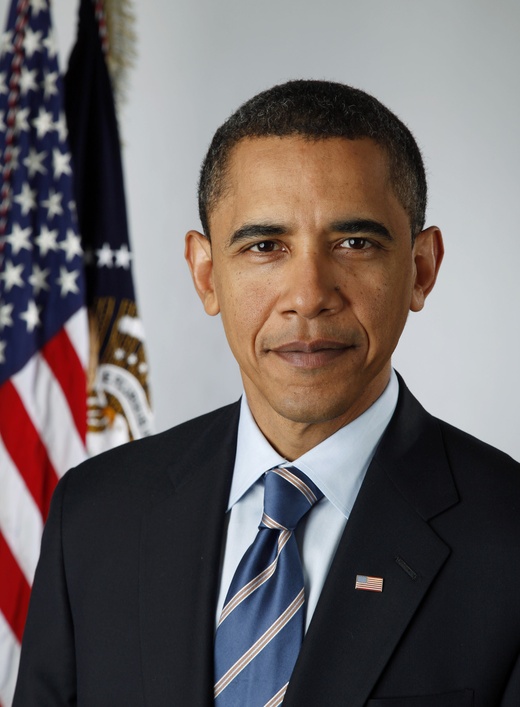 President Obama’s decision to place his required disclosure statement at the top of recent campaign ads markedly shifts the tone of presidential campaigning, though in a way not obvious at first. By spotlighting what we’re about to see, instead of acknowledging what we’ve just seen, he gives us permission to perceive his words in an entirely new way. A simple rhetorical shift admits a truth that has lingered beneath politics for years.
 So they move their disclaimers to the end. Even if it only lasts twenty-five seconds, we have to believe campaign ads as completely as we believe ads for Viagra or liquor. We withhold the admission that, oops, this is art. Not so President Obama. He admits—not implicitly, but explicitly—that a gap exists between campaign promises and the realities of governance. These, he says, are my words. Judge them only as that.
 But Thornton Wilder’s Our Town centers on the narration of the Stage Manager, who repeatedly calls attention to the theatrical conventions around him. He encourages us to consider the play with cool intellectual distance. Despite being adulterated by uncounted sentimental high school productions, this distancing effect has made Our Town a legitimate classic.


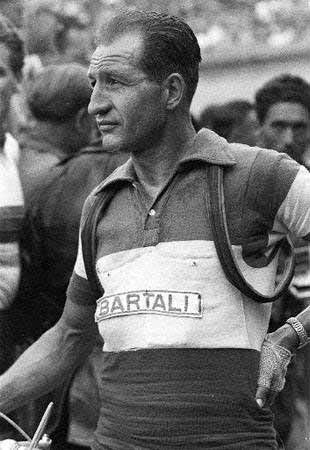 Like that would stop a True Believer. Bartali became Italy’s most famous (or infamous) deserter. And he came under the increasing influence of Cardinal Elia Della Costa, archbishop of Florence. Della Costa taught Bartali how to dance the fine line between law and conscience, and brought him into the conspiracy to rescue Jews from the encroaching machine. To this day we don’t know Bartali’s true contribution to this act of far-reaching heroism.
 Writers today, as I said above, have to publish—a lot—if they want to get paid. Our society has become so saturated with stuff to read, watch, and listen to, that only constant production staves off obsolescence. Books that don’t become instant bestsellers have a life expectancy of about six weeks before they get pulled and pulped. Gone are the days of sleeper hits like Charles Frazier’s Cold Mountain, which took several years to find its audience.