|
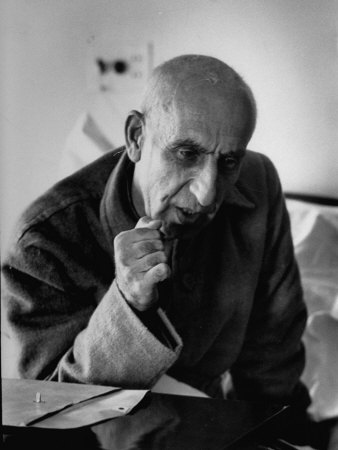
| Trayvon Martin's biggest crime consisted of looking like a crowd extra from Law & Order |
I can’t help remembering the highly publicized Bernard Goetz case. For those too young to remember, or not up on history, on December 22nd, 1984, Goetz, who had been mugged previously, used an unregistered revolver to shoot four black youths on a Manhattan subway who he claimed tried to rob him. After nine days on the run, the man the papers dubbed “The Subway Vigilante” turned himself in, and eventually served eight months on a minor gun charge.
Unlike Zimmerman, who faces near-universal hatred, Goetz became almost a folk hero. Because New York subways had become nearly synonymous with crime in a notoriously crime-riddled city, one man’s refusal to knuckle under transformed him into a potent symbol for gun ownership and civilian justice. But because a white man shot four black kids, he also embodied the racial divides that have long lingered beneath Manhattan’s urbane veneer.
Both shooters packed guns and, by all evidence, went out in search of a confrontation. Both sought to make a statement, and both became national figures for reasons that would probably not make their mothers proud. Yet where Goetz attracted heated controversy, with both supporters and detractors, Zimmerman has only shirt-tail support. And the difference is striking.
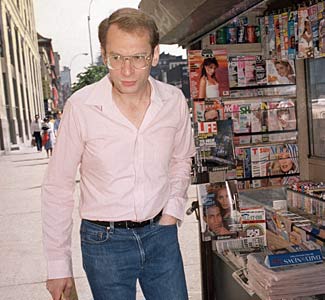 |
| To this day, Bernard Goetz remains a hero to some, a villain to others |
Perhaps the divergent reactions have something to do with the relative locations each shooter struck. People don’t associate Sanford, Florida, with the kind of crime that permeated Ed Koch’s New York. Indeed, Florida attracts copious retirees in large part because crime remains localized, and limited to drug and white collar infractions. Random muggings are rare enough to attract statewide attention. So Zimmerman seems considerably less justified that Goetz.
But the problem is not regional. In the two decades before Goetz’s attack, American crime rates had skyrocketed. New York crime had nearly tripled, and was not only nearly twice as high as the nation in general, but was one of the highest in the world. Watching the Subway Vigilante hit back seemed downright justified in light of the fact that ordinary working New Yorkers walked in fear for their lives every time they used mass transit.
We can’t say the same in 2012. Since 1993, crime has trended consistently downward. Despite regional outbursts and occasional sprees, the last two decades have seen America become as safe as it has been in living memory. Goetz’s Manhattan, once an icon of lawlessness, is now a family-friendly tourist attraction. George Zimmerman’s Sanford, Florida, is so bucolic that Kenny Chesney used it as a backdrop in the video for his nostalgic song “Young.”
Goetz and Zimmerman broke the law, but under disparate circumstances. While some called Goetz a criminal, and he did stand trial for his actions, he also gave people hope that criminals wouldn’t always run America’s cities. Though morally shaky, Goetz’s actions looked heroic. Zimmerman’s actions look like the jittery outbursts of a nut fueled by Red Bull, paranoia, and half-digested online conspiracy theories.
 |
| A Kel-Tec PF-9, the variety of easily concealed pistol George Zimmerman used to shoot Trayvon Martin |
Hopefully, as tragic as Trayvon Martin’s death is, it will energize our nation to distinguish real, legitimate fears from gibbering paranoia. Bernard Goetz had a legitimate fear, and if he didn’t handle it well, he at least handled it in a germane way. Here’s hoping George Zimmerman represents the dying gasp of an outmoded avenue of thought.


 In third grade, I lashed fallen twigs together with a broken shoelace to create an impromptu model spyplane. Abandoning the knot of kids playing tag or pickup softball, I flew daring missions around the playground perimeter. The chunky sand became vast terrain concealing hidden bases, while patches of grass became jungle thickets packed with possible NVA. Plane in hand, I jumped, ran, tumbled, and generally did what boys do.
 The situation improved at the university. Because post-secondary education favors individual scholarship over classroom primacy, I had much more autonomy to learn in a dedicated and self-directed way. But even then, the emphasis placed on group discussion, in which silence is tantamount to absence, impeded my learning. Cain musters persuasive evidence that this style of learning can easily overwhelm the amygdalae of the students most disposed to learning.
 All these insights occur in privacy. Requiring all students to be extroverted busybodies—and forbidding even the most extroverted students from spending time in quiet rumination—prevents students from ever taking ownership of the subjects they study. Many students think they can’t comprehend topics like math, science or the language arts, when in fact they simply have never been permitted to comprehend them.
 It seems the mythic American West was far less Caucasian than many of us believe. In the heyday of the cattle drives, African Americans comprised up to a third of working cowboys. Rodeo rider Bill Pickett invented the steer-wrestling move known as “bulldogging,” but got forced from his sport by a rising tide of racism. Nat “Deadwood Dick” Love perfected the rope tricks and sharpshooting techniques that made Roy Rogers and Gene Autry rich.
 Even Dean himself learned much on his journey. For instance, the Buffalo Soldiers he memorialized, it turns out, participated in illegal land grabs from Indians who only wanted to defend themselves. The wealthy and the powerful pitted two defenseless groups against each other, and laughed while they fought over the scraps. Yet the Buffalo Soldiers had the Army’s lowest desertion rate, and both groups set new standards for gallantry in battle.
 This simple core principle, rooted in Christian Scripture, informs all aspects of Amish life. While their communities look homogenous to outsiders (and most of us know little except what we see in TV and movies), Sleeth asserts they are actually a rich and thoughtful people. Standardized moral checklists violate their most treasured beliefs, because they preclude thought and prayer.


 In tandem with the “speech fever,” Marcus also expounds a future vision of dark Judaism. The Jews are the first victims of this spoken illness, and speculation abounds that this may be a dark Hebrew conspiracy. The Jews are not helped by the fact that they no longer worship in the shul, but in grim solitary enclaves, secret not only from the world, but from each other. It’s an arrangement almost customized to breed anti-Semitic paranoia.