Linda Elder and Richard Paul, 30 Days to Better Thinking and Better Living Through Critical Thinking: A Guide for Improving Every Aspect of Your Life, Revised and Expanded
 Motivational speaker Steve Siebold has made the media rounds since the Sandy Hook shooting, and before that really, advocating a robust raft of reforms. He has publicly scolded President Obama and Congress for letting partisanship trump meaningful thought. But who hasn’t? His latest book demands citizens engage in deeper, realistic thought, which he evaluates by its conclusions: if you’re thinking, you’ll agree with that paragon of critical thought, Steve Siebold.
Siebold unpacks public morals and public policy, which he lumps under the titular umbrellas of Sex, Politics, and Religion. He further subdivides this into fifty-four subtopics—in a book under 300 pages! How can he possibly examine so many topics, when few merit more than three pages of widely spaced, large-font type? You know the answer. This book stinks of straw man arguments, ad hominem attacks, and doctrinaire thought feeding foregone conclusions.
This produces a haphazard goulash of Ayn Randian libertarian diatribes. Repeatedly, he intrudes the caveat “Critical thinking tells us...”, which inevitably precedes an unexamined conclusion. Like his TV persona, Siebold reflexively excludes other viewpoints, dismisses debate in one or two sentences, and only considers arguments which support the position he already had. But he considers himself the distillation of hard thought and realistic (read “cynical”) positions.
 In his intro, Siebold promises: “This may rank among the most controversial books ever written.” But his unimaginative, doctrinaire opinions are old hat, even boring. This book epitomizes a man with great pride in his accomplishments, and impatience for divergent reasoning. Despite repeated calls for “critical thinking,” his frankly coercive tone rewards intellectual passivity and groupthink.
Briefly, Siebold exemplifies the three-part structure favored by schoolyard bullies and scolding fathers: “I’m right. You’re wrong. Shut up.” In a time of dangerous political controversy and remarkably banal violence, we need public figures to widen, not narrow, the debate. We must challenge ourselves to new solutions, not anchor ourselves to old ones. Thankfully, such a book exists.
Linda Elder and Richard Paul have dedicated their careers to advocating Critical Thought, which they see not as a series of conclusions, but as a process. We engage in critical thought when we test our assumptions and beliefs; practice intellectual virtues such as humility, honesty, and fairness; and practice discretion in how we receive news and opinions from media, bosses, and politicians. And they admit, this is much harder than it seems.
 Fortunately, in their latest book, Elder and Paul have broken the process down into thirty nuggets, designed so you can digest each in one day. Drawing on the same techniques teachers have historically used to parse difficult books, like the Bible or classic Russian literature, their process guides readers through an intellectual labyrinthe by taking it one step at a time. This encourages readers to unpack their own conclusions, not swallow ready-made opinions.
Human thought, like human muscle action, must be learned through gradual coaching. Just as we may believe some lifting technique makes perfect sense, only to discover too late that it causes severe back pain, a thought may seem reasonable in light of reflexive beliefs and old prejudices. We must learn carefully, over a span of time, which thoughts will result in desirable outcomes, and which we’ll pay dearly for down the line.
Far from expounding their own opinions, Elder and Paul cite many sources. Some expound how critical thinking works: Plato and Aristotle, Émile Durkheim, Eric Hoffer. Others exemplify critical thinking in action: Aquinas, Thomas Paine, HL Mencken, Margaret Mead. The authors’ sources give us key insights into the thought processes we should pursue, and just as important, they give us models to emulate so we know how critical thought may appear.
In their intro, which runs nearly fifty pages, Elder and Paul distill the points of their many prior books into a short rundown on how your mind works—and how it sometimes fails to work. This introduction contrasts very specific technical language with simple diagrams that make concepts comprehensible. One can imagine this as their PowerPoint presentation at corporate gatherings. It’s somewhat intimidating, though; feel free to skip it until you’ve read the rest of the book.
These two books are mirror images. One would exclude new ideas, stifle avenues of thought, and submit all insights to groupthink. The other encourages innovation, opens doors that only seem closed, and neither dominates nor submits. One seems useful in the near term, but will hasten painful consequences. The other requires more effort, but will proffer real solutions, or at least more meaningful debate.


 Unable to return to China when the Communists took over, Pei instead joined forces with a Manhattan land tycoon, designing low-cost housing for the post-war economic boom. Though “high art” architects looked down on this kind of work, it proved a valuable learning experience for Pei. He learned, because he had to, how to perform feats of remarkable engineering with scarce materials and less money. This would pay off when he graduated to more ambitious projects.

 Not that they ever say anything out-and-out wrong. Time and again, I felt the surge of recognition when they voiced a concept I’ve long nurtured but couldn’t quite enunciate. They frequently put their fingers on the pulse of some omission I often excuse, or some justification I make to vindicate my sins. In terms of what they actually say, Claiborne and Campolo are not just right, they pierce my pretensions and hold me to account.


 The picture at right began circulating on Facebook on Friday, hours after the Sandy Hook school shooting killed twenty children, seven adults, and the shooter. This image might reward unpacking on multiple levels,
including the strategic: do we really want to permit, even invite, gun battles in elementary schools? But I’d like to consider the implicit narrative underlying this seemingly straightforward image.
The picture at right began circulating on Facebook on Friday, hours after the Sandy Hook school shooting killed twenty children, seven adults, and the shooter. This image might reward unpacking on multiple levels,
including the strategic: do we really want to permit, even invite, gun battles in elementary schools? But I’d like to consider the implicit narrative underlying this seemingly straightforward image.


 In a similar vein, Neale wants us to simply accept his assurance that Gabriel suffers with the shadows of his past. Gabriel makes weak choices time and again because he can’t face his lingering childhood fears. Neale asserts that “the grief, scars, and rejections that plagued his childhood and adolescence had led to on-again, off-again friendships with the other kids, but no deep friendships to rely on at the brink of adulthood.”




 Our problems arise from a perverse incentive structure. Consider the example of a factory, one Bowles explicates often and well. Owners have every incentive to resist modernization and demand workers do more, because they want to maximize profit on existing capital investments. Workers, by contrast, have no ownership stake in outcomes, and thus
little incentive to obey owners’ expectations. Without governance structures, the two talk past each other.
Our problems arise from a perverse incentive structure. Consider the example of a factory, one Bowles explicates often and well. Owners have every incentive to resist modernization and demand workers do more, because they want to maximize profit on existing capital investments. Workers, by contrast, have no ownership stake in outcomes, and thus
little incentive to obey owners’ expectations. Without governance structures, the two talk past each other.
 Nor is Harper afraid to vary her tone. Her take on “Mary Did You Know?” captures the minor-key energy of Mattea’s classic recording, but in an urbane jazz style that deflects Mattea’s country original. Harper captures the fear Mary must have felt, knowing she’d birthed the Son of God. This remarkable detour into sonic darkness sustains the poignant edge that she begins with the almost political “Grown-Up Christmas List” and carries into her bold yet wistful “Silent Night.”

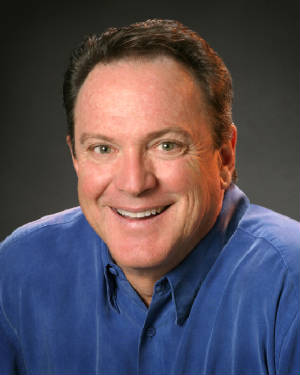 In his early sixties, Davis, who has been making people laugh for the Lord for decades, had a real “come to Jesus” moment when he saw a photograph of himself on the beach with his granddaughter. By then, he had ballooned to over 240 pounds, and his physical and mental health were in a spiral. He knew that, if he wanted to enjoy his grandchildren, he needed to get back on track, or else he was going to die.

