
 Even O’Reilly’s opponents, after speaking to him, admit he’s a smart man. Though his famous quick temper and dogmatism let some accuse him of thick-headedness, most who meet him agree that he’s actually quite intelligent. So I can’t believe O’Reilly has never heard of the Scaife Foundation, Heritage Foundation, Koch brothers, and other conservative funders. I first read of them in Rampton and Stauber’s Banana Republicans, clear back in 2004.
Initially, O’Reilly’s attempt at the same spin he claims to loathe in others took me aback. Surely he wouldn’t muddy the already turgid political waters on purpose. After all, he works for Fox News, owned by the intensely connected and possibly corrupt Rupert Murdoch. As Rampton and Stauber observe, the American right leaves fewer fingerprints on its idea system than the left, but its connections run every bit as deep, possibly deeper.
Recall how, during the February conflict over Wisconsin state workers’ rights, Ian Murphy of BuffaloBeast.com called governor Scott Walker, pretending to be David Koch, and got the governor to admit gaming the legal system to benefit the wealthy. The Koch brothers have campaigned for such preferential treatment at least since the 1970’s. They even paid to bus “non-partisan” protesters to Tea Party rallies in 2009 and 2010.
The political left is hardly less tainted. As long as they keep accepting support from George Soros, “the man who broke the Bank of England,” they’re elbows-deep in dirty money. Old Joe Kennedy, father of JFK, made his fortune bootlegging, and torpedoed his own presidential aspirations when, as US ambassador to the United Kingdom, he expressed sympathy for Adolf Hitler (or at least antipathy for his victims).

 In considering this money-based politics, and comparing it to the ideological inflexibility we’ve all seen in recent politics, I can’t help recalling a quote from Shane Claiborne. In The Irresistible Revolution, Claiborne recalls visiting an Iraqi Christian church prior to the 2003 war. An English-speaking parishioner lectured Claiborne that war is a failure of imagination. When frustrated and unable to resolve our differences, unimaginative persons just lash out.
America lacks a politics of imagination.
Our winner-take-all electoral system has yoked together people with conflicting impulses. If you oppose gay marriage, you must also support unlimited gun ownership. If you oppose war, you must also support the welfare state. Fox News and MSNBC take potshots at one another, making the conflict all the more doctrinaire. As we see with the religion debate, dissidents and fair-minded moderates have little voice in our democracy.

 Yet some maintain their drive to resist. In Anarchy and Christianity, Jacques Ellul notes how these two movements, often at odds, actually serve a similar drive. Anarchists believe power (including religion) diminishes humans. Ellul says God agrees. Consider how, in Scripture, Jesus brings hope to sinners, but castigates priests. Scripture extols David, Israel’s golden boy resisting Saul, then mocks David, the increasingly impotent kingly ruin.
The 2003 anti-war protests saw liberals join forces with traditional “peace churches” like the Quakers and Mennonites. As inveterate protesters, the churches arrived with pre-made signs. But when the liberals raised the signs to brandish their peace slogans, they found anti-abortion signs on the reverse. Two groups that seldom talk found common ground, at least briefly, and engaged in dialogue too many had previously resisted.
The imagination to have such dialogue will never come from the top. That’s the politics of passivity. All politics deals with how ordinary people relate to power, and when we give control of that relationship over to the other side, they will always pursue their own purposes. People in power, no matter how benevolent their goals, can only lead when they hear from committed, passionate followers.
We cannot limit our vision of power to mere voting. The media who report (and steer) the debate, wealthy individuals and corporations who decide what merits their subsidies, and those who claim to speak for God engage in politics as much as politicians. George Soros and David Koch may hold no official office, but they are instruments of power.
And we must have enough imagination to refuse their limiting, autocratic scripts.


 Socialist writer Barbara Garson admits, in
 Poet and philosopher Wendell Berry, in
  It goes further than Berry may realize. Joshua Holland, in
 I was recently offered a job with a decent wage and benefits, contingent on a seven-day work week. This seemed so obviously absurd that, when I commented on Facebook, I was astounded by how many people said I should take it, because “you were offered a job.” As though the bosses were magnanimous philanthropists presenting a gift from their largess, rather than needing me to do something for them.
 In his memoir,
 Early American colonists claimed to save slaves’ souls, so teaching them to read Scripture was mandatory. But after King Cotton made bottomless unpaid labor necessary, and Nat Turner’s rebellion proved slaves weren’t really happy, keeping slaves compliant took priority. (The BBC’s Huw Edwards reveals something similarly controversial in
 I can’t blame them, if their education resembled mine. My 9th grade English teacher said our class could tell Hemingway’s The Old Man and the Sea was profound because we couldn’t understand it. Only when I entered the university and saw future teachers taught did I realize my teacher probably didn’t understand the book either. Most teacher education consists of classroom management; prospective teachers have little grounding in their subjects.


 In Plato’s Republic, Thrasymachus, a notorious sophist, claims that “justice is the advantage of the stronger” and laws primarily exist to enforce social hierarchy. Philosophers debate whether Thrasymachus, an actual historical figure whose writings survive only in fragments, really meant this claim, or if he was Plato’s straw man. We can say with confidence, though, that many unjust people create ad hoc justice around themselves to fend off a world that remains appallingly heartless.
 Wayne and Falcone have an brief exchange, culminating in a storytelling device sometimes derided as
  Comic books and movies regard Batman as heroic because he turns his efforts to punishing those he considers lawbreakers, those who victimize the powerless. But consider the history of organized crime. Al Capone was born to immigrant parents in Park Slope, Brooklyn, and fought his way out of poverty. Jesse James backed the losing side in the Civil War and was branded an outlaw because he rode with Quantrill’s Raiders. John Gotti grew up in a poor ghetto and took up crime to offset his dissolute father’s gambling losses.



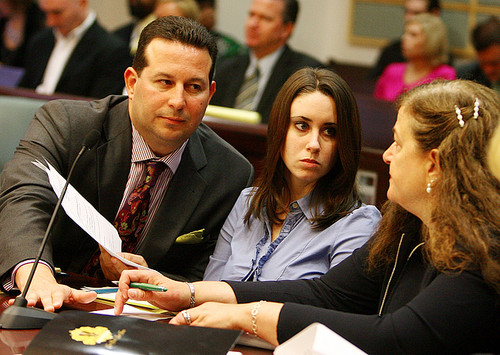 I’m not alone in this opinion. Both the prosecution and the defense, in the wake of the verdict, spoke harshly against the media coverage, which made gathering a jury pool exorbitantly expensive and difficult. Both Caylee as victim and Casey as defendant deserve justice, and when the court cannot assemble a jury, or even guarantee the defendant’s bodily safety, this flies in the face of justice.


 But it precisely describes their
  In a way, despite their constant sexual frustration, they are happier than either Leonard or Sheldon. Where those two want something they cannot have without a price they will not pay, Howard and Raj have let their wants become a public mask. They certainly have what they need. And while they may work themselves into the occasional tizzy over their need for common sexual release, they share a bond that would make most married couples jealous.