I wondered this after Joe Cordrey’s Reflections of My Mind crossed my desk. The poet subtitles it (Volume One), indicating he will produce more, yet I stand perplexed at what I see before me. It’s a masterpiece of sweeping generalization, pop sentimentality, and low ambition. Yet he must think it speaks to someone. Why else would he pay to have it published?
Ignore the all-caps, centered formatting. Ignore the absent copyright or title page. Ignore Cordrey’s disinterest in convention. Feast yourself instead on this passage from “Aviator”:
COLOR ME HUGHES
SOME CHAOTIC DIRECTOR, WHO NEVER PAID HIS DUES
COLOR ME MALKOVICH
AND, TEACH ME HOW TO FLY
AN AVIATOR, I WILL BE
HONEY, DON’T ASK ME WHY
Apart from the garbage sentiment, Cordrey clearly does not challenge himself. He doesn’t push the capabilities of language. He lets our familiarity with movie allusions do his work. That last line even falls back on relics of blues wails—lyrics that appear partly to aid memory. Any beginning writing teacher would say that, until he pushes himself as a writer, Cordrey can’t push his readers. Like the pop songs he mimics, his poems may drift over readers’ minds and amuse them, but once they’re gone, we forget them.
 The soft rock stylings certainly don’t kill Cordrey’s poetry. Aaron St. Julien’s Sanctuary of the Soul: Sacred Heart Offering uses hip-hop rhythms to produces interesting prose poems. Some of his work really has the power to reach in and shake you up, like this from “Invaluable”:
The title African Lotus was sent from Spirit because it describes the essence waiting to blossom the Gift of Divinity called for you last season those in your circle will not understand but still will try to reason some may even accuse you of treason, why! Why!
Yet even that passage offers flashes of St. Julien’s limitations. That distinctive four-beat rhythm and internal rhyme continue unabated throughout his collection. Clearly his fingers found a comfy place, and never drifted. And because he doesn’t challenge himself, he never challenges us.
 In fairness, not all self-published poets suffer thus. Thomas Noel Smith, in Dust and Other Poems, sometimes embraces difficulty. Though his melancholy themes have a distinctly Victorian nostalgia, he uses this traditionalism profitably in poems like “Gone Beyond Our Reach”:
Grandfather smoking his Camels
On concrete steps outside his house.
Grandmother wouldn't allow
Smoking inside
Even for her man.
That special man that God made
In His own image, and called him
"Grandfather."
Yet just when I feel maybe Smith offers hope, he lacks the courage of his convictions and retreats into a creaky old wheeze like “There is a Star”:
There is a star that brightly shines
It charts a course for me.
Where I'm bound I cannot tell
But it is my destiny
Smith’s transparent, and not very moving, allusion to Tennyson’s “Crossing the Bar” sucks the wind from my sails. When I read a poem and feel I’ve seen this before, I don’t feel comforted and homey. I just feel I’ve wasted my finite time.
This retreat into conservatism alarms me. Poets like Eliot and Pound created something new. Joining the poetic tradition means claiming literature’s greatest risk-takers as your ancestors. Yet these poets, so eager for recognition that they jump the accepted publication track and pay to print their work, seem dreadfully risk-averse.
 Effective poets threaten themselves. They grasp situations that make themselves uncomfortable. These poets reject that opportunity, and craft drab, uninspiring poetry. But not all hope is lost. Anarda Nashai was only a teen when she wrote School Girl: Poetry, but she embraces challenge and struggle. Consider “Steet Meat”:
Alley ways; traffic lights
Sidewalk trash; rat bites
Terrible traits; dirty feet
The corner store smells of street meat
Nashai appropriates the quatrain, which Smith and Cordrey squander, but makes it something grittier. Its Double Dutch rhythm ironically contradicts its grim images, showcasing what it means to be young amid urban decay. Nashai opens herself to this rot, and by opening herself, she touches us.
Why did Nashai publish her own work, instead of going through journals and accepted publishing houses? Only she could say. But amid all these thorns, it would be easy to forget one rose. Until aspiring poets put themselves at risk, and challenge themselves to challenge us, they’ll clutter the shelves with work that hasn’t finished incubating yet.


 In his book Empire Building, Garry Jenkins reveals that Lucas’ original script called for Ben Kenobi to make a narrow escape with his protégés after holding his former apprentice, Darth Vader, at bay. Actor Alec Guinness, who played Kenobi, balked on the grounds that the young heroes would have to drag a wounded man around for the rest of the movie.
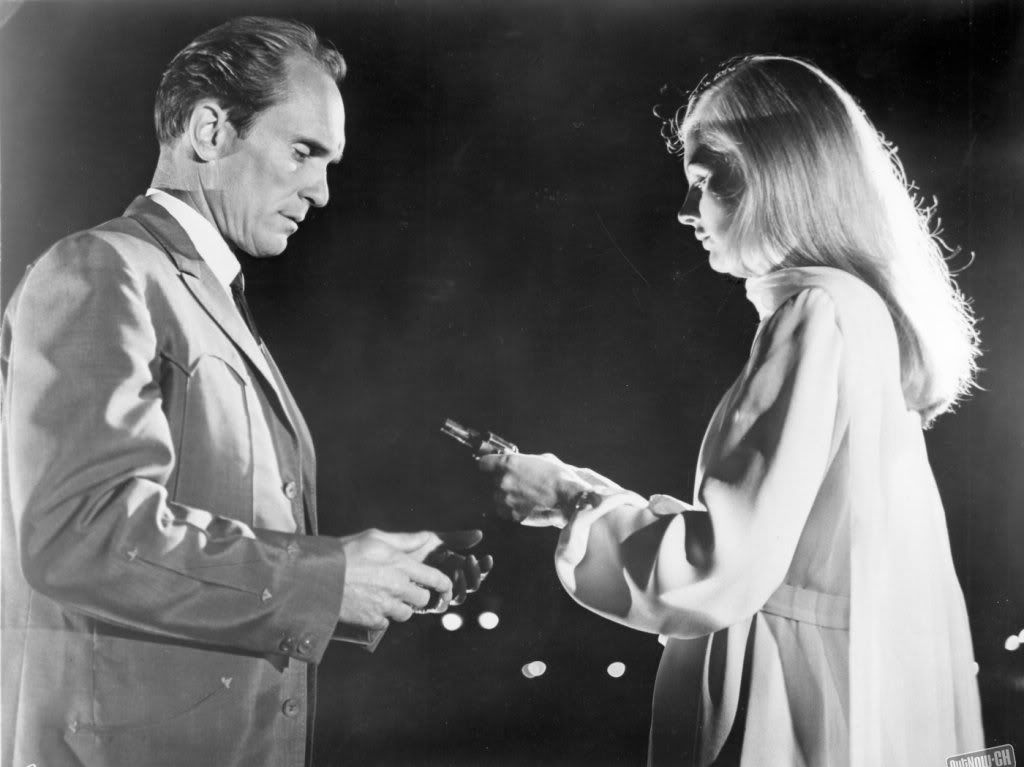 Young Marya Zimmet never acted onscreen after Francis Ford Coppola’s
  Stanley Kubrick and Arthur C. Clarke, both agnostics, nevertheless could not accept that life lacked a motivating factor. Things couldn’t just happen, they reasoned; they demanded a cause. So they looked beyond the stars. When we made the leap from Australopithecine to human, they make aliens the proximate cause.
 After Schwarzenegger's mechanically laconic role in the tech-noir Terminator, Dutch seems a diametrically opposed role: talkative, sweaty, principled. And this whole movie has a humid organic atmosphere, which amplifies this film’s reversal theme. While the Predator initially has the soldiers at its mercy, its technology gradually degrades, and it finds itself on equally organic footing with its human adversary.
 Theo Faron (Clive Owen) hasn’t yet accepted his ex-wife Julian Taylor’s (Julianne Moore) job offer, nor does he realize what profound odds he faces. He only knows she’s implied he might be rewarded with renewed romance. The old flames are demonstrating their old trick, blowing a ping-pong ball between their mouths, when an angry mob attacks; one well placed shot pierces Julian’s jugular vain. On the run as fugitives, they can’t even bury her.
 Despite the “rhetoric” in her title, Mendlesohn doesn’t minutely analyze word choices or parse the neuropsychology that has hijacked recent rhetoric. Instead, she closely considers writers’ storytelling choices with an eye toward how they reconcile realistic character with frank portrayals of the supernatural. This approach yields four broad categories that describe most modern fantasy.


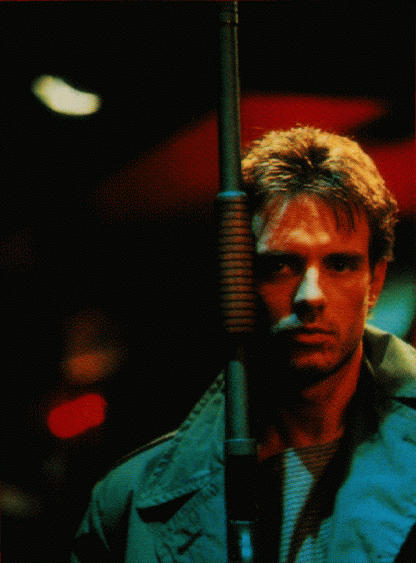 Deep within Reagan’s America, when we feared our own technology would destroy humanity, a strange, dark film appeared, featuring a stone-faced villain whom the heroes could not defeat, a hero who could only hope to keep running, and a heroine who couldn’t understand her predicament. Pretty accurate summation of Eighties America, really.
 Vincent D’Onofrio as Pvt. Leonard Lawrence, almost unrecognizable under seventy added pounds, poses an important question: is he intellectually disabled, or has DI Hartman (R. Lee Ermey) broken him? More important, does it matter? If Lawrence, nicknamed “Gomer Pyle” by Hartman, can’t handle Parris Island, how can he possibly handle Vietnam?
 Ellen Ripley isn’t an admirable hero because a woman plays the men’s game. She’s admirable because she’s a woman, with everything that entails. When the marines flee the monsters, which pounce as relentlessly as whack-a-mole puppets, Ripley keeps her family intact. The men disintegrate in terror; only Ripley has the fortitude to count noses.
 This surprising act of violence after what had been a dry political satire seems initially jarring. Though Shaw’s suicide isn’t the first violent death, its close focus immediacy announces that jokes have ended. This topic, the movie announces, is too serious, too vital to our fundamental freedoms.
 From here, in Clements’ reading, vampires devolve. She disdains the Buffyverse’s moral equivalency, mocks Sookie Stackhouse’s compartmentalized humanism, and sees in Stephanie Meyer no mere stylistic lapse, but indeed a failure of ethical foundation. These stories, she says, embody the absence of sin and grace, not just in vampire literature, but throughout Anglo-American culture.